Hanoi’s Continuing Assault on Workers’ Right to Organize
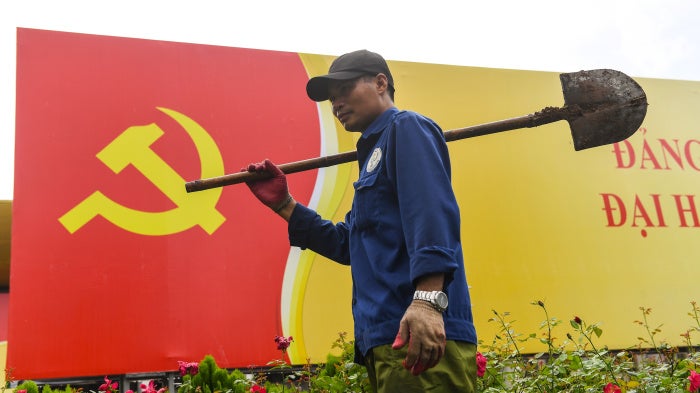
The 49-page report, “There Are No Independent Trade Unions in Vietnam: Hanoi’s Continuing Assault on Workers’ Right to Organize,” documents the Vietnamese governments’ continuing useof vague, overbroad criminal laws to suppress the activities of human rights and labor rights defenders, while maintaining an atmosphere of repression to thwart independent labor organizing. The government has issued decrees and articles in state-run media that reaffirm that all labor organizations in Vietnam are under the government’s authority, and portray independent trade unions as dangerous, anti-state entities.
Human Rights Watch welcomes the opportunity to address the International Organization for Migration (IOM) and its Member States at the 2005 Governing Council meeting (90th Session).
Internally displaced persons in the aftermath of Operation Murambatsvina
This 61-page report documents the government’s denial of assistance and protection to people internally displaced as a result of Operation Murambatsvina (“Clear the Filth”), which began in May. The report also examines the role of international agencies, and in particular the United Nations country team, in addressing the humanitarian crisis in Zimbabwe.
Human Rights Watch has released a list of persons believed to be in U.S. custody as “ghost detainees” -- detainees who are not given any legal rights or access to counsel, and who are likely not reported to or seen by the International Committee of the Red Cross.
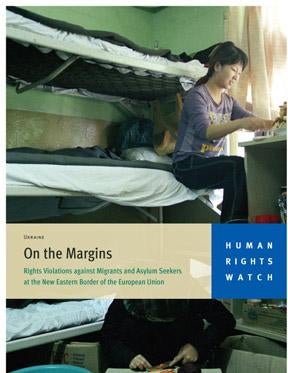
Rights Violations against Migrants and Asylum Seekers at the New Eastern Border of the European Union
This 77-page report documents the routine detention of migrants and asylum in appalling conditions, including severe overcrowding, frequently inadequate bedding and clothing, and little or no access to fresh air, exercise and medical treatment. The report also documents the physical abuse, verbal harassment, robbery and extortion suffered by those in detention.
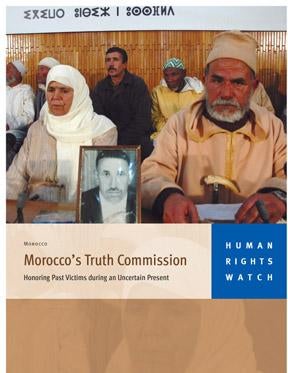
This 48-page report discusses how after nearly two years of investigations into abuses committed between 1956 and 1999, the state-appointed Equity and Reconciliation Commission (ERC) is to submit its final report and recommendations to King Mohamed VI at the end of this month.
On November 23, 2005, the State Duma, Russia’s parliament, is scheduled to consider a draft law that would dramatically restrict the work of nongovernmental organizations (NGOs) working in Russia.
Techniques described in the November 18 ABC News report—prolonged forced standing, sleep deprivation, and exposure to cold—are illegal and may possibly amount to torture. These techniques were used by Soviet and North Korean interrogators, and have been reported more recently in Egypt, Burma, Iran and Turkey.
Human Rights Watch calls on the African Commission on Human and Peoples’ Rights to address urgent human rights concerns in Burundi, Democratic Republic of the Congo, Ethiopia, Sudan-Darfur and Uganda.
Respect for human rights in the November 2005 parliamentary elections in Azerbaijan fell far short of international standards, with serious violations occurring both prior to and on election day. These shortcomings once again underscored the urgent need for major reforms in the areas of freedom of expression and assembly, the electoral law and its implementation, and accountability mechanisms.
This briefing concerns problematic new measures on speech and detention contained in the draft terrorism legislation—the fifth major piece of counter-terrorism legislation in as many years—currently being debated in the British parliament.
Inadequate Protection for Refugees and Asylum Seekers in Johannesburg
This 66-page report documents how refugees and asylum seekers in South Africa’s largest city often encounter abuse by police and other obstacles throughout the refugee-status determination process. Asylum seekers and refugees in Johannesburg are often subjected to harassment, mistreatment and extortion by the police.
Human Rights Watch respectfully offers the following submission to the Senate Legal and Constitutional Committee’s inquiry into the provisions of the Anti-Terrorism Bill (No. 2) 2005 (hereafter “the Bill”).
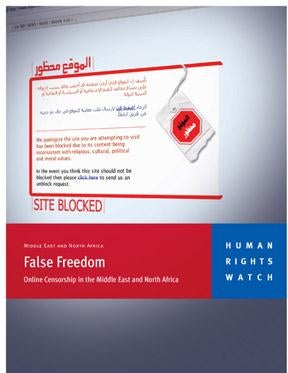
Online Censorship in the Middle East and North Africa
This 144-page report documents online censorship and cases in which Internet users have been detained for their online activities in countries across the region, including Tunisia, Iran, Syria and Egypt.
This briefing paper documents cases where Burundian soldiers summarily executed five civilians and tortured others whom they suspected of being collaborators with the last active rebel group, the National.
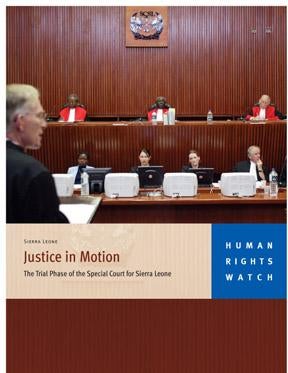
The Trial Phase of the Special Court for Sierra Leone
This 46-page report evaluates the conduct of the U.N.-backed court for war crimes in Sierra Leone during trials, which began in June 2005.The report details concerns regarding court operations that should be addressed to ensure that the court functions as fairly and effectively as possible.