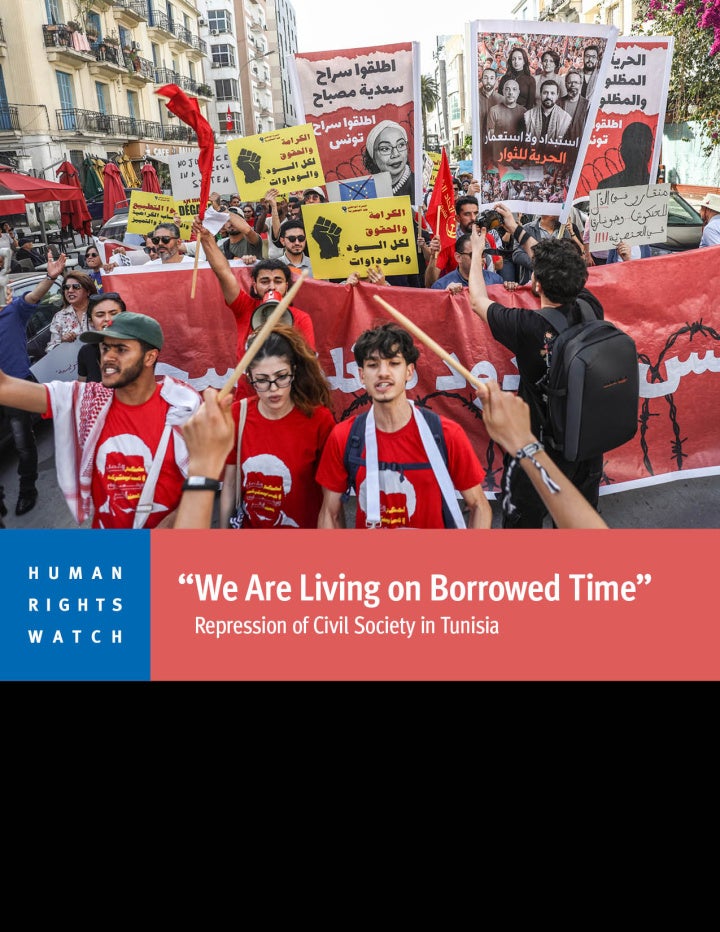
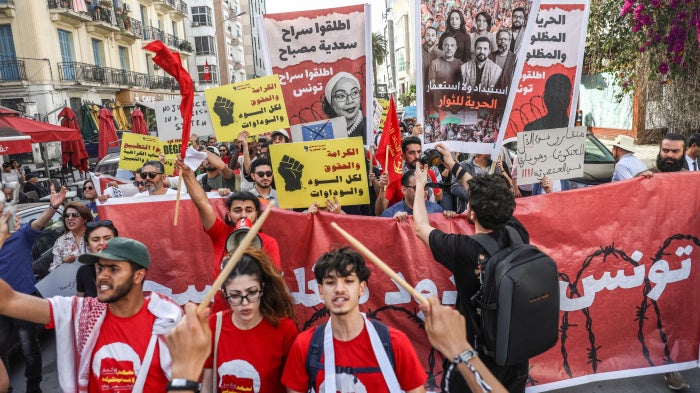
The 49-page report, “‘We Are Living on Borrowed Time’: Repression of Civil Society in Tunisia” documents the Tunisian authorities’ escalating repression of local and international civil society groups, workers, members, and affiliates through the weaponization of abusive prosecutions, arbitrary arrests, detention, financial and criminal investigations, mass suspensions, and threats of dissolution.
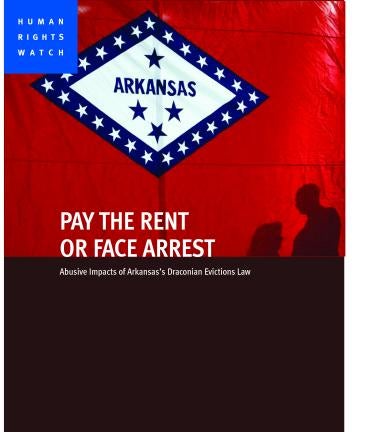
Abusive Impacts of Arkansas's Draconian Evictions Law
This 44-page report tells the stories of Arkansas tenants who were dragged into criminal court for transgressions that would not be a crime in any other US state. Other tenants who did not violate the law have faced charges because prosecutors acted on specious claims by landlords.
Police Mishandling of Sexual Assault Cases in the District of Columbia
This 196-page report concludes that in many sexual assault cases, the police did not file incident reports, which are required to proceed with an investigation, or misclassified serious sexual assaults as lesser or other crimes.
Summary Returns of Unaccompanied Migrant Children and Adult Asylum Seekers from Italy to Greece
This report documents the failure of Italian border police at the Adriatic ports of Ancona, Bari, Brindisi, and Venice to screen adequately for people in need of protection, in violation of Italy’s legal obligations. Human Rights Watch interviewed 29 children and adults who were summarily returned to Greece from Italian ports, 20 of them in 2012.
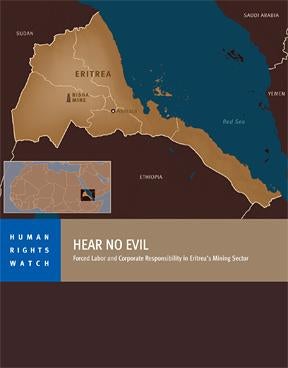
Forced Labor and Corporate Responsibility in Eritrea’s Mining Sector
The 29-page report describes how mining companies working in Eritrea risk involvement with the government’s widespread exploitation of forced labor. It also documents how Nevsun – the first company to develop an operational mine in Eritrea – initially failed to take those risks seriously, and then struggled to address allegations of abuse connected to its operations.
The Need for Legal and Institutional Reforms Ahead of Zimbabwe’s Elections
This report assesses the legislative and electoral reforms undertaken by the unity government, which was established in 2009 after the 2008 elections resulted in violence. The unity government consists of the former ruling Zimbabwe African National Union-Patriotic Front (ZANU-PF) and the two factions of the former opposition Movement for Democratic Change (MDC).
The 60-page report documents the experiences of dozens of rights defenders, journalists and bloggers, and lawyers whom security and intelligence forces targeted because they spoke out against the government.
Accountability before Guinea’s Courts for the September 28, 2009 Stadium Massacre, Rapes, and Other Abuses
This 58-page report analyzes Guinea’s efforts to hold those responsible for the crimes to account. On that day, several hundred members of Guinea’s security forces burst into a stadium in Guinea’s capital, Conakry, and opened fire on tens of thousands of opposition supporters peacefully gathered there.
In this report, Human Rights Watch offers new data indicating that people who enter the criminal justice system with an arrest for public possession of marijuana rarely commit violent crimes in the future.
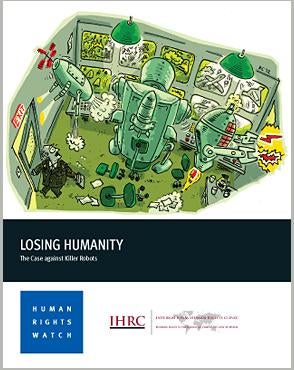
This 50-page report outlines concerns about these fully autonomous weapons, which would inherently lack human qualities that provide legal and non-legal checks on the killing of civilians. In addition, the obstacles to holding anyone accountable for harm caused by the weapons would weaken the law’s power to deter future violations.
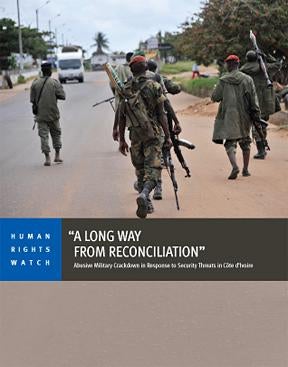
Abusive Military Crackdown in Response to Security Threats in Côte d’Ivoire
This 73-page report details the brutal crackdown that followed a series of violent attacks on military installations around the country in August. The attacks were allegedly committed by militants loyal to former President Laurent Gbagbo.
This 73-page report found that some child domestic workers – who are overwhelmingly girls – toil for 12 hours a day, 7 days a week, for as little as US$11 a month. Some girls told Human Rights Watch that their employers frequently beat and verbally abused them, denied them education, and sometimes refused them adequate food.
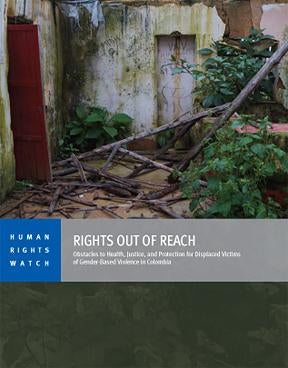
Obstacles to Health, Justice, and Protection for Displaced Victims of Gender-Based Violence in Colombia
This 101-page report documents how recent improvements in Colombia’s laws, policies, and programs on rape and domestic violence have not translated into more effective justice, healthcare, and protection for displaced women and girls. More than half of the country’s roughly four million displaced are female.