Guidelines for the implementation of the European Union’s Forced Labor Regulation are an important step toward rights-respecting supply chains but need further strengthening to eliminate forced labor from the EU market, Human Rights Watch and 12 civil society organizations and trade unions said in a September 2 joint letter to the European Commission.
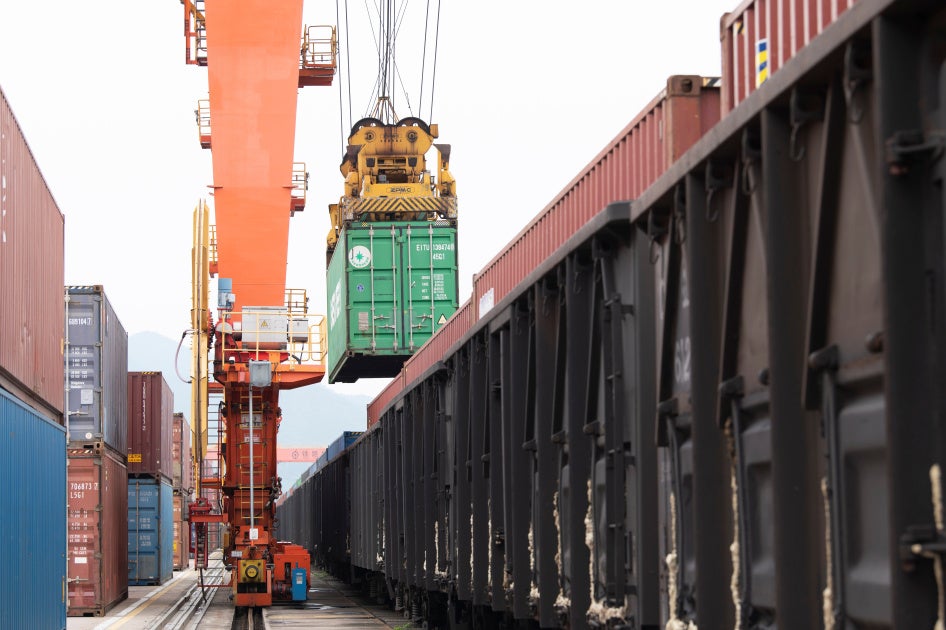
The EU’s forced labor regulation was adopted in May 2024 and will apply from December 2027. It enables the European Commission and national governments to ban imports and exports of products wholly or partially made with forced labor. If properly enforced, the regulation could create a powerful incentive for companies to eradicate forced labor from their supply chains.
Within the EU, cases of labor exploitation, most involving migrant workers, regularly make headlines, including in Italy’s fast fashion industry, seasonal harvesting in France, and berry picking in Finland. Globally, the 2022 International Labour Organization (ILO) Global Estimates on Modern Slavery estimated that 17.3 million people are victims of forced labor exploitation in the private sector worldwide, with an eight percent increase between 2016 and 2021. The Global Estimates details that some 3.9 million additional people are victims of state-imposed forced labor. A 2024 ILO research study on the economics of forced labor estimated that companies derive US$63.9 billion in annual profits from forced labor in the private sector.
The European Commission guidelines, published June 26, are important because they set out how regulators at the EU level and in member states should implement the forced labor regulation. The guidelines describe how civil society, trade unions and workers can submit evidence about products linked to forced labor, how officials should investigate allegations, and how companies and their suppliers should respond to investigations.
The guidelines are important partly because they incentivize companies to promptly tackle forced labor cases in their supply chains and provide compensation or other forms of remediation to victims. EU or national regulators can require companies to provide evidence of the remediation they have provided to victims at any time during their investigation. The guidelines also rightly clarified that in case of state-imposed forced labor, which often affects a specific region or country in its entirety, investigations can target whole categories of products from that area, enhancing the effectiveness of such ban.
There remains, however, a need for improvement. The Commission’s guidelines should caution against any overreliance on the audits many companies use to assess forced labor risks at their factories or suppliers; these often fail to accurately represent workers’ real experience. Conflicts of interest between the auditors and the company in question and the risk that factories hide evidence or coerce workers to provide misleading testimony often undermine these audits.
The Commission should instead require EU and national regulators to verify all information submitted by companies in response to an investigation with alternative and independent sources. The guidelines should also state that, when designing measures to address or remediate situations of forced labor, companies should consider workers’ specific vulnerabilities—such as caste, gender, age, literacy, religion, or beliefs—as well as relevant contextual factors such as local labor laws and business practices or economic models, to ensure that those measures respond appropriately to victims’ needs.
The next step to prepare for the implementation of the forced labor regulation is for the European Commission to finalize its Forced Labour Portal, which will include a forced labor risk database that should list products, sectors and/or regions that are at risk of forced labor. The database should include the Xinjiang Uyghur Autonomous Region in China, Turkmenistan, and North Korea as regions and countries at risk of state-imposed forced labor.
The EU’s decision to enact a regulation banning forced labor was a clear indication of its commitment to tackle abuses against workers throughout supply chains. Now that it is on the books, the EU should ensure that it is properly implemented.