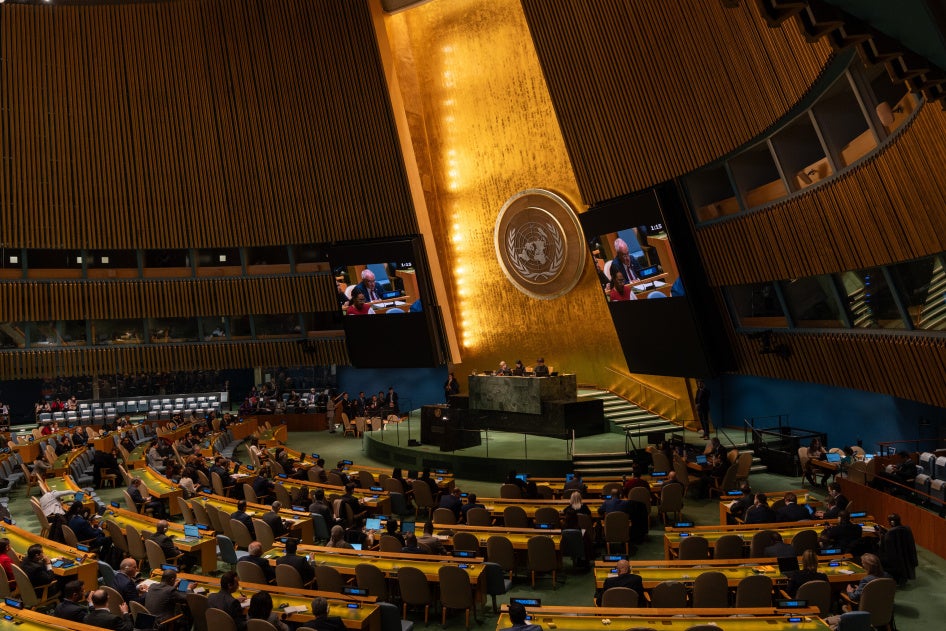
(New York) – The United Nations General Assembly amended a longstanding rule on June 30, 2026, to ease the world body’s deepening liquidity crisis, but severe funding problems remain, Human Rights Watch said.
A new Human Rights Watch questions-and-answers document describes the effects of the UN’s liquidity crisis on its global human rights activities , and makes recommendations to UN member countries to ensure the UN has the resources it needs to protect and promote human rights and save lives.
“The US, China, and other governments that haven’t paid or are late in paying their dues have forced the UN to cut back on critical human rights and humanitarian operations worldwide,” said Louis Charbonneau, UN director at Human Rights Watch. “UN member states should explore new avenues to hold delinquent countries accountable for defaulting on their UN financial obligations.”
While the US and China are responsible for nearly half the funds that member countries are obligated to contribute to the UN, dozens of other countries also pay late or not at all.