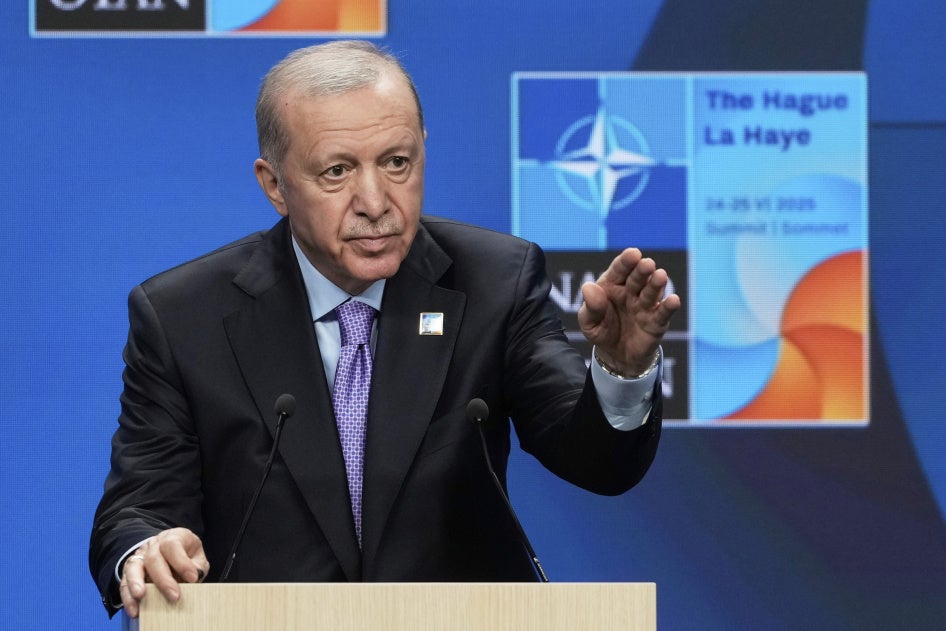
Turkey is preparing to host the July NATO summit with the Western alliance firmly focused on keeping its most eastern member on side. The increased geopolitical capital that Turkey has enjoyed since Russia’s full-scale invasion of Ukraine and tumultuous developments in the Middle East is proving convenient cover for President Recep Tayyip Erdoğan to jail and remove political rivals and critics at home. Just under two weeks before the summit, police in Ankara rounded up over 200 people right after the authorities announced draconian bans on all demonstrations and public gatherings. Erdoğan is able to count on there being barely a murmur from the country’s European partners.
As heads of state assemble in Ankara, the jailed Istanbul mayor and main opposition Republican People’s Party presidential candidate, Ekrem İmamoğlu, will be preparing to defend himself before a court at the remote high-security prison where he has been held since March 2025.
Prosecutors allege İmamoğlu had turned the Istanbul municipality he ran into a criminal organization – a “many-tentacled octopus,” says the indictment, adopting Erdoğan’s own description. The prosecutors have piled on multiple corruption charges against İmamoğlu and over 400 co-defendants, which could spell hundreds of years in prison for the mayor if convicted, and in the meantime remove him from politics.
Weeks of trial hearings so far demonstrated only that the evidence is heavy with hearsay testimony lacking in material proof that money actually changed hands for corrupt enrichment. And a growing number of those in the dock are complaining that prosecutors twisted their arms with promises of release in return for providing unsubstantiated information against the mayor and others, in some cases even threatening to detain their relatives unless they complied.
The political motivation behind the trial is quite apparent: Erdoğan and his party want to make sure İmamoğlu can’t stand as the opposition’s presidential candidate.
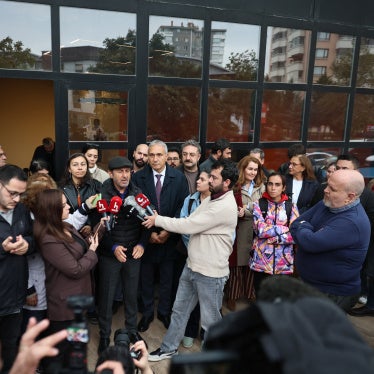
Erdoğan’s focus on thwarting the political ambitions of his chief rival extends to the opposition party as a whole. Every day brings more arrests of mayors from the Republican People’s Party around the country. On May 21, an Ankara regional court gave an unprecedented order to remove the leader of the party, Özgür Özel, and its entire national leadership, citing unproven complaints from disgruntled party members that delegates were bribed to vote for Özel at a party congress in 2023. He was re-elected three times, leaving little doubt that he was their chosen candidate.
Widely broadcast footage three days later showed police smashing their way into the party headquarters with tear gas and riot gear to remove Özel and others from the building where they had remained to signal their refusal to recognize the court order.
Overseeing the entire process is Justice Minister Akın Gürlek, whom Erdoğan promoted to that post in February from his former role as Istanbul chief prosecutor responsible for indicting İmamoğlu.
The removal of Özel and the jailing of İmamoğlu together constitute the kind of government-led encroachment on Turkey’s democracy reminiscent of the era of military coups.
The former head of Turkey’s Constitutional Court said that the regional court’s removal of a party’s elected leadership is a worse power grab than the numerous instances of Turkey’s top court closing down political parties and a very sad moment for Turkish democracy.
Those attending the NATO summit may rightly see positives in the peace process with the Kurdish armed group, the PKK. But when it comes to democratic participation and human rights for Turkey’s Kurds, things are far less positive. Kurds faced years of governments jailing their elected party leaders, members of parliament, and mayors.
In 2018, the charismatic Kurdish politician Selahattin Demirtaş ran for president from prison, where he has been held for almost 10 years. Erdoğan has defied rulings by the European Court of Human Rights to release Demirtaş, rulings that conclude that Demirtaş’s detention served the political aim of silencing him—just as with İmamoğlu today.
NATO membership is supposed to require adherence to democracy, human rights, and the rule of law. Turkey last hosted a NATO summit in 2004 at the height of the country’s bid to join the EU. When there was optimism about its trajectory aligning with those values and obligations.
In 2026, the member states will be greeted by a president who has consolidated power in his own office under a super presidency and is using the courts to quash the main opposition party, which defeated his own party in the 2024 local elections, in an effort to avoid any future defeat at the polls.
As heads of state of the NATO alliance arrive in Ankara, they should pause and reflect that the state of human rights, rule of law, and democracy in Turkey should matter to the alliance.