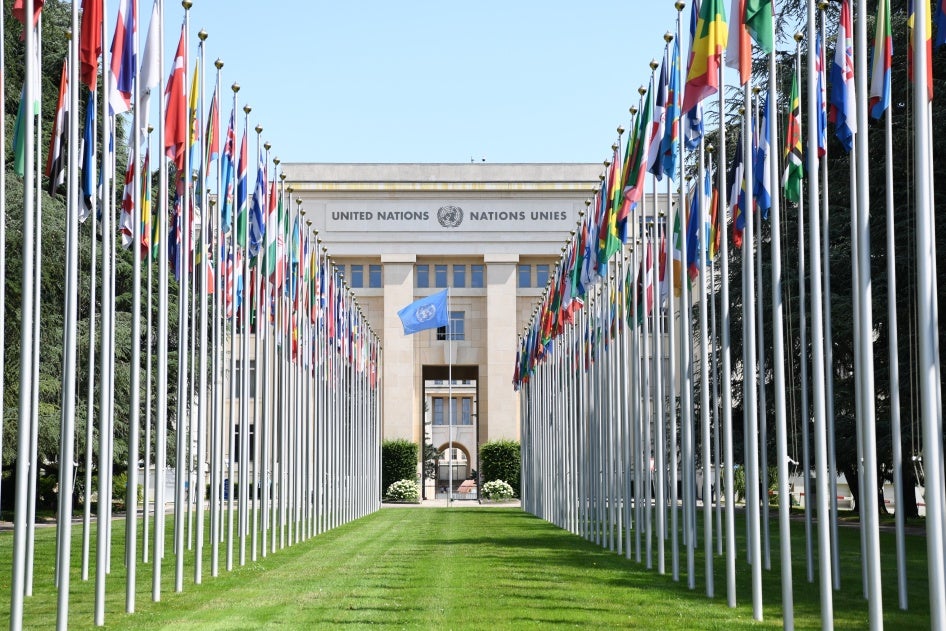
Human Rights Watch statement on the occasion of the twentieth anniversary of the UN Human Rights Council. During the 62nd session of the UN Human Rights Council an informal high-level discussion was held on June 19 to celebrate this anniversary.
As the HRC celebrates its 20th anniversary we want to recall its important achievements, and challenges it faces.
The Council has played a key role in standard setting and served as a vital forum for states, civil society, and rights holders to discuss pressing issues and crises. At its best, it has centered and responded to the voices and demands of victims, survivors and affected communities, on which its relevance and credibility depend. The Council has, however, regrettably failed to develop a credible response to reprisals.
The work of this Council and its mechanisms have a real impact on people’s lives around the world – preventing and responding to human rights violations, providing a lifeline of support to victims, survivors and affected communities, working to strengthen national law and policy to better protect rights, supporting access to justice, and raising the alarm about emerging crises.
The Council has developed innovative tools to deliver on its mandate to address grave and systematic abuses, and better advance accountability. The creation of the IIMM on Myanmar in 2018, thanks to bold and creative leadership of the OIC and EU, working together in the aftermath of the Rohingya crisis, was a landmark action that set a new bar for HRC investigative mechanisms in terms of evidence gathering and preservation.
More should be done to follow up on implementation and link the reporting and recommendations of the HRC’s investigative mechanisms to atrocity prevention discussions in New York and elsewhere, and address grave violations wherever they occur in a more principled and consistent manner.
Two key innovations of the HRC as opposed to its predecessor, the Commission, were the UPR, the universality of which helps to move the HRC beyond selectivity, and the expectation that members should uphold the highest standards of human rights and be subject to heightened scrutiny during their membership terms. As we mark this 20th year, states need to redouble the commitment to the universality of the UPR, and respect for the membership criteria.
Investment in human rights is an investment in stable, resilient societies, which can help build and preserve durable peace, reduce inequalities, and prevent conflict and crises. We urge states to mobilize in response to the financial crisis that is undermining the effectiveness of the HRC and its mechanisms, and instead ensure the human rights pillar can operate within its already very modest budget, by paying their UN dues in full and on time and stepping up voluntary contributions.
Specifically, states should ensure their own 2026 assessed membership contributions are paid in full without further delay, take steps to increase penalties for non or late payment of dues, and mobilize to address counterproductive rules that reward late payment – and mobilize to support the high commissioner’s appeal for support for the entire human rights ecosystem, as a matter of urgency.
Thank you.