
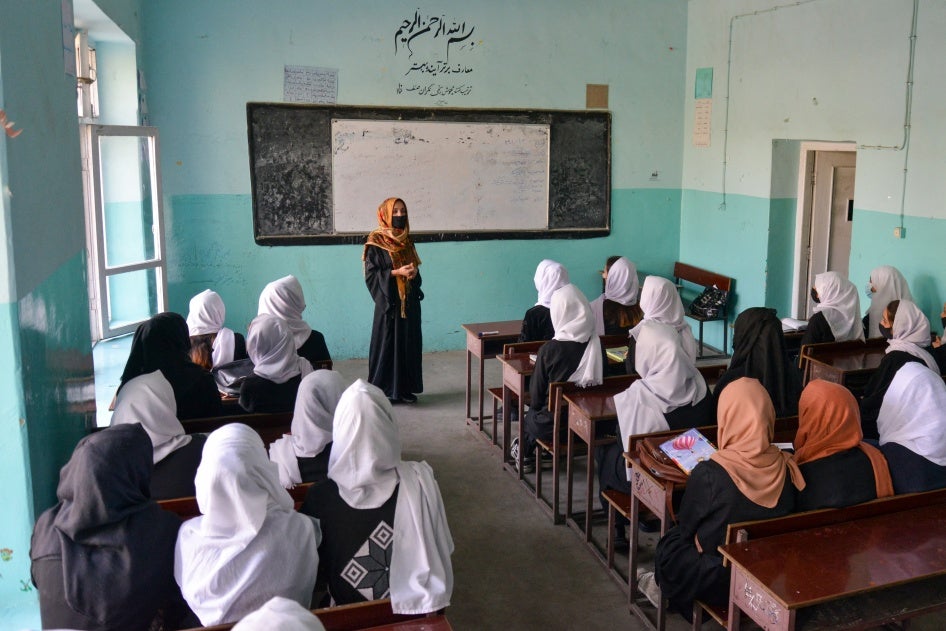
On April 23, it had been 1,677 days. It will have been more by the time you read this.
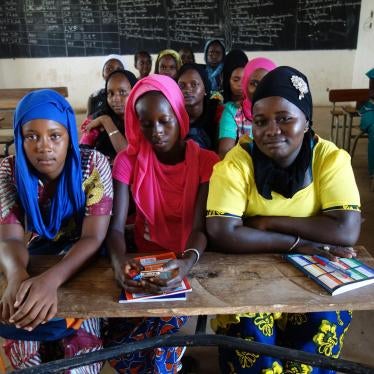
That’s the number of days that girls in Afghanistan have been banned, by the Taliban, from studying beyond sixth grade. Soon, there will be no new women doctors, lawyers, professors, or engineers in Afghanistan. Boys are being raised to see this as normal. Girls are being raised to live within walls.
There is an opportunity right now for every country in the world to do something about this, to stand with girls and women in Afghanistan and the rest of the world. There’s also an important deadline coming up: April 30.
This situation — unprecedented in modern history except for the Taliban’s previous years in power — has drawn attention to the need for effective application of international criminal law. The International Criminal Court has issued warrants for two senior Taliban leaders for the crime against humanity of gender persecution.
While the crime of gender persecution, or the denial of fundamental rights on the basis of gender, can be used to hold Taliban leaders accountable, it falls short of capturing the full scope of the abuse: a system in which extreme gender discrimination has been deliberately embedded into every level of society.
How do we collectively condemn an administration that systematically discriminates against more than half of their citizens based on gender? How do we ensure this ends and doesn’t repeat somewhere else?
There is a way, but it requires every delegation at the United Nations to get involved. By April 30, states should submit proposals for amendments to the draft of a United Nations treaty that would provide new protections to halt crimes against humanity. After this date, states will be able to get behind and push for these proposals during the negotiation process.
Afghan women’s rights defenders and human rights experts ranging from the UN High Commissioner for human rights, the UN’s women’s rights committee, and UN experts to South African jurists and scholars, Amnesty International, and Human Rights Watch are calling for states to include gender apartheid in their proposals to fully capture the devastating abuses against girls and women in Afghanistan, which go far beyond the denial of education.
This change would open up new avenues of accountability against the Taliban and any other group that might engage in similar crimes. This would strengthen protection of women’s rights globally.
The history of international human rights and criminal law is a history of the world responding to atrocities. International treaties, such as the conventions banning apartheid and banning genocide, and the Universal Declaration of Human Rights itself, were crafted and agreed upon in the aftermath of horrifying abuses and driven by consensus that there must be action to try to ensure that such crimes could never happen again.
The April 30 deadline is one step in a longer process. After proposals from states are received, they will be considered as part of a negotiation process which is scheduled to conclude in 2029, hopefully with the adoption of a strong new treaty bringing new human rights protections globally.
The proposal to add gender apartheid to the treaty is one of many proposals from activists, experts, and states for how the draft treaty, prepared by UN experts, can be strengthened. The proposals also include other new protections for women’s rights, as well as for children’s rights, the rights of people with disabilities, and preventing slavery. Every state will have a chance to weigh in, build alliances with other states, and fight for what they care about most in this process. Human Rights Watch is also supporting proposals to strengthen the crime of persecution, by making it a stand-alone crime.
The crimes against humanity treaty process comes at a moment of global instability, rising authoritarianism in many countries, and alarming efforts by a growing list of authoritarians to roll back the rights of women and girls. Authoritarian leaders and mainstream politicians have made shocking moves to deny women and girls reproductive choice, to increase impunity for violence against women, to reduce protections against gender discrimination in the workplace, and even to question women’s right to vote and participate in public life. A number of conflicts are seizing the world’s attention, and those conflicts often bring specific gendered harm to women and girls, including sexual violence.
In this challenging moment, the treaty process can be a beacon of hope. It is an opportunity for states that have pledged to stand firm on women’s rights, and human rights more broadly, to turn words into action. It is a moment for politicians who believe in women’s rights to say clearly that equality is never negotiable.
Several states have already indicated that they plan to propose changes to the crimes against humanity treaty that would make gender apartheid a crime. These states have earned the appreciation of women everywhere.
Others should follow. Governments now face a clear choice: stand with women’s rights defenders and act to confront gender apartheid—or be remembered for their silence.