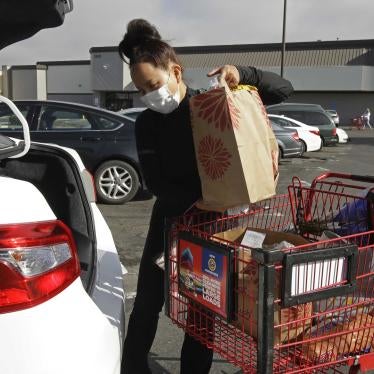
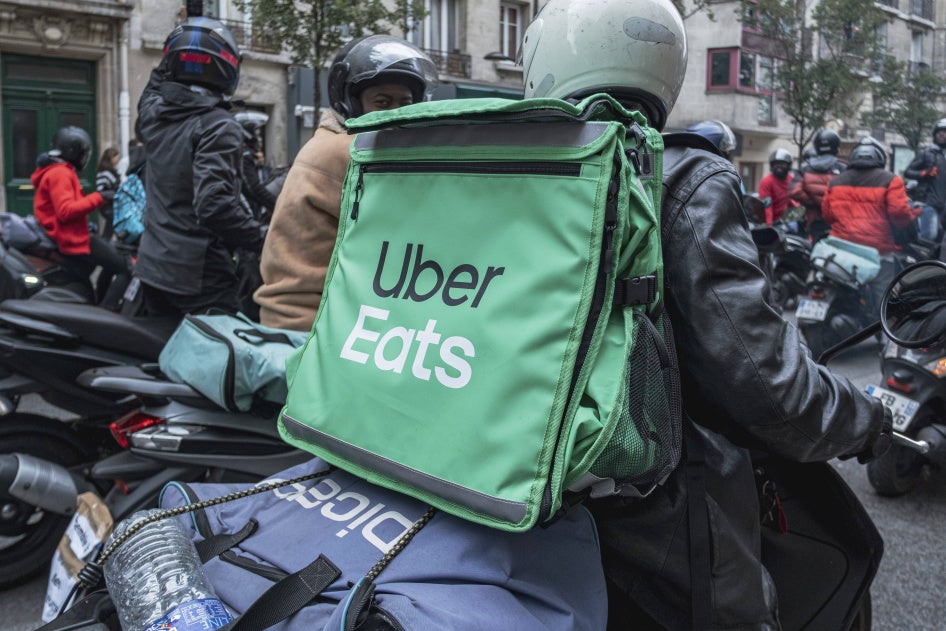
Every day, food-delivery workers cross Paris and Bordeaux in all weather, working long hours for pay well below France’s minimum wage. For most, this work provides their only source of income.
A new survey of around 1,000 workers in France who deliver food for companies such as Uber Eats and Deliveroo describes the consequences of platform or “gig” work.
The findings mirror what Human Rights Watch has documented in the United States, including in a survey of 127 platform workers in the state of Texas.
In France, 56 percent of platform workers reported going an entire day without a proper meal due to lack of money in the past year. In Texas, nearly two-thirds reported difficulty paying for food and groceries.
Platform workers take home only a fraction of what consumers pay, and bear costs for equipment, maintenance, insurance, and social security contributions, because most platform companies classify workers as self-employed. In Texas, where many workers use cars, expenses reduced pay by up to 70 percent to US$5.12 (€4.35) an hour, below the federal minimum wage of $7.25 (€6.16).
In France, while most workers use bikes or e-bikes, lowering transportation costs, three-quarters of respondents also said they rent access to someone else's app account, paying an average of €528 a month to an individual. For some, like migrant workers who lack secure immigration status and cannot register an account in their own name, these types of arrangements raise further risks.
On average, workers earned less than €4 an hour after expenses, well below France’s minimum wage of €11.65 an hour at the time of the survey.
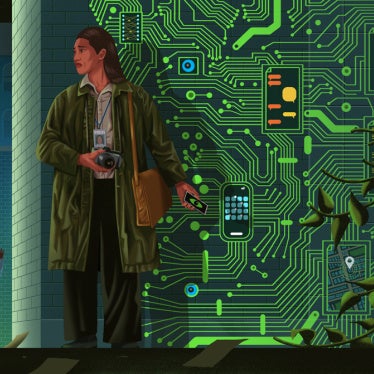
Workers in France described conditions similar to those Human Rights Watch documented: opaque algorithms, constant surveillance, fear of arbitrary deactivation, deteriorating health, and barriers to social protection that stem directly from their classification as self-employed.
These findings arrive at a critical moment as European Union member states begin implementing a 2024 EU directive designed to improve conditions for platform workers. Meanwhile, the International Labour Organization will soon deliberate on a new treaty for decent work in the platform economy.
Human Rights Watch calls on governments to establish a presumption of employment where platform companies exercise control over workers, guarantee pay that accounts for all time worked and costs, ensure access to healthcare and social security, and end arbitrary account deactivation. Regulating the platform economy is a matter of rights.