Human Rights Impacts of a China Belt and Road Project in Cambodia
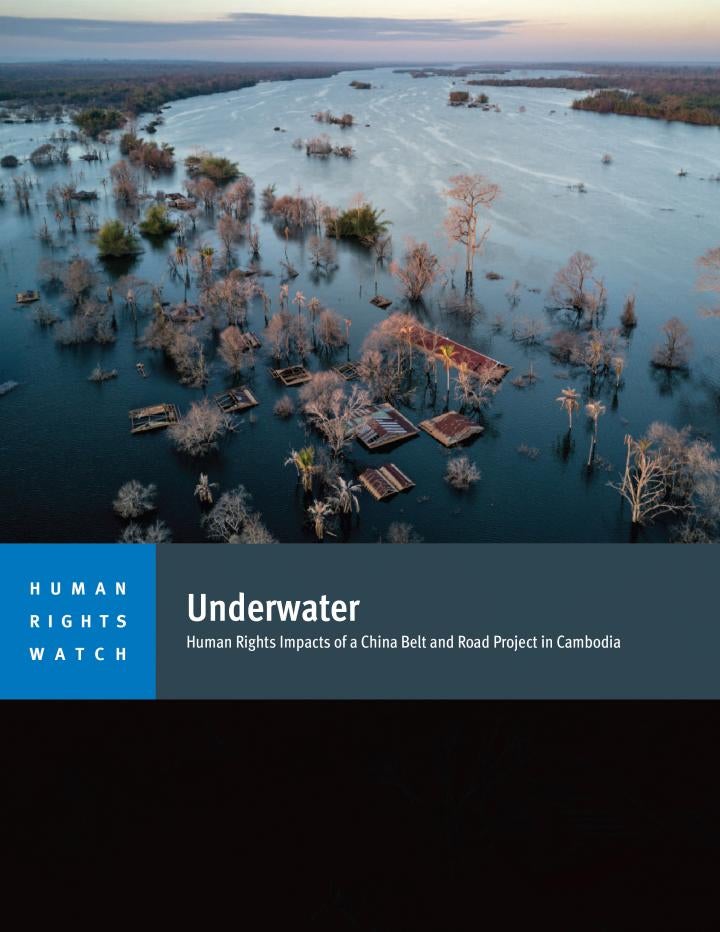
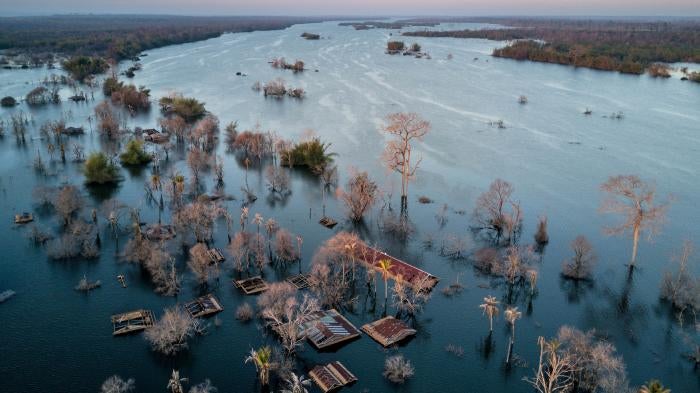
The 137-page report, “Underwater: Human Rights Impacts of a China Belt and Road Project in Cambodia,” documents economic, social, and cultural rights violations resulting from the Lower Sesan 2 dam’s displacement of nearly 5,000 people whose families had lived in the area for generations, as well as impacts on the livelihoods of tens of thousands of others upstream and downstream. Cambodian authorities and company officials improperly consulted with affected communities before the project’s start and largely ignored their concerns. Many were coerced into accepting inadequate compensation for lost property and income, provided with poor housing and services at resettlement sites, and given no training or assistance to secure new livelihoods. Other affected communities upstream and downstream of the dam received no compensation or assistance.
How China’s Long Reach of Repression Undermines Academic Freedom at Australia’s Universities
The 102-page report, “‘They Don’t Understand the Fear We Have’: How China’s Long Reach of Repression Undermines Academic Freedom at Australia’s Universities,” describes Chinese government surveillance of pro-democracy students from the mainland and Hong Kong in Australian universities. Students are broadly aware that such surveillance takes place, leaving them fearful. Many alter their behavior and self-censor to avoid threats and harassment from classmates, and being “reported on” to authorities back home.
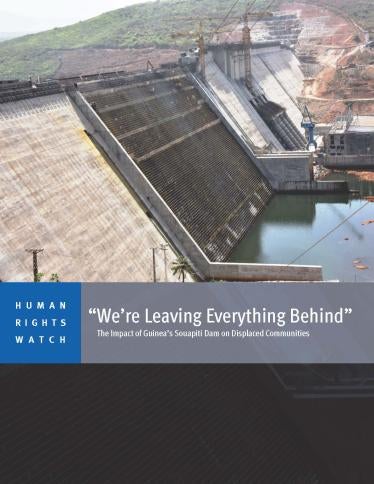
The Impact of Guinea’s Souapiti Dam on Displaced Communities
The 63-page report, “‘We’re Leaving Everything Behind,’ The Impact of Guinea’s Souapiti Dam on Displaced Communities,” documents how resettled communities, forced off their ancestral homes and farmlands, are struggling to feed their families, restore their livelihoods, and live with dignity.
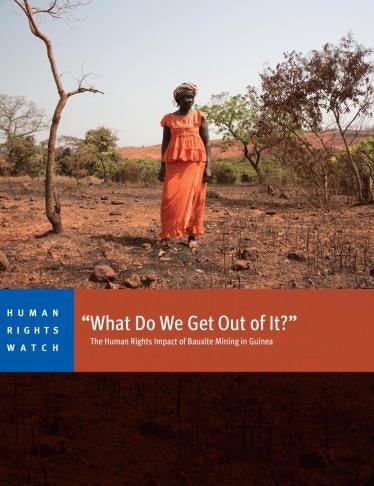
The Human Rights Impact of Bauxite Mining in Guinea
This report focuses on two mining projects that were Guinea’s two largest bauxite producers in 2017: La Société Minière de Boké (SMB), a joint venture linked to the world’s largest aluminum producer, China Hongqiao Group, that has expanded extremely rapidly since it began in 2015; and la Compagnie des Bauxites de Guinée (CBG), a decades-old company co-owned by multinationals Alcoa and Rio Tinto. Guinea’s government, which has transformed Guinea into the world’s third-largest exporter, should take immediate steps to better regulate companies and protect communities.
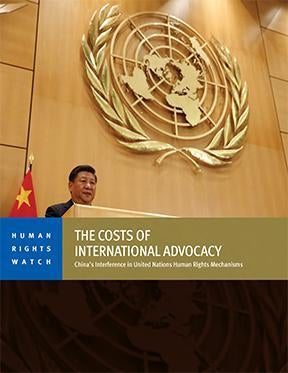
China’s Interference in United Nations Human Rights Mechanisms
This report details China’s efforts to harass independent activists, primarily those from China. Chinese officials have photographed and filmed activists on UN premises in violation of UN rules, and restricted travel by mainland activists to the UN Human Rights Council in Geneva. China has also used its membership on the Economic and Social Council’s Committee on Non-Governmental Organizations (NGOs) to block NGOs critical of China from being granted UN accreditation, and it has sought – and succeeded in – blacklisting accredited activists from participating in UN events.
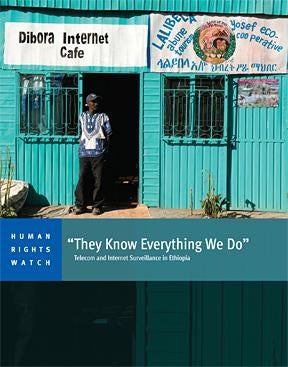
The 137 page report details the technologies the Ethiopian government has acquired from several countries and uses to facilitate surveillance of perceived political opponents inside the country and among the diaspora. The government’s surveillance practices violate the rights to freedom of expression, association, and access to information.
This 96-page report documents how the government and London-based African Minerals Limited forcibly relocated hundreds of families from verdant slopes to a flat, arid area in Tonkolili District. As a result, residents lost their ability to cultivate crops and engage in income generating activities that once sustained them.
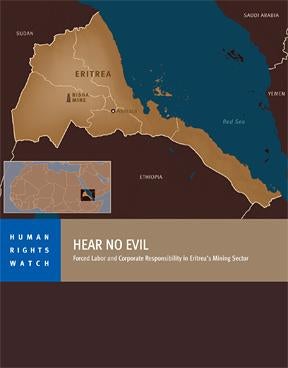
Forced Labor and Corporate Responsibility in Eritrea’s Mining Sector
The 29-page report describes how mining companies working in Eritrea risk involvement with the government’s widespread exploitation of forced labor. It also documents how Nevsun – the first company to develop an operational mine in Eritrea – initially failed to take those risks seriously, and then struggled to address allegations of abuse connected to its operations.
Labor Abuses in Zambia's Chinese State-owned Copper Mines
This 122-page report details the persistent abuses in Chinese-run mines, including poor health and safety conditions, regular 12-hour and even 18-hour shifts involving arduous labor, and anti-union activities, all in violation of Zambia’s national laws or international labor standards.
This 60-page report documents numerous violations of human rights by the Nepali authorities, particularly the police, against Tibetans involved in peaceful demonstrations in Kathmandu, including: unnecessary and excessive use of force; arbitrary arrest; sexual assault of women during arrest; arbitrary and preventive detention; beatings in detention; unlawful threats to deport Tibetans to China; restrictions on freedom of movement in the Kathmandu Valley; harassment of Tibetan and foreign journalists; and harassment of Nepali, Tibetan, and foreign human rights defenders.
China is increasingly using trade and diplomatic reprisals to silence human rights criticism, and governments around the world, when thus forced to choose between principle and profit, are putting business first. The perceived conflict between human rights and trade was perhaps best symbolized by U.S.