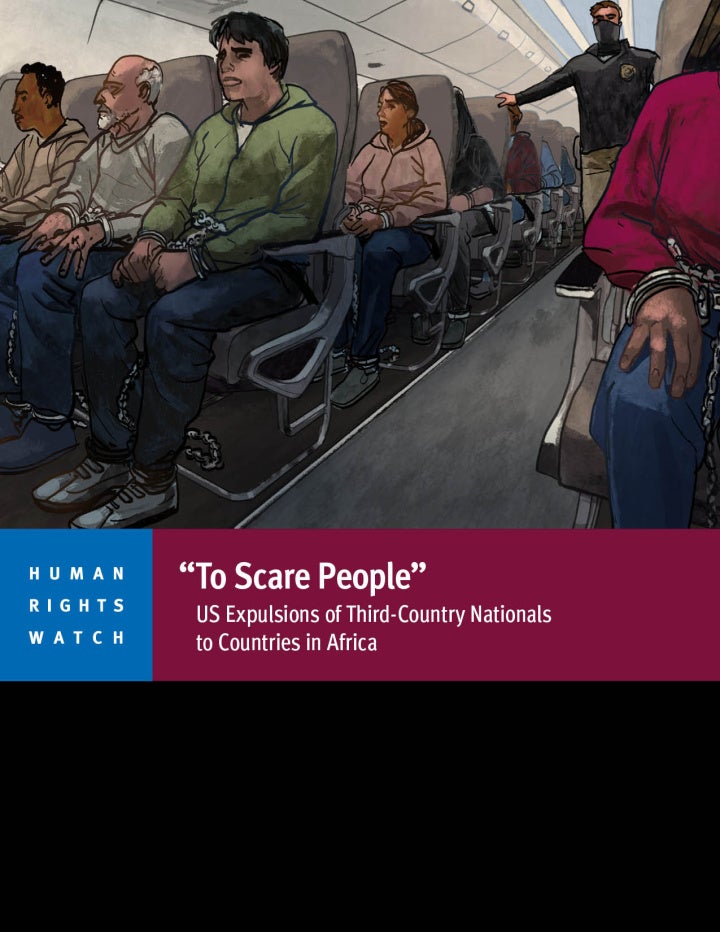
US Expulsions of Third-Country Nationals to Countries in Africa
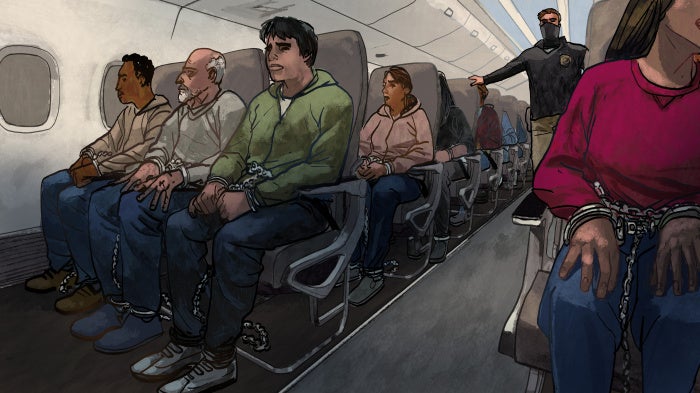
The 125-page report, “‘To Scare People’: US Expulsions of Third-Country Nationals to Countries in Africa,” documents that US authorities denied the more than 500 people transferred to third countries a meaningful chance to contest their removals or to articulate their fears of being removed to these countries. Some countries arbitrarily detained people they had accepted, and some have sent people onward to the risk of persecution or torture in their home countries, violating the international law principle of nonrefoulement.
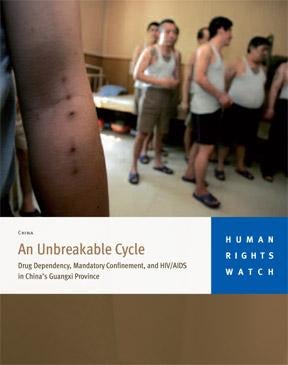
Drug Dependency Treatment, Mandatory Confinement, and HIV/AIDS in China’s Guangxi Province
In China, illicit drug use is an administrative offense and Chinese law dictates that drug users “must be rehabilitated.” In reality, police raids on drug users often drive them underground, away from methadone clinics, needle exchange sites, and other proven HIV prevention services.
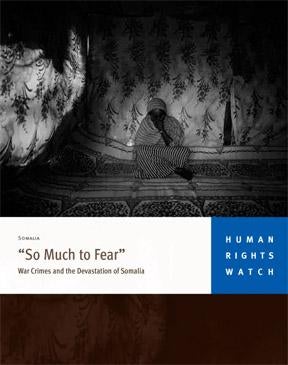
The 104-page report, "So Much to Fear: War Crimes and the Devastation of Somalia," describes how the Somali Transitional Federal Government (TFG), the Ethiopian forces that intervened in Somalia to support it and insurgent forces have committed widespread and serious violations of the laws of war.
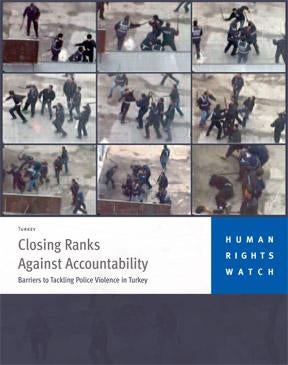
This 80-page report documents 28 cases of police abuse against members of the public since the start of 2007, and examines official investigations of police conduct in those instances. The cases include fatal and non-fatal shootings by the police; ill-treatment and excessive use of force by police against demonstrators; and ill-treatment during or following identity checks.
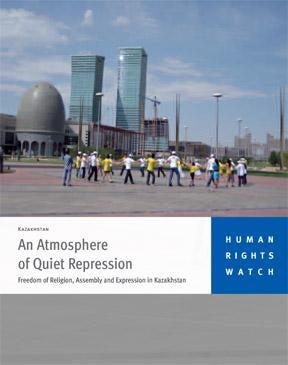
Freedom of Religion, Assembly and Expression in Kazakhstan
The 55-page report is being released before the OSCE Ministerial Council meeting on December 4 and 5 in Helsinki. The report documents Kazakhstan's extensive restrictions on freedom of religion, expression, and assembly, which are inconsistent with its international obligations on human rights.
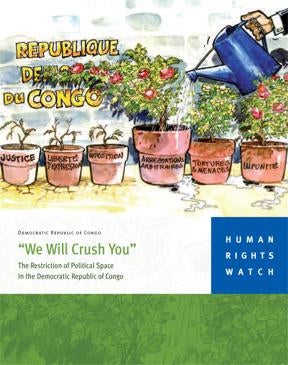
The Restriction of Political Space in the Democratic Republic of Congo
This 96-page report documents the Kabila government's use of violence and intimidation to eliminate political opponents. Human Rights Watch found that Kabila himself set the tone and direction by giving orders to "crush" or "neutralize" the "enemies of democracy," implying it was acceptable to use unlawful force against them.
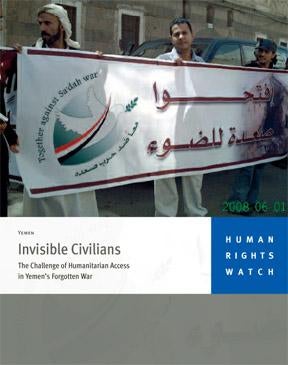
The Challenge of Humanitarian Access in Yemen’s Forgotten War
This 50-page report documents how the Yemeni authorities have severely restricted humanitarian access to its northernmost governorate, Sa’da, ravaged by four years of armed conflict. As of October 2008, up to 70,000 people in remote areas and towns remained outside the reach of aid agencies.
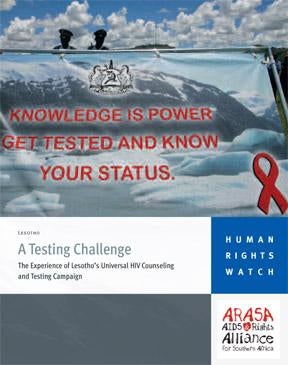
The Experience of Lesotho’s Universal HIV Counseling and Testing Campaign
This 60-page report found that the Know Your Status (KYS) campaign, begun in 2005 with the goal of testing 1.3 million people, was underfunded and had tested only 25,000 people by August 2007, four months before the campaign ended. Ambitious goals to train and pay thousands of lay counselors and expand support groups for people living with HIV were largely sidelined.
Over the past seven years, the US government’s consistent disregard for human rights in fighting terrorism has diminished America’s moral authority, set a negative example for other governments, and undermined the goal of reducing anti-American militancy around the world.
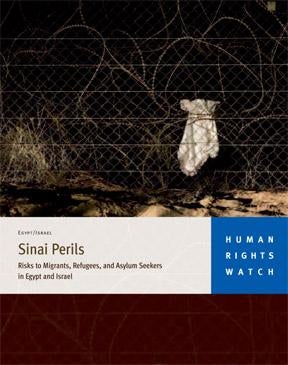
Risks to Migrants, Refugees, and Asylum Seekers in Egypt and Israel
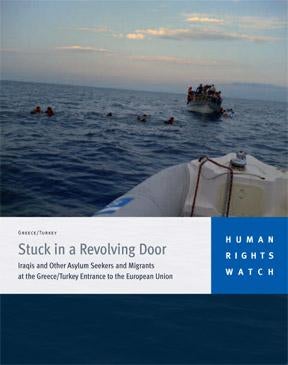
In this 90-page report, Human Rights Watch called on Egypt to halt the use of lethal force against border crossers and all deportations of persons to countries where they risk persecution or ill-treatment. Israel should halt forced returns of migrants to Egypt, where they face military court trials and possible unlawful deportation to their countries of origin.
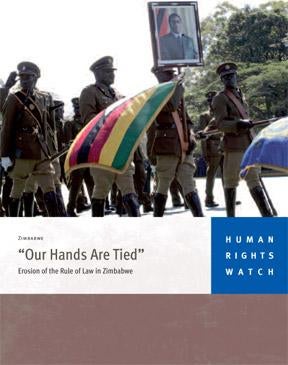
This 47-page report documents how ZANU-PF has compromised the independence and impartiality of judges, magistrates and prosecutors and transformed the police into an openly partisan and unaccountable arm of ZANU-PF. The report also documents how police routinely and arbitrarily arrest and detain MDC activists, using harassment and detention without charge as a form of persecution.
This year's annual meeting of states parties to the International Criminal Court (ICC) comes just a few months after two important anniversaries: ten years since the adoption of the ICC statute and five years since the start of the court's operations. This memorandum identifies a series of challenges the court now faces as it carries out its mandate to bring justice for the world's worst crimes.
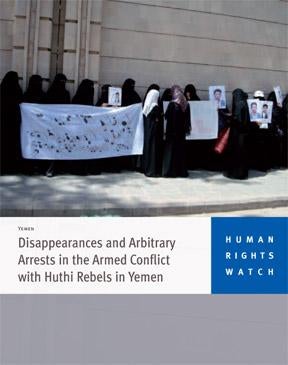
This 47-page report documents 62 cases of unlawful and arbitrary arrest in connection with the conflict in northern Yemen that since 2004 has periodically erupted into heavy clashes. Yemeni human rights groups have credibly documented hundreds of cases of unlawful arrests, and in August 2008 the government spoke of more than 1,200 political prisoners.