US Expulsions of Third-Country Nationals to Countries in Africa
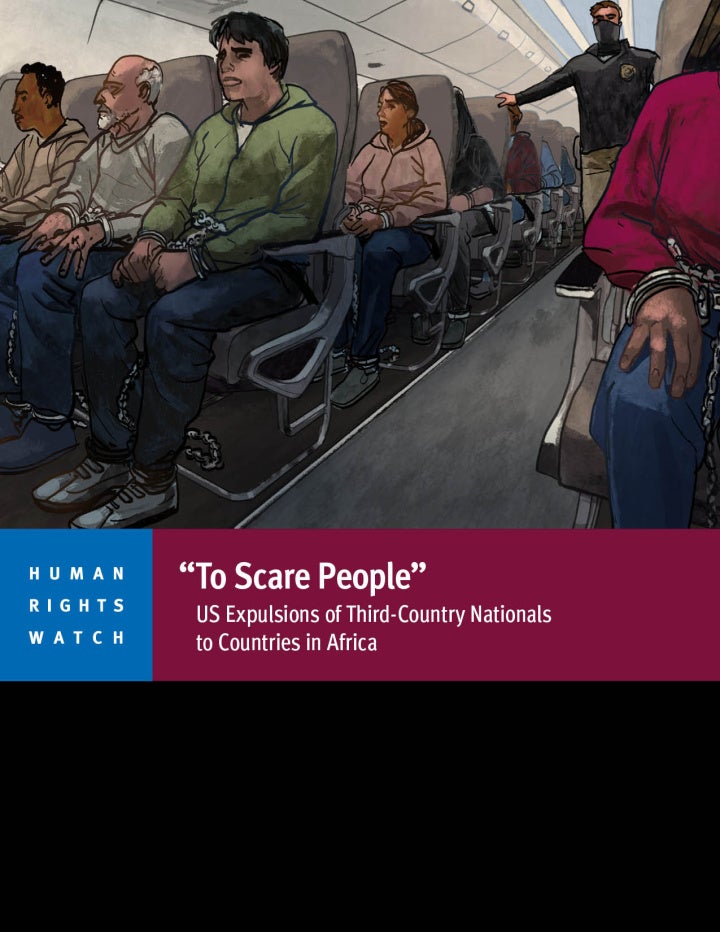
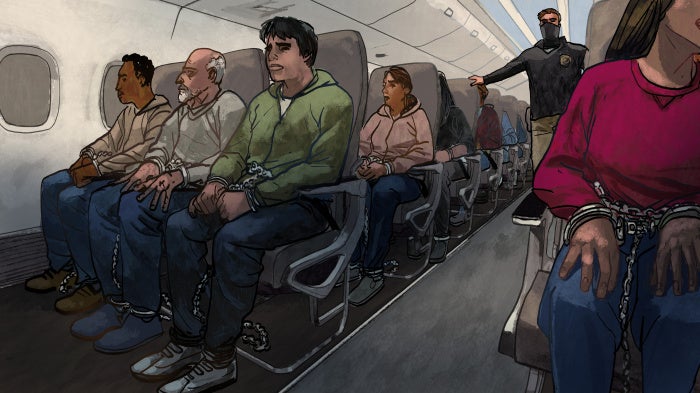
The 125-page report, “‘To Scare People’: US Expulsions of Third-Country Nationals to Countries in Africa,” documents that US authorities denied the more than 500 people transferred to third countries a meaningful chance to contest their removals or to articulate their fears of being removed to these countries. Some countries arbitrarily detained people they had accepted, and some have sent people onward to the risk of persecution or torture in their home countries, violating the international law principle of nonrefoulement.
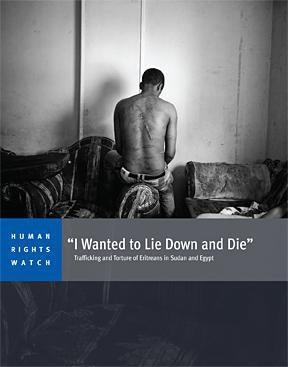
Trafficking and Torture of Eritreans in Sudan and Egypt
This 79-page report documents how, since 2010, Egyptian traffickers have tortured Eritreans for ransom in the Sinai Peninsula, including through rape, burning, and mutilation.
Ill-Treatment of Sub-Saharan African Migrants in Morocco
This 79-page report found that beatings and other abuses occurred as Moroccan security forces took custody of Sub-Saharan migrants who had tried unsuccessfully to reach the Spanish enclave of Melilla, or—prior to September 2013—as they were rounding up migrants without any semblance of due process to expel them to Algeria.
Iran’s Violation of Afghan Refugee and Migrant Rights
This 124-page report documents how Iran’s flawed asylum system results in a detention and deportation process with no due process or opportunity for legal appeal. Iranian officials have in recent years limited legal avenues for Afghans to claim refugee or other immigration status in Iran, even as conditions in Afghanistan have deteriorated.
The Denial of Work Authorization and Assistance for Asylum Seekers in the United States
The 56-page report documents the hardships faced by asylum seekers, many of whom suffered egregious abuses in their home countries, as a consequence of being denied work authorization. The Immigration and Nationality Act (INA) should be amended to remove the bar to employment for asylum seekers with non-frivolous claims, the groups said.
Detention, Abuse, and Neglect of Migrant Children in Indonesia
This 86-page report details Indonesia’s poor treatment of migrant and asylum-seeking children. They arrive in Indonesia after fleeing persecution, violence, and poverty in Somalia, Afghanistan, Pakistan, Burma, and elsewhere. Indonesia detains hundreds of migrant and asylum-seeking children each year without giving them a way to challenge their detention.
The 52-page report documents frequent stops of people who appear to be foreigners, unjustified searches of their belongings, insults, and, in some cases, physical abuse. Many are detained for hours in police stations pending verification of their legal status.
Abuses against Internally Displaced in Mogadishu, Somalia
The 80-page report details serious violations, including physical attacks, restrictions on movement and access to food and shelter, and clan-based discrimination against the displaced in Mogadishu from the height of the famine in mid-2011 through 2012.
Exploitation of Migrant Workers Ahead of Russia’s 2014 Winter Olympic Games in Sochi
This 67-page report documents exploitation of migrant workers on key Olympic sites, including the Central Olympic Stadium, the Main Olympic Village, and the Main Media Center.
Summary Returns of Unaccompanied Migrant Children and Adult Asylum Seekers from Italy to Greece
This report documents the failure of Italian border police at the Adriatic ports of Ancona, Bari, Brindisi, and Venice to screen adequately for people in need of protection, in violation of Italy’s legal obligations. Human Rights Watch interviewed 29 children and adults who were summarily returned to Greece from Italian ports, 20 of them in 2012.
The 60-page report documents the experiences of dozens of rights defenders, journalists and bloggers, and lawyers whom security and intelligence forces targeted because they spoke out against the government.
Migrant Women’s Access to Protection for Family Violence in Belgium
This 59-page report found three major protection gaps for migrant women who experience domestic violence in that country. Women who migrate to Belgium to join a husband or partner may face deportation if they report the violence during the period when their status is being confirmed, as do undocumented migrant women.
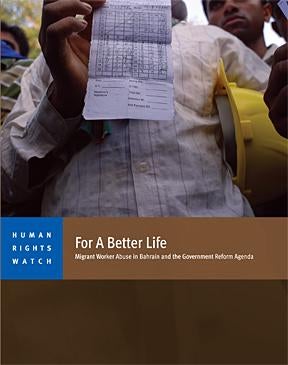
Migrant Worker Abuse in Bahrain and the Government Reform Agenda
This 123-page report documents the many forms of abuse and exploitation suffered by migrant workers in Bahrain and details the government’s efforts to provide redress and strengthen worker protections. Bahraini authorities need to implement labor safeguards and redress mechanisms already in place and prosecute abusive employers, Human Rights Watch said.
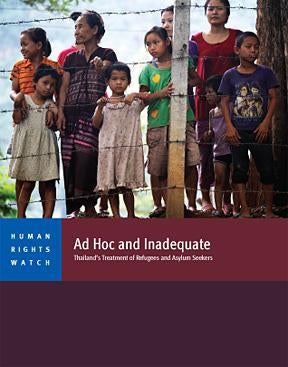
Thailand’s Treatment of Refugees and Asylum Seekers
This 143-page report finds that Thai refugee policies are not grounded in law and cause refugees of all nationalities to be exploited and unnecessarily detained and deported. The report focuses on the plight of Burmese refugees, the largest current refugee group in Thailand.