Arbitrary Detention, Killings, and Forced Recruitment by the M23 and the Rwanda Defence Force
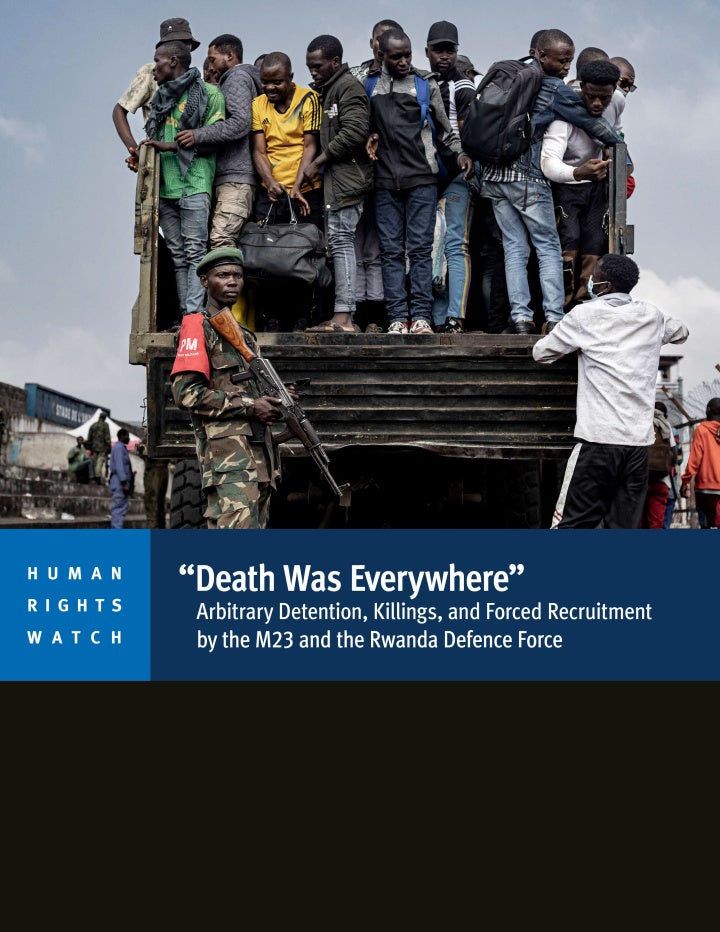
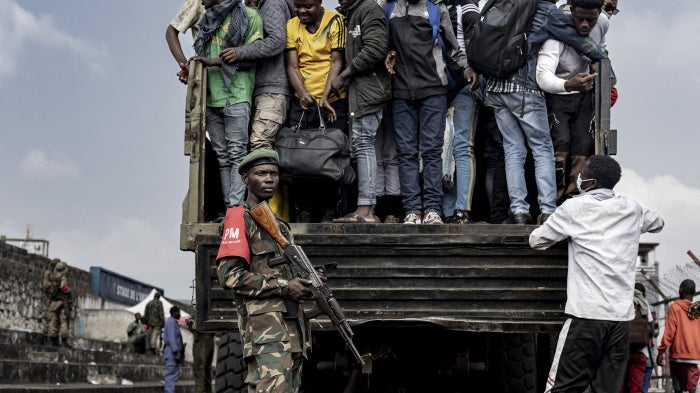
The 78-page report, “‘Death Was Everywhere’: Arbitrary Detention, Killings, and Forced Recruitment by the M23 and the Rwanda Defence Force,” documents large-scale roundups and arrests in North and South Kivu provinces in eastern Congo, as well as grave abuses against detainees at the Rumangabo and Tshanzu training camps in North Kivu, between mid-2024 and December 2025. M23 fighters, backed by Rwandan military personnel, have committed murder, torture, corporal punishment, and used forced labor and child soldiers, researchers found. These abuses are war crimes and should be investigated as possible crimes against humanity.
An array of violent human rights abuses committed by public security units have become institutionalized in Mexican society. Americas Watch concludes that this pattern of excessive violence can only mean that either the Mexican government has adopted a policy of tolerating such behavior, or it has lost control over its police, security and prosecutorial agencies.
A comprehensive investigation of brutal human rights violations told in chillingly dispassionate style, Human Rights in Iraq describes how the Ba’ath regime subjects Iraqi citizens to forced relocation and deportation, arbitrary arrest and detention, torture, “disappearance,” and summary political execution.
The Ghanaian government, the Provisional National Defence Council(PNDC), has attempted to crack down on churches and other religious organizations through the imposition of a controversial new law. PNDC Law 221 requires all religious bodies to register with the Ministry of the Interior, so as to make them "accountable" to the government.
A small group of rebel insurgents attacked the Liberian border town of Butuo in late December 1989, killing an undetermined number of soldiers and immigration officials. The government of Liberia responded to the attack with a show of force, sending two battalions to Nimba County, where Butuo is located.
As Cuba approaches the 36th anniversary of its revolution, it is engaged in an extended crackdown on independent peaceful activity and its human rights practices continue to be subject to the whim of the executive. Among the targets of this crackdown are newly-emerged human rights groups, whose establishment in recent years had given the appearance of greater openness in Cuba.
Afghanistan has been the scene of some of the most serious human rights violations on record. About one half of the country's prewar population is either in emigration, or internally displaced, or dead. Most of the biolations documented in three previous Helsinki/Asia Watch reports continued in 1987, despite the fact that prospects for peace in 1988 seem brighter than ever before.
This 33-page report by Americas Watch and the National Coalition for Haitian Refugees finds that, far from encouraging political pluralism, the Haitian goverment is stiffling opposotion political parties; shutting down the independent press; attempting to silence the Church; and terrorizing members of the inteligentsia who have attempted to speak out about Haiti's critical economic and social prob
This 25 page report by the National Coalition for Haitian Refugees, Americas Watch, and the Lawyers Committee for International Human Rights examines human rights conditions in 1984, a year when respect for human rights continued to be poor, and in some respects deteriorated significantly.
The Committee to Protect Journalists and the the Americas Watch mission to Haiti from August 12-15,1984 to investigate a recent crackdown on the press.