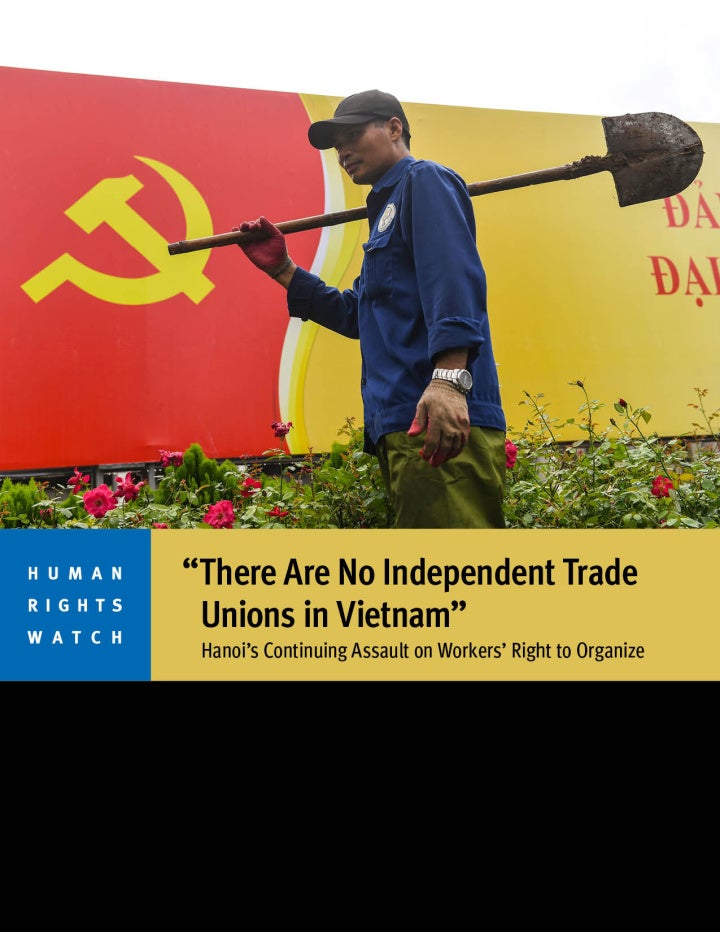
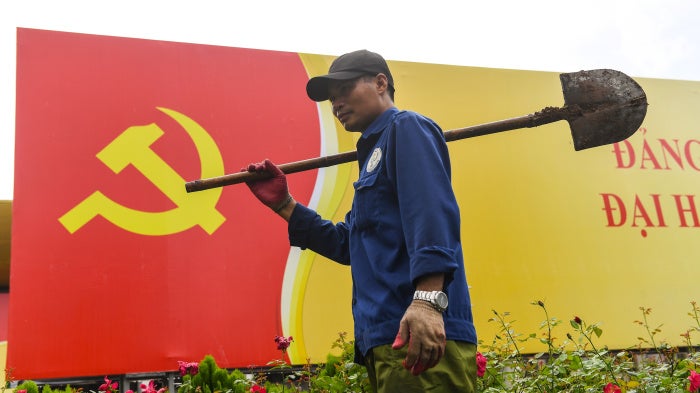
Hanoi’s Continuing Assault on Workers’ Right to Organize
The 49-page report, “There Are No Independent Trade Unions in Vietnam: Hanoi’s Continuing Assault on Workers’ Right to Organize,” documents the Vietnamese governments’ continuing useof vague, overbroad criminal laws to suppress the activities of human rights and labor rights defenders, while maintaining an atmosphere of repression to thwart independent labor organizing. The government has issued decrees and articles in state-run media that reaffirm that all labor organizations in Vietnam are under the government’s authority, and portray independent trade unions as dangerous, anti-state entities.
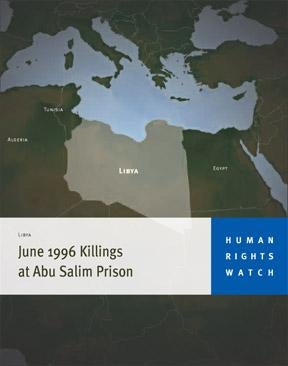
In the summer of 1996, stories began to filter out of Libya about a mass killing in Tripoli’s Abu Salim prison. The details remained scarce, and the government initially denied that an incident had taken place. Libyan groups outside the country said up to 1,200 prisoners had died.
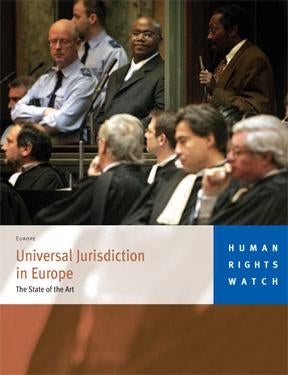
This 101-page report looks beyond shrill debates about the concept and examines how it is working in practice. Based on interviews with judges, investigators, lawyers and officials in eight European countries, the report describes how some governments, including Britain, Denmark, Norway and the Netherlands, have created special war crimes units to conduct investigations across the globe.
This paper documents a drastic deterioration in the human rights situation on the Chad side of the Chad-Sudan border, where Sudanese government-backed “Janjaweed” militias raid at will, and Darfur rebels opposed to Khartoum forcibly recruit Sudanese refugees, including children, to serve as rebel fighters.
On March 29, 2006 former Liberian President Charles Taylor was surrendered to the U.N.-backed Special Court for Sierra Leone. Taylor’s surrender for trial provides an extraordinary opportunity for the people of Sierra Leone and West Africa to see justice done for atrocities committed during Sierra Leone’s armed conflict since 1996.
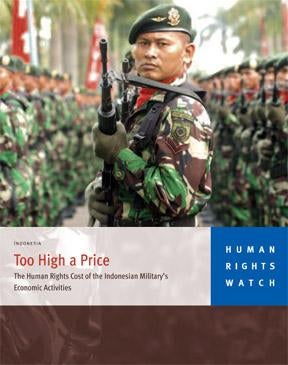
The Human Rights Cost of the Indonesian Military’s Economic Activities
This 136-page report is the most comprehensive account to date of the harmful effect on civilians of the armed forces' involvement in business. Human Rights Watch calls on the Indonesian government to ban all military businesses, reform the budget process, and hold military personnel accountable for crimes.
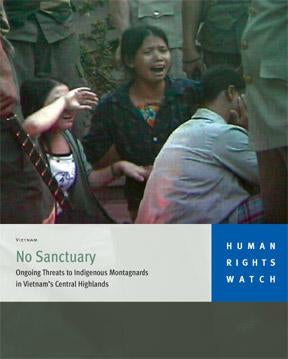
Ongoing Threats to Indigenous Montagnards in Vietnam’s Central Highlands
Drawing on eyewitness accounts and published sources, this 55-page report provides fresh information about ongoing religious and political persecution of Montagnards, or indigenous communities, in Vietnam’s Central Highlands.
The Special Criminal Court on the Events in Darfur
This briefing paper examines the first year of the special court's operations, and sets out the major roadblocks to the prosecution of war crimes in Darfur. The courts were established by the Sudanese government to deal with the widespread crimes in Darfur.
Chronology of the case against Zhao Yan, the Chinese assistant at the New York Times Beijing bureau who has been accused of leaking state secrets and of lesser fraud charges. The trial is expected to begin June 8.
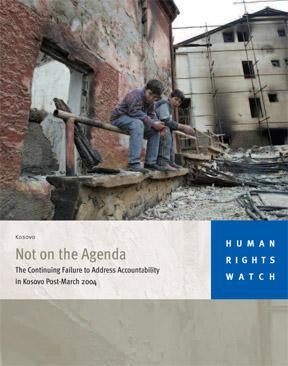
The Continuing Failure to Address Accountability in Kosovo Post-March 2004
This 74-page report focuses on the criminal justice response to the March 2004 violence in the province. At that time, widespread rioting across the province, involving more than 50,000 people, left hundreds of minorities injured and thousands displaced from their homes.
This 36-page report documents human rights abuses against civilians that were committed by state security forces, their allied militias and the rebel New Forces (Forces Nouvelles) between November and March. These armed groups have preyed on civilians through intimidation and outright force.
In this brief initial paper, Human Rights Watch seeks to contribute to the ongoing discussions about how the Human Rights Council should function and develop its work. The first year of the Council will be one of transition, but also a unique occasion to build a principal human rights organ that delivers results in the short, medium, and long term.
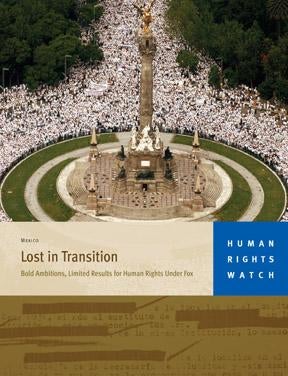
Bold Ambitions, Limited Results for Human Rights Under Fox
This 150-page <a href="http://hrw.org/reports/2006/mexico0506/"> report </a> documents the successes and failures of Fox’s human rights policies. The report offers detailed recommendations for his successor who will be chosen in the July presidential election on how to build upon the Fox agenda, while avoiding its significant shortcomings.