Hanoi’s Continuing Assault on Workers’ Right to Organize
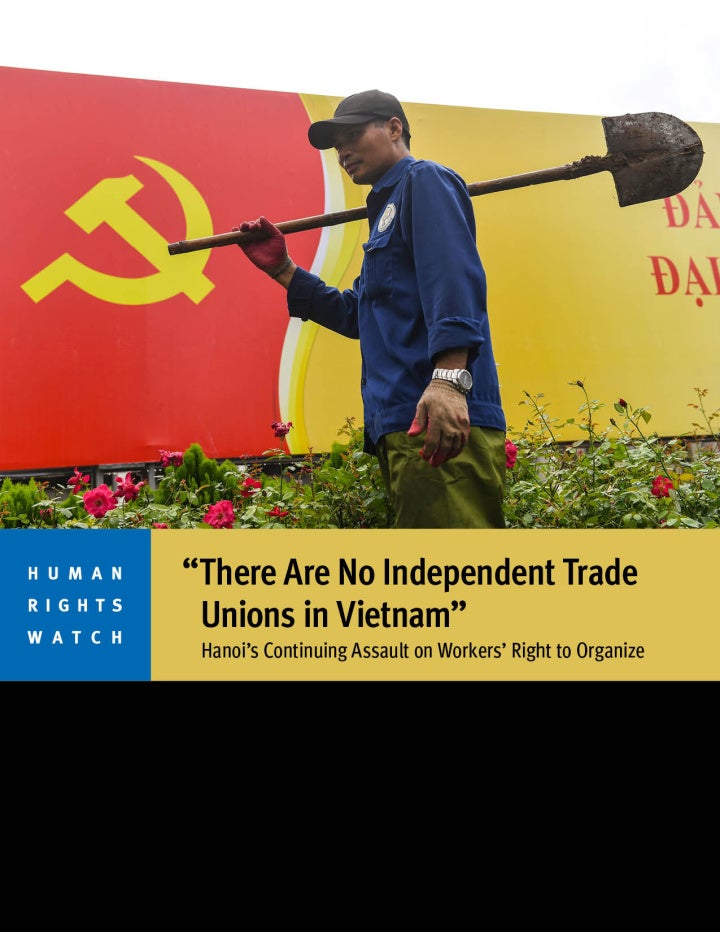
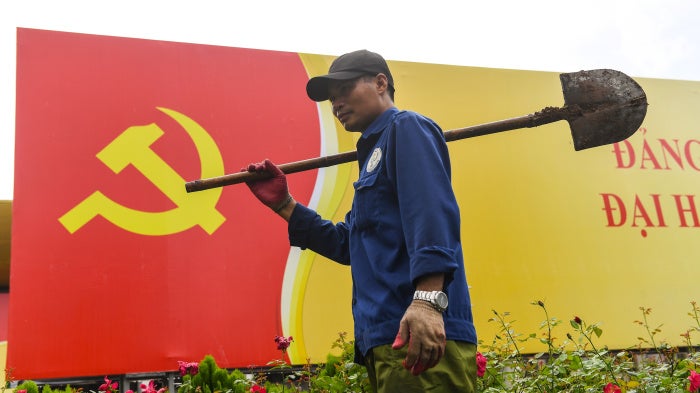
The 49-page report, “There Are No Independent Trade Unions in Vietnam: Hanoi’s Continuing Assault on Workers’ Right to Organize,” documents the Vietnamese governments’ continuing useof vague, overbroad criminal laws to suppress the activities of human rights and labor rights defenders, while maintaining an atmosphere of repression to thwart independent labor organizing. The government has issued decrees and articles in state-run media that reaffirm that all labor organizations in Vietnam are under the government’s authority, and portray independent trade unions as dangerous, anti-state entities.
This report is a culmination of five years of work gathering evidence of the epidemic levels of violence against women and rampant sex discrimination around the world.
Law and Dissent in the Socialist Republic of Vietnam
Vietnam has entered an era of rapid economic and social transformation, heralded by the opening of its economy, its entry into ASEAN and the resumption of diplomatic relations with the U.S. At the same time, the government and the Vietnam Communist Party have sought to maintain firm political control.
Report by Defense Lawyers Charges Inmates Were Deliberately Massacred
The Algerian government covered up how approximately 100 inmates died during thesuppression of an uprising at Serkadji prison in February 1995, the bloodiest incident during the first three years of civil strife in the country.
Kuwait practices a system of institutionalized discrimination against its residents known as Bedoons, longtime inhabitants who have been denied Kuwaiti citizenship and are now being rendered stateless.
The Croatian Army Offensive in Western Slavonia and its Aftermath
On May 1, 1995, Croatian Army troops launched an offensive aimed at regaining control of Serb-held lands in western Slavonia, an area designated as a "United Nations Protected Area" (UNPA). By May 4, Croatian government troops had recaptured the area.
The creation of a system of faceless courts to prosecute those accused of terrorism—justified as a temporary emergency measure—stands out as anti-democratic and in violation of basic human rights principles. Together with the impunity granted to government forces who torture, rape, and murder citizens, justice under Fujimori is two-faced: benevolent to soldiers, punitive to civilians.
Millions of workers in Pakistan are held in contemporary forms of slavery. Throughout the country employers forcibly extract labor from adults and children, restrict their freedom of movement, and deny them the right to negotiate the terms of their employment. Employers coerce such workers into servitude through physical abuse, forced confinement, and debt-bondage.
This report focuses on Syria’s state security court and the continuing trials of individuals accused of membership in unauthorized political groups. It also examines the practice of torture in Syria, and the pressure and punishment placed on political prisoners after release.
On May 1, 1995, Croatian Army troops launched an offensive aimed at regaining control of Serb-held lands in western Slavonia, an area designated as a "United Nations Protected Area." By May 4, Croatian government troops had recaptured the area. During the week of May 8, we traveled to Croatia to assess the behavior of Croatian troops during and immediately after the offensive.
A Case-Study of Military Repression in Southeastern Nigeria
Two years after the annulment of the June 1993 presidential election, which was widely viewed to have been won by Chief Abiola, the Nigerian political climate was volatile and human rights violations pervasive. The repressive tactics of the government of Gen.
Rights Abuses Follow Renewed Foreign Aid Commitments
Since December 1994, there has been a notable deterioration in the human rights situation in Kenya, evidenced by Pres. Moi's crackdown against human rights activists, opposition politicians and internally displaced persons.
Gao Yu, 51, one of China’s most prominent journalists, was sentenced to six years in prison on November 10, 1994, for “illegally providing state secrets to institutions outside [China’s] borders” in a series of four articles in Mirror Monthly and Overseas Chinese Daily, both Hong Kong-based publications.
Bolivia, one of the world’s leading producers of coca leaf and refined cocaine, is also the largest recipient of U.S. counter-narcotics aid. The aid has led to new legislation, institutions and antinarcotics strategies in Bolivia that are shaped by U.S. concerns and dependent on U.S. funding.
Throughout Pakistan employers forcibly extract labor from adults and children, restrict their freedom of movement, and deny them the right to negotiate the terms of their employment. Employers coerce such workers into servitude through physical abuse, forced confinement, and debt-bondage.