Hanoi’s Continuing Assault on Workers’ Right to Organize
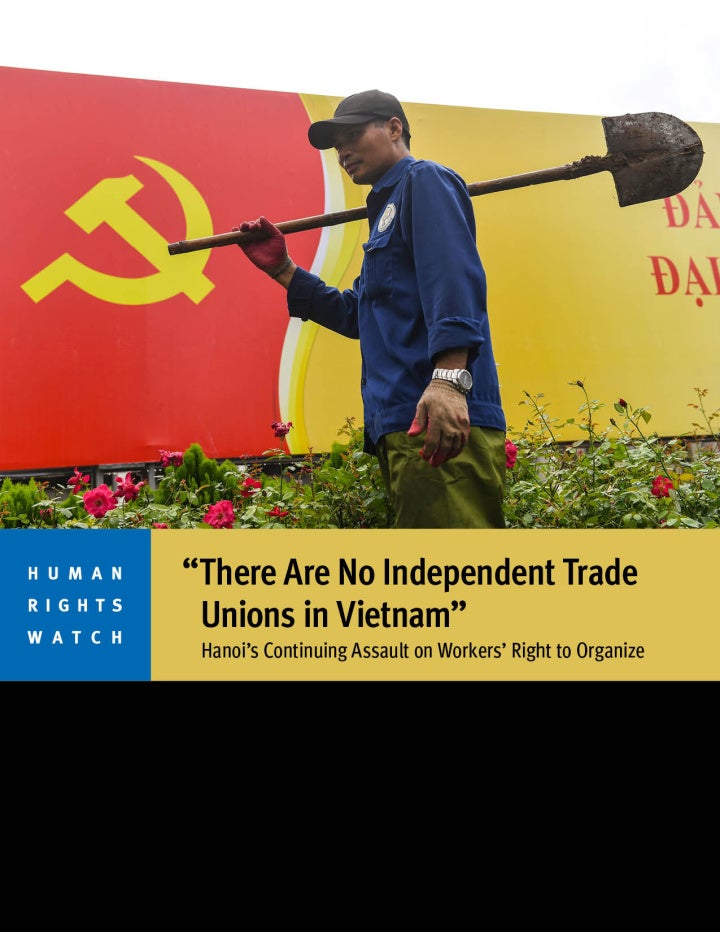
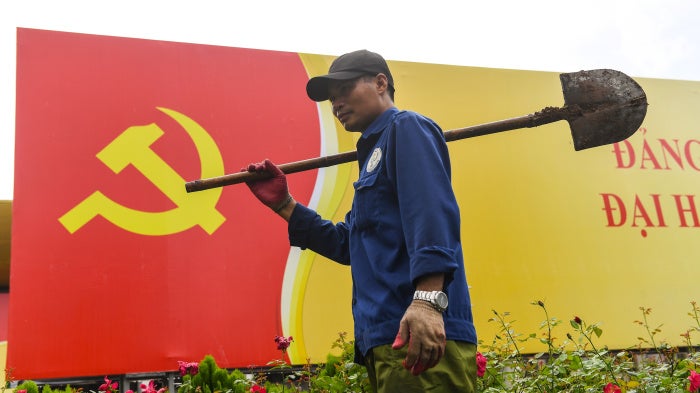
The 49-page report, “There Are No Independent Trade Unions in Vietnam: Hanoi’s Continuing Assault on Workers’ Right to Organize,” documents the Vietnamese governments’ continuing useof vague, overbroad criminal laws to suppress the activities of human rights and labor rights defenders, while maintaining an atmosphere of repression to thwart independent labor organizing. The government has issued decrees and articles in state-run media that reaffirm that all labor organizations in Vietnam are under the government’s authority, and portray independent trade unions as dangerous, anti-state entities.
Human Rights Violations and the Faceless Courts in Peru
The incarceration of hundreds of innocent prisoners charged or convicted of terrorist crimes they did not commit is now an open secret in Peru. While there may be disagreement about the numbers unjustly prosecuted by Peru's "faceless courts," no one in Peru, including the architect of the court system, President Alberto Fujimori, denies that the problem exists.
Denial of the Right of Refugees to Return to the Krajina
One year ago, on August 4, 1995, the Croatian Army launched Operation Storm, an offensive to retake the Krajina region, which had been controlled by separatist ethnic Serbs since early 1991.
In the aftermath of rioting on July 27, 1996, in Jakarta, a massive crackdown was conducted by the Indonesian internal security apparatus, targeting young student activists suspected of involvement in organizations collectively branded by the army as the "new PKI" [Indonesian Communist Party].
Maquiladoras, or export-processing factories, along the U.S.-Mexico border account for over US billion in export earnings for Mexico and employ over 500,000 workers.
The region of North Kivu in eastern Zaire has been the site of recurrent interethnic violence since 1992, often carried out with the complicity of Zairian regional and national leaders and the Zairian security forces.
Since late March 1993, following a series of stabbings inside Israel, a general policy of "closure" — the term referring to Israel's sealing of the West Bank and Gaza — has been in effect in the occupied territories.
China is increasingly using trade and diplomatic reprisals to silence human rights criticism, and governments around the world, when thus forced to choose between principle and profit, are putting business first. The perceived conflict between human rights and trade was perhaps best symbolized by U.S.
The major social and structural upheavals in Hungarian society since the collapse of communism, coupled with increasingly open discrimination, have had a disproportionately large and negative impact on Roma, whose low social status, lack of access to education, and isolation make them relatively unable to defend themselves and their interests.
The impact of crime control policies on minorities is among the most important, disturbing and contentious social issues facing the United States. Overwhelming data establish the striking proportion of African-Americans entangled in the criminal justice system—on any given day one in three young black American males is either in prison or jail, on probation or parole.
Roma in the Czech Republic Foreigners in Their Own Land
Since 1989, Czech authorities have failed to adequately protect Roma from the ever-increasing danger of racist attacks. When attacks do occur, Roma are often denied equal treatment before the law, a direct violation of both Czech and international law.
On May 7, 1992, an Egyptian administrative court decided to uphold last year's decree dissolving the Egyptian branch of the Arab Women's Solidarity Association (AWSA), a prominent women's rights organization. The court refused to grant an injunction that would have allowed AWSA to continue operating while it awaits the outcome an appeal on the merits of the government decree.
Macedonia has taken some important steps toward democratization since declaring its independence from the Yugoslav federation in 1991. Substantive reform has opened the door to the European institutions and laid the foundation for a multi-party system based on the rule of law. Nevertheless, some serious problems remain.
The fierce struggle for power between Bangladesh's main political parties has fostered a situation of lawlessness and civil strife in which wanton acts of violence and intimidation by both the former ruling party, the Bangladesh Nationalist Party, backed by security forces, and the opposition parties, have become routine features of the political process.
In 1995 alone, there were at least 181 reported attacks against Roma or foreigners in the Czech Republic and many other assaults go unreported. One murder in particular, that of Tibor Berki in May 1995, incited a public debate about racism and prompted the government to take more forceful measures.