Hanoi’s Continuing Assault on Workers’ Right to Organize
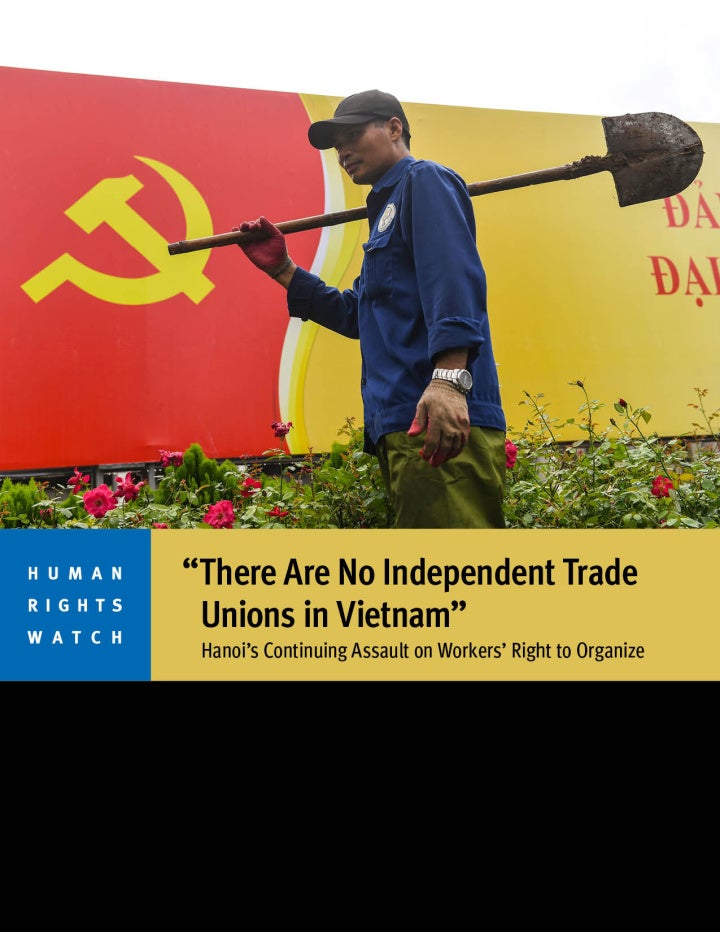
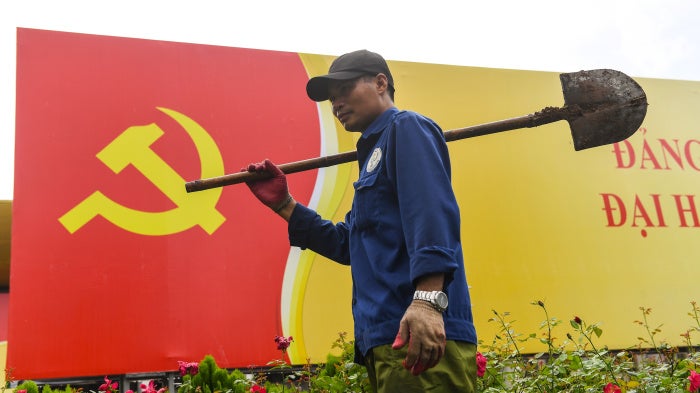
The 49-page report, “There Are No Independent Trade Unions in Vietnam: Hanoi’s Continuing Assault on Workers’ Right to Organize,” documents the Vietnamese governments’ continuing useof vague, overbroad criminal laws to suppress the activities of human rights and labor rights defenders, while maintaining an atmosphere of repression to thwart independent labor organizing. The government has issued decrees and articles in state-run media that reaffirm that all labor organizations in Vietnam are under the government’s authority, and portray independent trade unions as dangerous, anti-state entities.
The concept of smart (i.e., self-destructing) mines certainly has humanitarian allure. In theory, a mine that blows itself up in a relatively short period of time is preferable to a mine that lasts for decades, and should pose less danger to civilians.
Torture in Egypt is a widespread and persistent phenomenon. Security forces and the police routinely torture or ill-treat detainees, particularly during interrogation. In most cases, officials torture detainees to obtain information and coerce confessions, occasionally leading to death in custody. In some cases, officials use torture detainees to punish, intimidate, or humiliate.
A Human Rights Watch Briefing Paper, February 24, 2004
After the November 23, 2003 revolution, leading to the formation of a new government and the election of Mikheil Saakashvili as president, an opportunity has opened to make real progress on human rights in Georgia. The new government must take up this opportunity by making respect for human rights the core of its reform program.
Topical Digests of the Case Law of the ICTR and the ICTY
This 285-page book organizes the tribunals’ decisions by topic, including genocide, crimes against humanity, war crimes, individual criminal responsibility, command responsibility and sentencing.
A Human Rights Watch Briefing Paper , February 2004
The purpose of this briefing paper is to outline Human Rights Watch's main concerns regarding the barrier as the International Court of Justice, at the request of the United Nations General Assembly, considers the barrier's legal consequences.
Background information on the detention and harassment of human rights defenders and organization in Tunisia in anticipation of President Ben Ali's visit to Washington D.C.
Stemming Slovakia's Arms Trade with Human Rights Abusers
The government of Slovakia must do more to bring its arms trade under control. Slovakia adopted some legal reforms in 2001 and 2002, but serious problems remain that allow arms to be exported or illegally trafficked to human rights-abusing countries in Africa and elsewhere. Human Rights Watch says that the country has served as both an exporter and transit hub for arms deals from other countries.
Human Rights Watch has received information about human rights abuses against Dalits in virtually every sphere of life in Nepal, including marriage, religious practice, access to land, and access to education. This submission to the government’s 15th and 16th periodic report to the Committee documents continued conditions of oppression and abuse.
This 108-page report by Human Rights Watch says that the persecution of Tenzin Delek Rinpoche, a highly-respected Tibetan lama facing a death sentence on unproven allegations of involvement in a bombing, highlights the ongoing strictures placed on Tibetans in China. In recent years, the Chinese government has consolidated secular control at the expense of monastic influence.
This 43-page report documents how more than 15,000 child soldiers fought on all sides of the Liberian civil war, and that many units were composed primarily of children. The report argues that establishing a firm peace in the West African nation will depend on the successful reintegration of child soldiers into civil society.
Human Rights Watch strongly believes that accountability for serious past crimes is the foundation for post-conflict reconstruction based on the rule of law and respect for human rights. This Briefing Paper looks at the challenges in addressing impunity for the horrific crimes that have been committed in the Democratic Republic of the Congo since 1996.
A Briefing for the 4th UN Security Council Open Debate on Children and Armed Conflict
Throughout 2003 thousands of children were deployed as combatants, to commit abuses against civilians, as sex slaves, forced labourers, messengers, informants and servants in continuing and newly erupting conflicts. Children were usually used to perform multiple roles, and girls in particular often acted as combatants as well as being sexually exploited.
The Commission on Human Rights should adopt a resolution encouraging the Democratic Republic of Congo (DRC) to implement reforms in its judicial system and to begin investigation and prosecution of violations of international law committed during the recent wars (beginning in 1996 and 1998 respectively).
Court Should Reaffirm Absolute Prohibition against Returning People to Torture in Uzbekistan
Human Rights Watch, in cooperation with the Association for Inidvidual Rights in Europe (AIRE), was granted leave to intervene in the controversial case of Mamatkulov and Askarov v. Turkey before the European Court of Human Rights.