Hanoi’s Continuing Assault on Workers’ Right to Organize
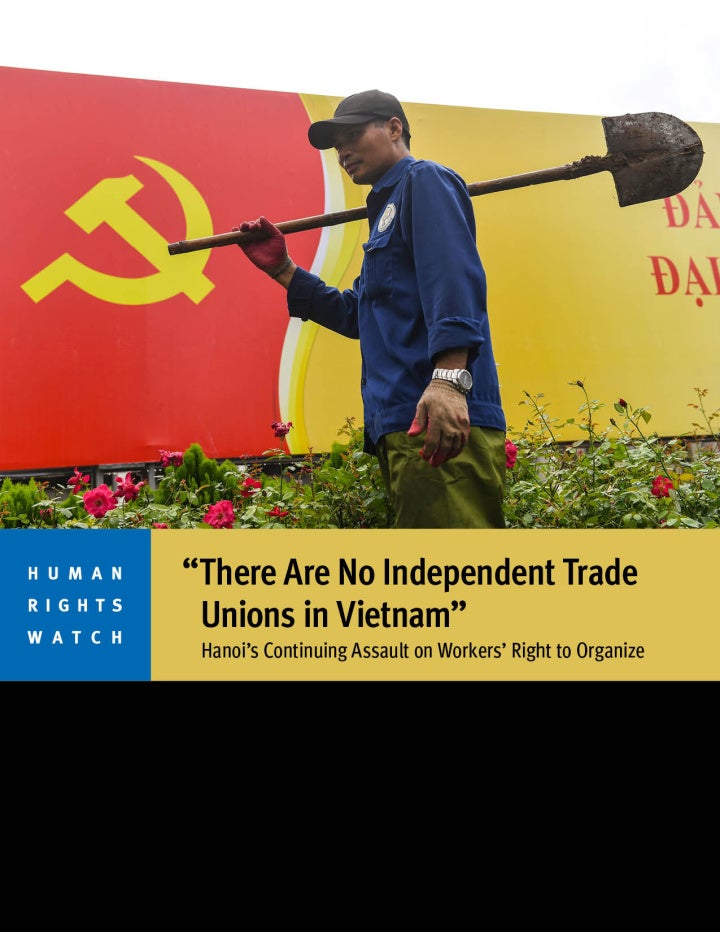
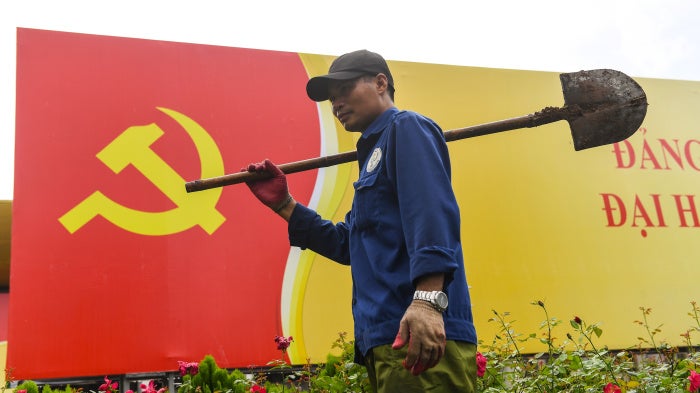
The 49-page report, “There Are No Independent Trade Unions in Vietnam: Hanoi’s Continuing Assault on Workers’ Right to Organize,” documents the Vietnamese governments’ continuing useof vague, overbroad criminal laws to suppress the activities of human rights and labor rights defenders, while maintaining an atmosphere of repression to thwart independent labor organizing. The government has issued decrees and articles in state-run media that reaffirm that all labor organizations in Vietnam are under the government’s authority, and portray independent trade unions as dangerous, anti-state entities.
Torture and ill-treatment of detainees in Iraqi custody
This 94-page report documents how unlawful arrest, long-term incommunicado detention, torture and other ill-treatment of detainees (including children) by Iraqi authorities have become routine and commonplace. Human Rights Watch conducted interviews in Iraq with 90 detainees, 72 of whom alleged having been tortured or ill-treated, particularly under interrogation.
Workers in the U.S. meat and poultry industry endure unnecessarily hazardous work conditions, and the companies employing them often use illegal tactics to crush union organizing efforts. In meat and poultry plants across the United States, Human Rights Watch found that many workers face a real danger of losing a limb, or even their lives, in unsafe work conditions.
Since February 2003, Darfur has been the scene of massive crimes against civilians of particular ethnicities in the context of an internal conflict between the Sudanese government and a rebel insurgency. Almost two million people have been forcibly displaced and stripped of all their property and tens of thousands of people have been killed, raped or assaulted.
Two years after the start of negotiations for the demobilization of paramilitary groups, Colombian President Alvaro Uribe plans to present a draft law to govern demobilization at an international donors’ conference in Cartagena, Colombia, on February 3-4, 2005.
This briefing paper describes new and disturbing information about recent large-scale arrests of Montagnard Christians living in Vietnam’s Central Highlands and the torture of Montagnard activists, house church leaders, and others, including individuals who have been deported or have voluntarily returned from Cambodia
Rwandan armed groups, like many other armed groups in the eastern Democratic Republic of Congo (DRC), kill, rape, and otherwise injure civilians and often loot or extort their property. Under the terms of the Lusaka Accords and the Pretoria Agreement ending four years of war in the Congo, the Congolese government agreed to disarm these groups, but has failed to do so.
Human Rights Watch’s key concerns on Turkey for 2005
At its December 16-17 summit in Brussels, the European Council is expected to decide whether or not to open negotiations for Turkey’s full membership of the European Union. The decision follows the October 2004 evaluation by the European Commission that “Turkey sufficiently fulfils the political criteria” and its recommendation that accession negotiations be opened.
The 70-page report documents that youths in Rio de Janeiro’s detention centers are often beaten and verbally abused by guards. Most complaints of ill-treatment are never investigated by the state’s Department of Socio-Economic Action (Departamento Geral de Ações Sócio-Educativas, or DEGASE), the authority responsible for juvenile detention facilities.
Out of Sync with SADC Standards and a Threat to Civil Society Groups
The government of Zimbabwe drafted the 2004 Non-Governmental Organizations (NGO) Bill after a four-year period of deteriorating relations with oppositional civil society organizations, including NGOs, churches, trade unions, and the independent media. The Bill will adversely affect, and effectively eliminate, all organizations involved in promoting and defending human rights.
This 62-page report documents serious human rights abuses stemming from discriminatory family laws that have resulted in a divorce system that affords separate and unequal treatment to men and women.
HIV/AIDS is a preventable disease, yet approximately 5 million people were newly infected with HIV in 2003, the majority of them through sex. Many of these cases could have been avoided, but for state-imposed restrictions on proven and effective HIV prevention strategies, such as latex condoms.
People with Criminal Records Denied Access to Public Housing
The United States provides federally subsidized housing to millions of low-income people who could not otherwise afford homes on their own. U.S. policies, however, exclude countless needy people with criminal records, condemning them to homelessness or transient living.
People with Criminal Records Denied Access to Public Housing
Decent and stable housing is essential for human survival and dignity, aprinciple affirmed both in U.S. policy and international human rights law.The United States provides federally subsidized housing to millions of low income people who could not otherwise afford homes on their own.
People with Criminal Records Denied Access to Public Housing
This 101-page report is the first examination of “one strike” policies in public housing. Established to protect housing developments from potentially dangerous tenants, these policies automatically exclude applicants with certain criminal records.