Hanoi’s Continuing Assault on Workers’ Right to Organize
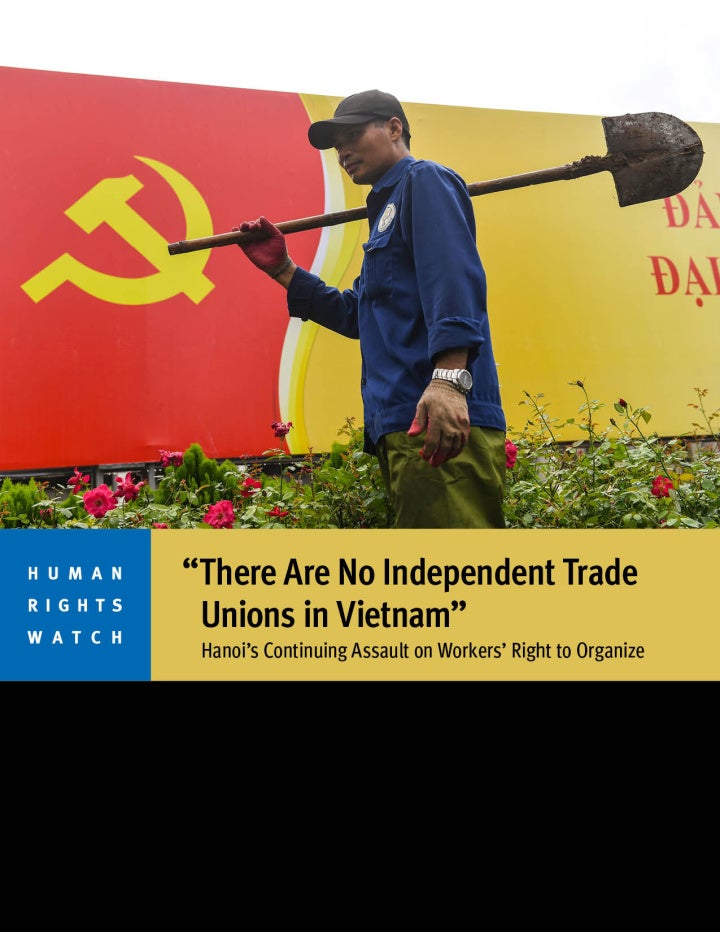
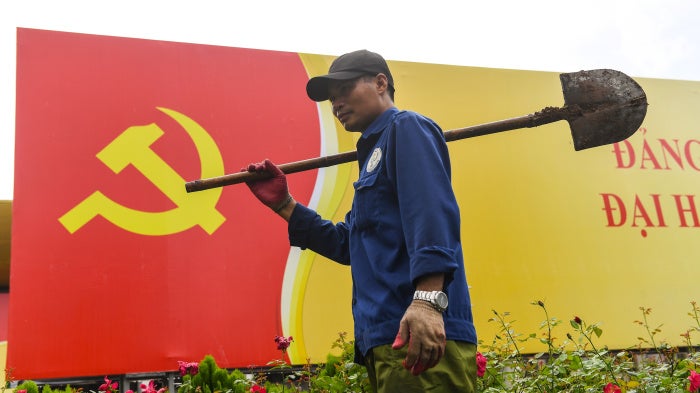
The 49-page report, “There Are No Independent Trade Unions in Vietnam: Hanoi’s Continuing Assault on Workers’ Right to Organize,” documents the Vietnamese governments’ continuing useof vague, overbroad criminal laws to suppress the activities of human rights and labor rights defenders, while maintaining an atmosphere of repression to thwart independent labor organizing. The government has issued decrees and articles in state-run media that reaffirm that all labor organizations in Vietnam are under the government’s authority, and portray independent trade unions as dangerous, anti-state entities.
In September 2003 and September 2004, Human Rights Watch argued for partial or total suspension of tariff benefits when we submitted Andean Trade Preferences Act (ATPA) petitions to the Office of the U.S. Trade Representative (USTR). In those petitions, we detailed Ecuador’s failure to meet the ATPA and ATPDEA workers’ rights criteria.
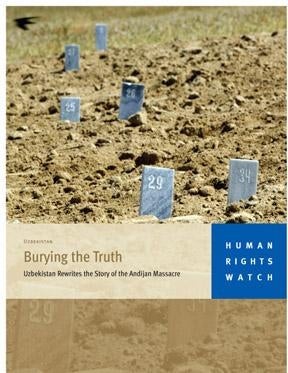
Uzbekistan Rewrites the Story of the Andijan Massacre
This report provides numerous first-hand testimonies of a brutal police campaign forcing people to “confess” that they belong to extremist religious organizations, that the protests in Andijan were violent, and that the protesters were armed.
This report documents an underlying climate of fear among many voters and candidates, especially in remote, rural areas—an atmosphere that has negatively impacted the political environment in the lead-up to the elections.
This 60-page report is based on interviews with hundreds of children in all regions of the world. Human Rights Watch investigations in more than 20 countries found that school fees and related education costs, the global HIV/AIDS epidemic, discrimination, violence and other obstacles keep an estimated 100 million children out of school, the majority of whom are girls.
The scale of destruction is unprecedented in Zimbabwe. Indeed, there are few, if any precedents of a government so forcibly and brutally displacing so many of its own citizens in peacetime. The victims are mainly the poor and vulnerable in Zimbabwe's cities and towns, many of the households already devastated by the HIV/AIDS pandemic.
On September 7, Egypt will hold its first-ever multi-party presidential election, as distinct from the single-candidate plebiscites that have so far characterized the “re-elections” of President Husni Mubarak.
Algerian President’s Peace Plan Faces National Vote September 29
On August 15, the government of Algeria published the text of a long-promised “Charter for Peace and National Reconciliation” in the Journal Officiel. This came a day after a major speech by President Abdelaziz Bouteflika announcing that Algerians will be asked to approve the Charter in a referendum on September 29.
Police Beatings, Rape, and Torture of Children in Papua New Guinea
This report documents boys and girls being shot, knifed, kicked and beaten by gun butts, iron bars, wooden batons, fists, rubber hoses and chairs. Some are forced to chew and swallow condoms. Eyewitnesses describe gang rapes in police stations, vehicles, barracks and other locations. Children are also routinely detained with adults in sordid police lockups and denied medical care.
This document is based on dozens of interviews with women candidates and election workers during the past month. Human Rights Watch details the challenges confronting Afghanistan’s 582 women candidates, who make up approximately 10 percent of the total 5,800 candidates.
In recent years, Azerbaijan has received increasing attention from Europe and the United States, accompanied by increased aid allocations and defense and other cooperation. The Azerbaijani government recognizes and seeks the benefits of developing closer relations with Europe and the United States. This suggests that the relationship with the E.U.
Since the Rose Revolution, the Georgian government has seemed ready to reform its laws, policies, and practices affecting human rights to bring them into line with European standards. Although the government is displaying the political will for such reforms, past experience suggests that the process will not be easy.
The Bush administration appears poised to erase many of the positive steps the United States has taken in the past toward banning antipersonnel mines. The United States will decide in December 2005 whether it will begin the production of a new antipersonnel mine called Spider. According to a media report, which the Pentagon has yet to confirm or deny, in May 2005 the U.S.
Drawing on interviews with numerous demobilized paramilitaries, the report is the first to document the Colombian government’s mishandling of the recent paramilitary demobilizations.