US Civil Rights Enforcement Under the Trump Administration
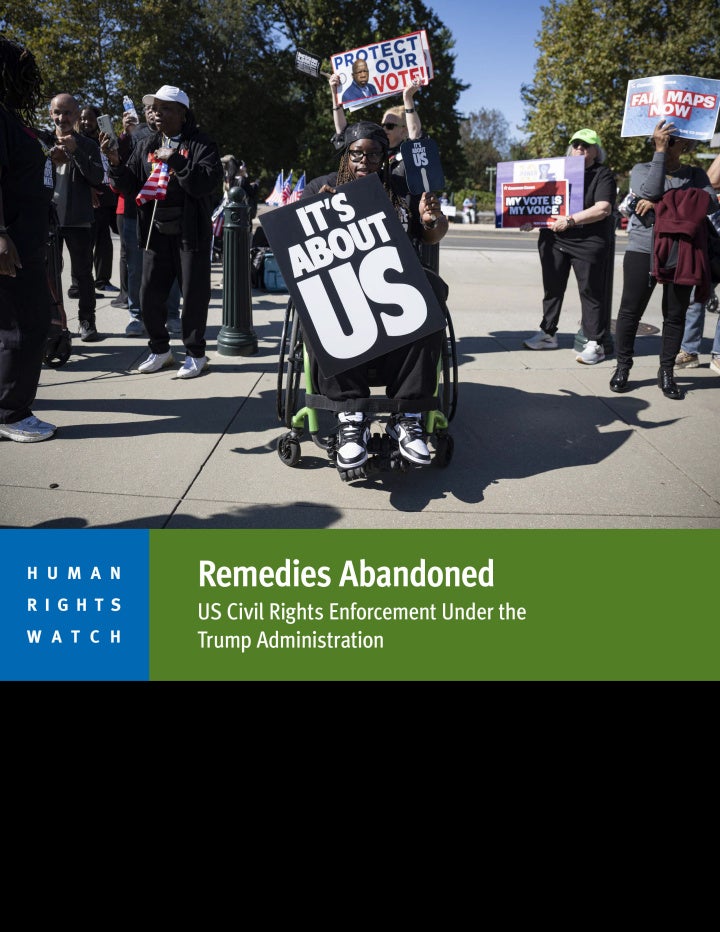
The 112-page report, “Remedies Abandoned: US Civil Rights Enforcement Under the Trump Administration,” documents the administration’s efforts to unravel the work of four key agencies between January 2025 and the spring of 2026: the Justice Department’s Civil Rights Division, which lost about 75 percent of its attorneys; the Education Department’s Office of Civil Rights, which moved to lay off nearly half its staff in one day and closed 7 of its 12 regional offices; the Housing and Urban Development Department’s Fair Housing Office, which shrank dramatically; and the Equal Employment Opportunity Commission, which reached its lowest staffing levels in over 40 years.
During the Israel-Hezbollah war, Israel was accused by Human Rights Watch and numerous local and international media outlets of attacking two Lebanese Red Cross ambulances in Qana on July 23, 2006.
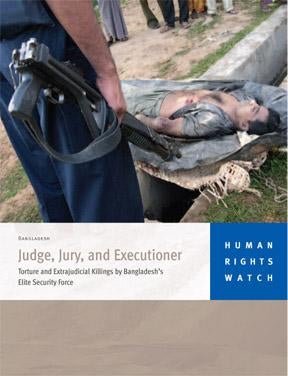
Torture and Extrajudicial Killings by Bangladesh’s Elite Security Force
This 79-page report describes how Bangladesh's Rapid Action Battalion (RAB), established in 2004 to stop spiraling crime, has made a practice of killing criminal suspects in detention. Torture methods used by the force include beatings, boring holes in suspects with electric drills, and the application of electric shock.
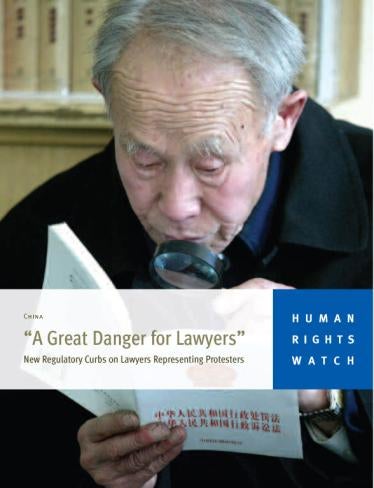
New Regulatory Curbs on Lawyers Representing Protesters
This 71-page report details the “Guiding Opinions on Lawyers Handling Mass Cases,” which were introduced in March 2006, and discusses subsequently adopted local variants. The report explains how the Guiding Opinions let local authorities interfere in cases involving 10 or more plaintiffs, making it more difficult for the cases to get a fair hearing in court.
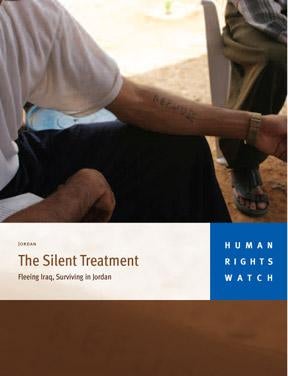
After fleeing violence and persecution in Iraq, hundreds of thousands of Iraqis living in Jordan face a daily threat of arrest, fines and deportation because the Jordanian government treats them as illegal immigrants rather than refugees. Since the war in Iraq began in 2003, more than 1 million Iraqis have fled, but none of Iraq’s neighbors, nor the United States, treats them as refugees.
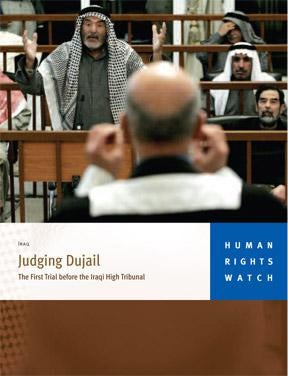
This 95-page report is based on 10 months of observation and dozens of interviews with judges, prosecutors and defense lawyers, and is the most comprehensive analysis to date of the trial.
Rights to Freedom of Expression and Information under Angola’s New Press Law
In this 25-page report, Human Rights Watch analyses Angola’s new Press Law, which was issued in May. The report concludes that, despite improvements over previous Angolan law, the new law still contains elements that undermine press freedom. In addition, many of its crucial provisions will remain inoperable unless implementing legislation is enacted immediately.
Human Rights Watch Briefing Paper for the 37th Session UN Committee against Torture
This 16-page briefing paper is addressed to the Committee against Torture. It documents ill-treatment and torture by pro-Moscow Chechen forces under the effective command of Prime Minister Ramzan Kadyrov, as well as by federal police personnel.
The task of the intergovernmental working group on review of mandates is wide-ranging and important. In this paper, Human Rights Watch identifies the six key points that should help guide the working group's review.
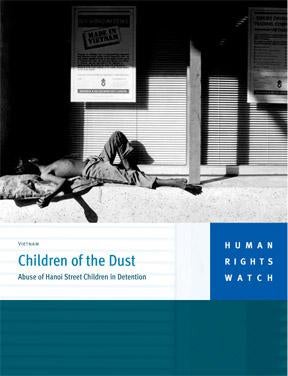
This 77-page report documents cases of serious violations of the rights of street children in Hanoi. Police routinely round up street children in arbitrary sweeps and deposit them at state “rehabilitation” centers – euphemistically called “Social Protection Centers” – where they are detained for periods ranging from two weeks to as much as six months.
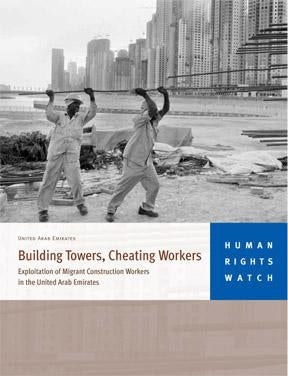
Exploitation of Migrant Construction Workers in the United Arab Emirates
Based on extensive interviews with workers, government officials and business representatives, this 71-page report documents serious abuses of construction workers by employers in the United Arab Emirates.
The second Congo war began in 1998 and involved the Democratic Republic of Congo (DRC) government forces of Laurent Kabila, which were supported by Angola, Zimbabwe, and Namibia, against several rebel movements backed by Uganda, Rwanda, and Burundi.
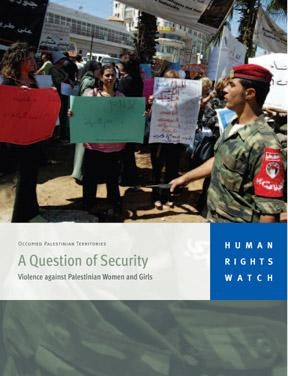
This 101-page report, based on field research conducted in the West Bank and Gaza in November 2005 and early 2006, documents dozens of cases of violence ranging from spousal and child abuse to rape, incest and murders committed under the guise of family “honor.” There is increasing recognition of the problem, and some PA officials have indicated their support for a more vigorous government res
This 45-page paper documents how the UK government is undermining the torture ban, even as it proclaims its efforts to combat torture worldwide. Torture, including returns to risk of torture, is prohibited by international law. No exceptions are allowed, even in time of war or national emergency.
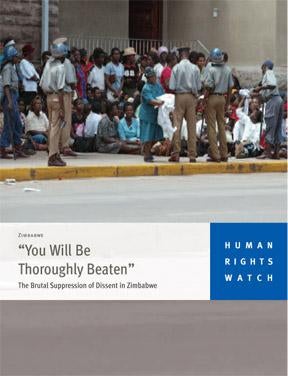
This 28-page report reveals the repressive tactics that the Zimbabwean government has used against civil society activists in the past year. Human Rights Watch has documented systematic abuses against activists, including excessive use of force by police during protests, arbitrary arrests and detention, and the use of torture and mistreatment by police and intelligence officials.