Reports

US Civil Rights Enforcement Under the Trump Administration

The 112-page report, “Remedies Abandoned: US Civil Rights Enforcement Under the Trump Administration,” documents the administration’s efforts to unravel the work of four key agencies between January 2025 and the spring of 2026: the Justice Department’s Civil Rights Division, which lost about 75 percent of its attorneys; the Education Department’s Office of Civil Rights, which moved to lay off nearly half its staff in one day and closed 7 of its 12 regional offices; the Housing and Urban Development Department’s Fair Housing Office, which shrank dramatically; and the Equal Employment Opportunity Commission, which reached its lowest staffing levels in over 40 years.
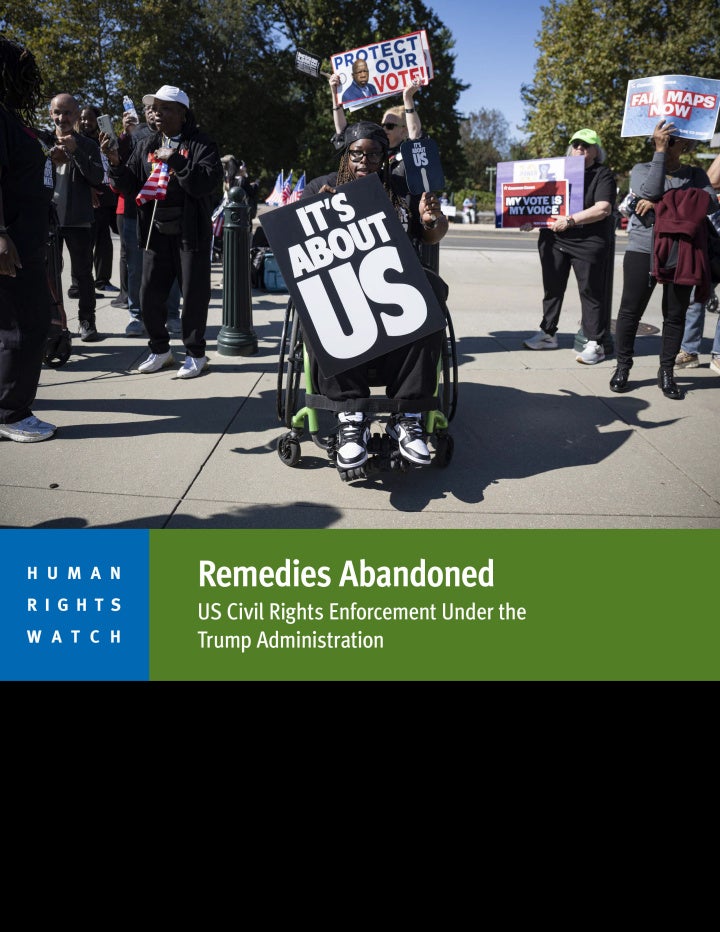
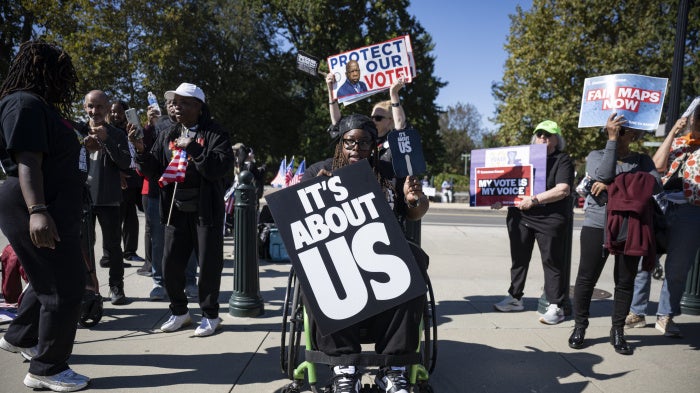
A man in a wheelchair holds a protest sign at a demonstration
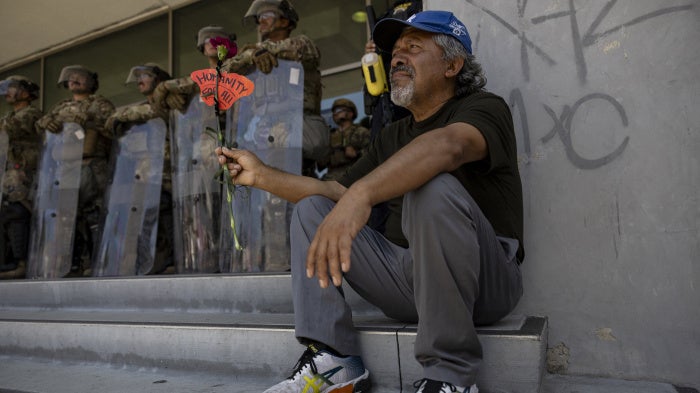
A man holds a flower and the message "Humanity for All" in front of a line of soldiers

Search

  • February 1, 1996

    In February 1995, Pres. Zedillo ordered a crackdown on the Zapatista National Liberation Army (EZLN). As the Mexican army fought to regain territory in which the Zapatistas had operated since January 1994, federal and state police worked in tandem to arrest men and women accused of leading or supporting the Zapatistas.
  • February 1, 1996

    Arms Trade and Human Rights Abuses since the Lusaka Protocol

    In updating our 1994 report, Arms Trade & Violations of the Laws of War in Angola, we found that despite the signing of the Lusaka Protocol between the Angolan government and UNITA that led to a cease-fire, sporadic fighting continued in 1995.
  • January 1, 1996

    A Policy of Fatal Neglect in China’s State Orphanages

    China’s claim to guarantee the “right to subsistence” conceals a secret world of starvation, disease, and unnatural death a world into which thousands of Chinese citizens disappear each year.
  • January 1, 1996

    Refugees, Civil Patrollers, and Impunity

    Tens of thousands of Guatemalans fled systematic army repression between 1980 and 1983, flooding southern Mexico with refugees. Hundreds of thousands more were estimated to be displaced internally. Recent cases of state violence against returning refugees cast serious doubts on the Guatemalan government's commitment to ensure safe repatriation and foster the rule of law in rural areas.
  • January 1, 1996

    Human Rights Abuse and Criminality in Rio de Janeiro

    The homicide rate in Rio de Janeiro tripled in the last 15 years and public concern grew apace. The press, prominent civic leaders, and politicians focused particularly on violence related to criminal gangs and drug trafficking. Unfortu-nately, law enforcement efforts to control crime relied on flagrant and numerous human rights abuses.
  • January 1, 1996

    Throughout the world, thousands of children are used as soldiers in armed conflicts. Although international law forbids recruiting children under fifteen as soldiers, such young children may be found in government armies and, more commonly, in armed rebel groups.
  • December 1, 1995

    In the last two years, the Chinese government has issued new directives requiring all congregations to register with religious authorities, stepped up pressure on evangelists, and tightened control on contact with foreigners and distribution of religious materials. Those suspected of linking religion to political activity have been singled out for the harshest treatment.
  • November 1, 1995

    1995

    Covering the human rights situations in 11 of the Asia-Pacific Economic Cooperation (APEC) countries, the evidence presented here suggests that economic growth alone has not led to greater human rights protection. Yet human rights was the issue that would not go away for Asia in 1995 as it became an economic issue, a determinant of aid and an irritant to trade from Burma to Indonesia.
  • November 1, 1995

    Since the end of 30 years of military dictatorship and the election in 1992 of the country’s first civilian president in three decades, the Republic of Korea is a more open country with a government that pledges respect for international human rights. Nevertheless, it has not lived up to its pledges.
  • November 1, 1995

    State Response to Domestic Violence and Rape

    The new South African government has pledged to ensure women a full and equal role in every aspect of the economy and society. Yet South African women continue to face extraordinarily high levels of violence which prevent them from enjoying the rights they are guaranteed under the new dispensation.
  • November 1, 1995

    Since 1984, the government of Turkey has waged an increasingly bitter war with insurgents of the Kurdistan Workers Party (PKK). To date, the toll is estimated at over 19,000 deaths, including some 2,000 death-squad killings of suspected PKK sympathizers, two million internally displaced, and more than 2,200 villages destroyed mostly by Turkish security forces. In an effort to root out PKK fighters and sympathizers from southeast Turkey, the government has adopted increasingly brutal counterinsurgency measures, in clear violation of international law. The PKK, for its part, has also systematically engaged in violations such as summary executions and indiscriminate fire.This report documents the Turkish security forces’ violations of human rights, and their reliance on U.S. and NATO-supplied weapons in doing so. Drawing on investigations of some 30 incidents that occurred between 1992 and 1995, the report links specific weapons systems to individual incidents of Turkish violations. Supplemented by interviews with former Turkish soldiers, U.S. officials and defense experts, the report concludes that U.S. weapons, as well as those supplied by other NATO members, are regularly used.
  • October 15, 1995

    Bosnia and Herzegovina

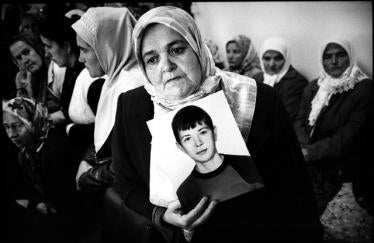
    Photo: A woman holds a photo of her missing son as Bosnian Muslim relatives of the victims and survivors of the Srebrenica massacre meet with Dutch former peacekeeping troops. © 2007 Reuters

  • October 1, 1995

    In the year after Pres. Aristide returned to Haiti, there was marked, concrete improvement in respect for human rights and the government launched institutional reforms that should bring lasting change. In this report, however, we note several cases of improper use of force and other problems with the interim and new national police forces.
  • October 1, 1995

    While the Croatian government has taken steps to correct some of the abuses of human rights that had marked Croatia's first two years of independence, violations of civil and political rights by reason of ethnic identity and political dissent continue.