US Civil Rights Enforcement Under the Trump Administration
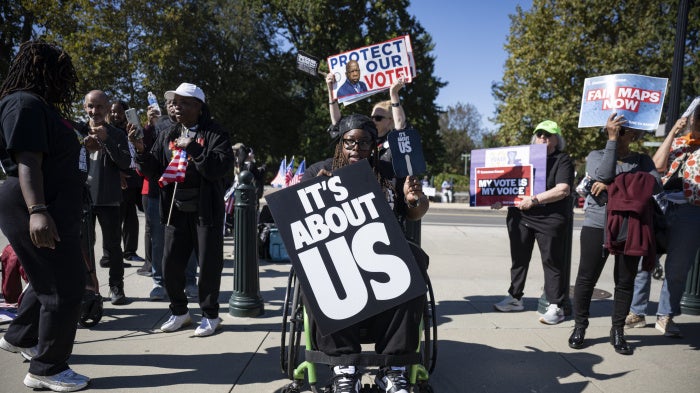
The 112-page report, “Remedies Abandoned: US Civil Rights Enforcement Under the Trump Administration,” documents the administration’s efforts to unravel the work of four key agencies between January 2025 and the spring of 2026: the Justice Department’s Civil Rights Division, which lost about 75 percent of its attorneys; the Education Department’s Office of Civil Rights, which moved to lay off nearly half its staff in one day and closed 7 of its 12 regional offices; the Housing and Urban Development Department’s Fair Housing Office, which shrank dramatically; and the Equal Employment Opportunity Commission, which reached its lowest staffing levels in over 40 years.
This 52-page report documents a range of crimes against minorities since 2003, including physical assaults, attacks on religious and cultural buildings, and cemetery desecration. The Serbian government’s response to these attacks has been inadequate.
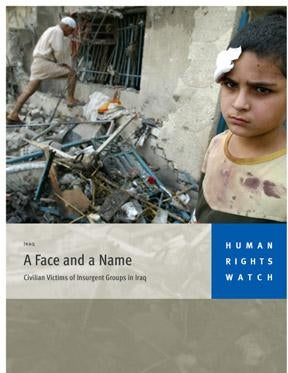
This report is the most detailed study to date of abuses by insurgent groups. It systematically presents and debunks the arguments that some insurgent groups and their supporters use to justify unlawful attacks on civilians.
This briefing paper warns that Liberia’s transition from a near-failed state to a democratic country governed by rule of law cannot be considered complete until there is considerably more progress in several key areas. First, Liberia’s judicial system, which remains plagued by striking deficiencies, must be rebuilt with the help of the international community.
The most brutal U.S.-backed dictator you’ve never heard of—Hissène Habré of Chad—has just been indicted in Belgium on charges of mass murder and torture. His indictment was a decisive breakthrough in a judicial chess game pitting the former central African dictator against a Chadian torture victim and a New York “dictator hunter” at Human Rights Watch.
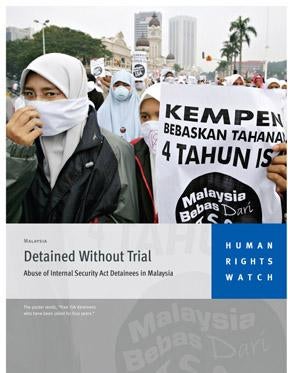
Abuse of Internal Security Act Detainees in Malaysia
This 34-page report is based on interviews with family members of current ISA detainees, their lawyers and handwritten statements of ISA detainees. It documents the physical abuse, ill-treatment and humiliation of more than 25 detainees in Kamunting Detention Center in December 2004. None of these detainees have been charged or tried.
Firsthand Accounts of Torture of Iraqi Detainees by the U.S. Army's 82nd Airborne Division
This report provides soldiers' accounts of abuses against detainees committed by troops of the 82nd Airborne stationed at Forward Operating Base Mercury (FOB Mercury), near Fallujah.
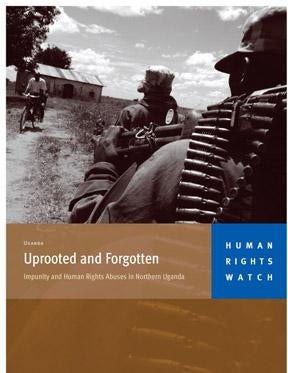
Impunity and Human Rights Abuses in Northern Uganda
This 76-page report documents how the ongoing lack of accountability and civilian protection in the north has fueled atrocities by both sides. In each of the displaced persons camps visited, Human Rights Watch found cases of abuse by Ugandan government forces as well as rebel combatants.
In September 2003 and September 2004, Human Rights Watch argued for partial or total suspension of tariff benefits when we submitted Andean Trade Preferences Act (ATPA) petitions to the Office of the U.S. Trade Representative (USTR). In those petitions, we detailed Ecuador’s failure to meet the ATPA and ATPDEA workers’ rights criteria.
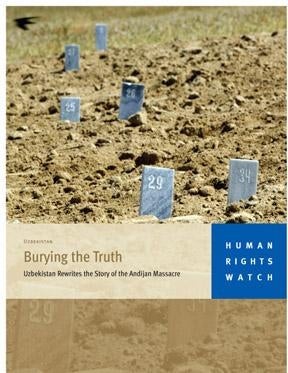
Uzbekistan Rewrites the Story of the Andijan Massacre
This report provides numerous first-hand testimonies of a brutal police campaign forcing people to “confess” that they belong to extremist religious organizations, that the protests in Andijan were violent, and that the protesters were armed.
This report documents an underlying climate of fear among many voters and candidates, especially in remote, rural areas—an atmosphere that has negatively impacted the political environment in the lead-up to the elections.
This 60-page report is based on interviews with hundreds of children in all regions of the world. Human Rights Watch investigations in more than 20 countries found that school fees and related education costs, the global HIV/AIDS epidemic, discrimination, violence and other obstacles keep an estimated 100 million children out of school, the majority of whom are girls.
The scale of destruction is unprecedented in Zimbabwe. Indeed, there are few, if any precedents of a government so forcibly and brutally displacing so many of its own citizens in peacetime. The victims are mainly the poor and vulnerable in Zimbabwe's cities and towns, many of the households already devastated by the HIV/AIDS pandemic.
On September 7, Egypt will hold its first-ever multi-party presidential election, as distinct from the single-candidate plebiscites that have so far characterized the “re-elections” of President Husni Mubarak.