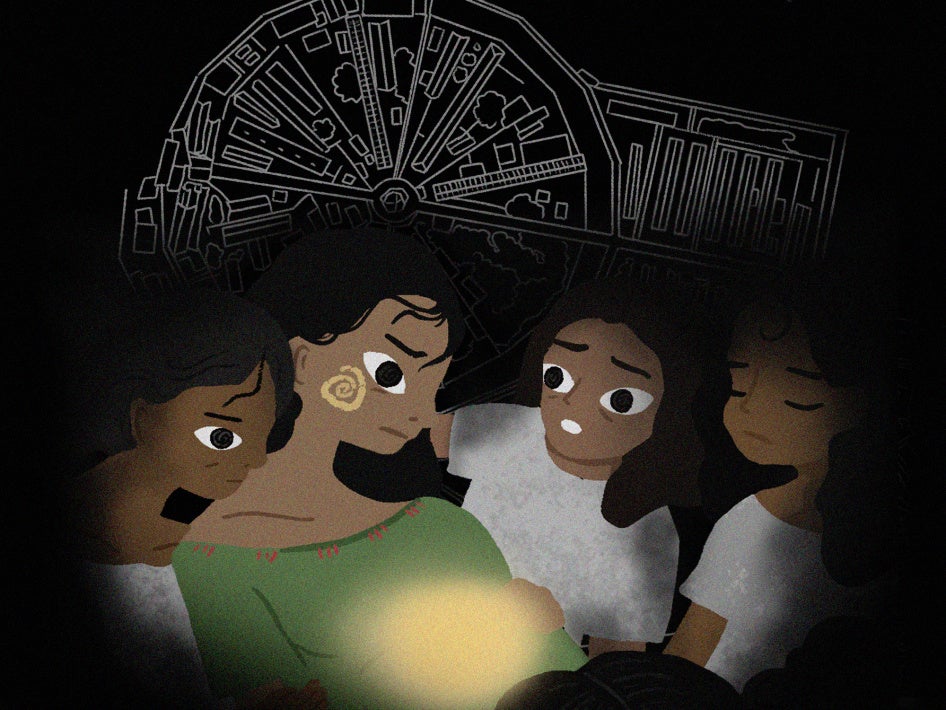
(Bangkok) – The Myanmar military junta subjects women political prisoners to torture, sexual violence, and life-threatening denial of medical care, Human Rights Watch said today.
Among the over 30,000 political prisoners detained since the junta’s February 2021 coup are about 6,600 women and 640 children. Former prisoners and their families have reported beatings, rape, squalid conditions, and the dangerous and sometimes deadly denial of prenatal and obstetric medical care to pregnant women. The junta should urgently and unconditionally release all women political prisoners and their children, including the former leader Aung San Suu Kyi, who has been detained for more than five years.
“Women who have been detained as political prisoners in Myanmar paint a deeply disturbing picture of a prison system in which suffering and neglect are both deliberate and routine,” said Bryony Lau, deputy Asia director at Human Rights Watch. “The women face layers of injustice, from arbitrary arrest to torture and mistreatment in detention, to unrelenting fear and trauma following release.”
In 2025 and 2026, Human Rights Watch interviewed 17 former women political prisoners, 3 family members, and 4 lawyers and advocates. The former detainees—activists, journalists, healthcare workers, and aid workers at the time of their arrest—had been held in 11 interrogation centers and prisons, some since the 2021 coup.
The women said they were prosecuted under various criminal code provisions used against real or perceived critics of the junta. These include Penal Code section 505A, a vague and overbroad post-coup law to punish opposition and dissent, and the sweeping Counter-Terrorism Law. Several women said they were detained unlawfully as hostages for friends or relatives who had eluded arrest.
Women reported being tortured and ill-treated during interrogation, which could last months, or as punishment. Prison authorities beat them with sticks, chains, metal pipes, and slingshots, and subjected them to electric shock, sexual violence, cigarette burns, prolonged stress positions, and weeks or months in solitary confinement. Most said they had faced sexual humiliation or assault, including invasive body searches conducted in a manner and at a frequency that indicated an intent to humiliate more than any legitimate security purpose.
An activist, 26, who was pregnant when arrested in 2024, was interrogated for over a month. Her husband said, “They threatened her about the pregnancy, told her to tell them about me and her colleagues [in the opposition]. They threatened her: ‘If you won’t tell us the information, we’ll hit your belly.’”
More than 2,300 men and women have died in custody since the coup, according to the Assistance Association for Political Prisoners. Myanmar Prison Witness has documented 290 deaths of political prisoners between February 1, 2021, and September 16, 2026, including 43 deaths of women political prisoners and their children.
“Our lives in prison are worth an A4 paper,” a former political prisoner said, referring to the notice families are required to sign when informed about a death in detention. The bodies are not returned to families, he said, and Human Rights Watch is unaware of any investigations or accountability. In some cases, the families are not even informed.
Former prisoners said that prison authorities consistently block access to necessary medical care for serious chronic and acute conditions. Treatment is highly arbitrary, requiring months-long waits, bribes to prison guards, and outside payments for medicine and care.
“When it comes to disease, there is no medication, so you just have to endure it,” said a woman who spent three years in prison. “Minor issues unnecessarily become serious issues.”
Women said that medical neglect is compounded by a near-total lack of specialized services to meet their sexual and reproductive healthcare needs. Pregnant women are denied access to necessary prenatal, obstetric, and postnatal care, and may face abuses that could endanger their health, lives, and pregnancy.
A woman arrested in 2021 when three months’ pregnant said her interrogators, who knew she was pregnant, used electric shock and beat her, leaving her with chronic pain. She was held in a storage room with nine other pregnant inmates, where they slept on a concrete floor among used medical masks and gowns.
“There was no ultrasound so there was no way to estimate the due date,” she said. “My water broke at midnight, but the [hospital] referral letter only arrived at 10 a.m.… Chains were put back on my feet right after the delivery.”
Some women are left to give birth in their cells due to the lack of emergency care, which former prisoners said led to stillbirths and deaths of mothers and infants.
Women also described overcrowding and squalid conditions that placed their lives and health at risk. After release, a number of these women reported experiencing depression, hypervigilance, isolation, and suicidal thoughts.
Myanmar is party to several core international human rights treaties that address treatment of people in custody, including the Convention on the Elimination of All Forms of Discrimination against Women; the Convention on the Rights of the Child; and the Convention on the Rights of Persons with Disabilities.
Under treaty and customary international law, Myanmar authorities have a duty of care for people in prisons, including an obligation to protect their rights to life, health, safety, dignity, and security. Moreover, no one may be subjected to cruel, inhuman or degrading treatment or punishment.
The UN Standard Minimum Rules for the Treatment of Prisoners (the Nelson Mandela Rules) state that the “provision of health care for prisoners is a State responsibility,” with necessary health care to be provided free. The Rules call for all prisons to ensure prompt access to medical attention and accommodation for prenatal and postnatal care and treatment, including arrangements for giving birth in a hospital.
The UN Rules for the Treatment of Women Prisoners and Non-custodial Measures for Women Offenders (the Bangkok Rules) establish additional protections for women prisoners, including gender-specific healthcare services at least equivalent to those available in the community, and safeguards for mothers and children.
Concerned governments should impose targeted economic and travel sanctions on senior junta officials to press the junta to unconditionally release all arbitrarily detained and imprisoned people, including Aung San Suu Kyi; immediately end torture and other ill-treatment in custody; and grant impartial international humanitarian agencies full access to everyone in custody. Donors should support local groups providing legal, medical, psychosocial, and vocational assistance to current and former women political prisoners, and increase resettlement opportunities for particularly vulnerable people.
“Governments should use every opportunity to press the junta to release all political prisoners, including detained women,” Lau said. “Focusing greater attention on the plight of detained women will show the junta that it can’t hide its horrific treatment behind prison walls, and the thousands of women unjustly detained that they haven’t been forgotten.”
For more information on the junta’s abuses against women political prisoners, please see below. For their protection, pseudonyms are used for those interviewed.
Myanmar Junta Abuses against Women Political Prisoners
Torture, Ill-Treatment, and Retaliation
Torture and other ill-treatment are rampant in Myanmar prisons, interrogation centers, military bases, and other detention sites, with reports of beatings, rape, prolonged stress positions, electrocution, and deprivation of food, water, and sleep.
Military authorities shuttled Phyu Phyu, 36, between interrogation centers in northern Yangon known as Shwe Pyi Thar, and 8 Mile in Mayangone Township for three-and-a-half months in 2022, where she said she was questioned and beaten repeatedly:
They used many techniques. Like one of the older men would say, “You are like my daughter, we won’t do anything if you answer the questions.” … They used sticks and beat me when they’re not satisfied with my answers. They’d say, “You are lying to us.”.… They would threaten that they could kill me anytime. “No one knows that you’re here, so we have permission to kill you anytime.
After being transferred to Insein prison in Yangon, she requested a hospital visit for the pain and dizziness she had suffered since the beatings. After about 10 months and multiple requests, she was taken to see a hospital doctor, who found that her left shoulder bone had been crushed.
In July 2025, the activist Wutt Yee Aung, 26, died in Insein prison after years without adequate medical treatment for head injuries from multiple beatings following her arrest in September 2021. Two months before her death, an advocate working on her case told Human Rights Watch that she was having repeated seizures.
Women said the guards targeted political prisoners as “troublemakers” who at times were separated from other detainees. Khine Zar, 27, said the officer-in-charge of the women’s prison at Daik-U in Bago Region routinely “abused her authority.” She said one time “[s]he ordered other prisoners to beat three political prisoners with chains…. One of the victims was carried away in a blanket, she was so badly injured.”
During a prison riot in Insein, Nilar Oo, 31, said guards beat her even though she had not participated:
I was targeted because I had been involved in other demands. Men and women guards beat me and other inmates. I was kicked by four people at the same time. After the incident, I was put in solitary confinement for two weeks as punishment.
During roll calls, guards required prisoners to hold squatting stress positions, or pone san, for an hour.
Prisoners who complain about the poor conditions or treatment to family members or visiting officials face retaliation, those interviewed said, such as confiscating their parcels or letters, reducing food rations, denying them visits, denying medical care, sending them to solitary confinement, or transferring them to a harsher or more remote prison. Officers also use collective punishment, such as confining entire units, as “discipline.”
“If someone tried to report to the warden, they are transferred to another prison,” said Hnin Hnin, 29. “They set an example that whistleblowers will be retaliated against.”
Several women said they had been transferred to Thayawaddy prison in Bago Region, which was notorious for the guards’ systematic brutality toward political prisoners. Phyu Phyu was transferred from Insein to Thayawaddy in 2023 with about 300 other political prisoners, 100 women and 200 men. She said, “They told us, ‘You were sent to this prison because you were disobedient at another prison.’”
Recently released prisoners said that new prisoners were commonly beaten on arrival at Thayawaddy. Nandar Hlaing, 32, said she was beaten, then put in solitary confinement for two weeks:
I could go out only 15 minutes every 24 hours. I had to stay in a 10 x 6 ft. cell all day where I also ate and went to the bathroom. It was so dark. There was no electricity and nothing for me to do, nothing to read.
Thayawaddy officials held Khin San Win, 26, in solitary confinement for nine months after she was transferred from Insein. “When they transferred us from the hall building to solitary confinement, the prison staff, both male and female, swore at us and set prison dogs on us,” she said. “They also shot us with slingshots.” United Nations special rapporteurs on torture have affirmed that solitary confinement beyond 15 days constitutes a form of torture.
A prisoner advocate said that initially, male guards would refrain from violence against women prisoners. But over the past five years, that norm was abandoned. In Obo, Thayawaddy, and Daik-U prisons, she said, male staff used slingshots to control women political prisoners, even those who were sick or pregnant.
Sexual Violence
Sexual and gender-based violence is a frequent form of torture against detainees, including rape, sexual humiliation, and excessive and abusive use of invasive body searches and surveillance.
A representative from the Women’s Organization of Political Prisoners said they had documented cases of rape and sexual violence during interrogations. A woman held in Insein and Daik-U prisons between 2021 and 2023 said that guards coerced some women into sexual activity in exchange for medicine or other necessities.
Women at Insein prison described degrading body-searches before and after court appearances, allegedly to search for drugs or letters. “Every time I come back to the cell from the court during my trial, the female staff do a body search,” Khine Zar said. “They put their fingers into our bodies just to make sure we are not delivering letters to outside. It is the standard procedure. Women during their period have to unstick their pad from their panties for the search.”
Women held at five prisons described surveillance while showering or changing clothes, both directly and via CCTV cameras. “I didn’t feel secure while showering because the guards in the tower were staring at us,” said Cho Cho Win, 21, who was detained at Pyay prison between 2024 and 2025. “CCTV are everywhere including the changing rooms. The CCTV controllers are men, so we don’t feel safe. Some women didn’t even shower.”
The UN Independent Investigative Mechanism for Myanmar in 2025 found:
Systematic commission of sexual and gender-based crimes against individuals of different ages and genders in detention settings. Crimes include rape (gang rape and multiple rapes), including through the insertion of objects into anal and genital openings; sexual slavery; burning of sexual body parts with cigarettes or burned objects; sexualized touching or forced full or partial nudity; invasive body searches intended to humiliate; the use of sexualized, misogynistic or homophobic slurs, threats of sexual violence, or violence based on gender or sexual orientation; and reproductive violence, particularly against women and girls.
Violations of the Right to Health and Other Mistreatment
Medical Neglect
Former women prisoners described deeply inadequate medical care, without access to qualified staff, essential medicine or equipment, or emergency services. Women said that in general they were dependent on fellow detainees with medical backgrounds in the absence of official medical personnel. Some were able to buy medicine or request it in parcels from their families, depending on the prison. “In prison, we took care of ourselves,” said Khin San Win. “We secretly shared medicines with each other. Medicines were precious in prison.”
Prison medical staffing has been depleted since the coup, with large numbers of healthcare workers arrested for joining the opposition Civil Disobedience Movement (CDM). According to a representative from the Political Prisoners Network Myanmar, Thayawaddy prison has only 3 doctors for over 3,000 prisoners, while Insein has 4 or 5 for over 8,000 prisoners. A former prisoner at Nyaungshwe in Shan State said there was 1 doctor for 2,000 prisoners when she was held there in 2021. Prisons with fewer than 1,000 inmates often have no doctor or clinic.
Aye Myint, who was detained between 2021 and 2023, said that Daik-U prison had only one medical officer: “We called him ‘Ko Ko Para’ because the only medicine he gave us was paracetamol, no matter what the health problem was.”
Nu Nu, 33, a nurse for the CDM, was arrested in 2022 for providing medical care to opposition activists. She was detained for two-and-a-half years, first at Insein, then Thayawaddy. At Insein, a detained CDM doctor was assigned as the medical officer, she said, “but without any equipment and no authority to make any medical decisions.”
At Thayawaddy, she was assigned as the medical officer given her nursing background. “There was a male doctor, but he was always drunk,” she said. “So I was the one taking care of the check-ups.”
Former prisoners said that requests for anything beyond basic care required approval from the prison administrators, a prolonged arbitrary process. Requests were often denied.
In one of her most serious cases, Nu Nu treated a patient with kidney stones that progressed to a kidney infection and fever. “I gave her IV antibiotics and asked the prison to let her to get the treatment she needed,” she said. “Only after two months of asking was she allowed to get the treatment [at a hospital].”
A 47-year-old woman political prisoner said that an older inmate at Daik-U had to wait for six months for an X-ray after she slipped and broke her leg. She said her cellmate with kidney disease waited 45 days for permission for an X-ray. “More complicated patients are not transferred to the outside hospital until it is too late,” she said.
Two former prisoners at Daik-U said that the authorities denied prisoners with cancer access to outside hospitals, even with referrals from prison doctors. “For cancer patients, they can only get a referral when they’re dying,” a prisoner advocate said.
Many prisons had no nighttime medical care. Win Kyi, 28, had a seizure one night in 2021 while at Obo prison in Mandalay, after the doors had been locked. “A person claiming to be a prison doctor later came, but he examined me from outside the cell bars because the door couldn’t be opened,” she said.
Khine Zar described a nighttime medical emergency at Daik-U:
An inmate suffering from kidney failure began vomiting nonstop around 1 a.m. and repeatedly asked for medical attention. Because it was nighttime and the prison had already been locked, prison staff refused to call a doctor. Only at about 6 a.m., after we all together demanded urgent medical assistance, did prison staff attempt to contact the doctor. The staff came back and told us that the doctor had refused to come. Eventually, a male CDM doctor inmate was brought in to help her.
Women said that authorities cut off healthcare access as “discipline,” as well as promising medical treatment to coerce them to provide information during interrogations. Khine Zar said that the officer-in-charge in Daik-U prison threatened a prisoner after she had two seizures after being beaten during interrogation. “She warned her that if she ever ‘dared’ to have a third seizure, she would be placed in solitary confinement,” Khine Zar said.
Mya Sein, who was detained in Nyaungshwe prison in southern Shan State in 2021 and 2022, witnessed another political prisoner pass out one morning:
It turned out she was having a stroke. We asked the clinic to give her urgent medicine and said we would pay for her no matter the amount. But the warden said we needed to request a different level for the treatment. The doctor came to check on her 30 minutes after she fell. She regained consciousness but couldn’t walk. Her right side was paralyzed. She kept throwing up. We asked the doctor to bring the medicine that treats stroke within three hours. The doctor said he didn’t have it.
Women political prisoners face grave restrictions on access to menstrual supplies and to facilities for personal hygiene, which the UN Independent Investigative Mechanism for Myanmar identified as a form of reproductive violence.
Cho Cho Win was arrested in 2024 during a raid by 10 plainclothes officers, who ransacked her house, blindfolded her, and tied her hands with rope. “When I was arrested, I was on my period,” she said. “I couldn’t change my pad or underwear for two days.” During interrogation, the officers threatened to kill and dismember her:
I was scared to death. Due to the trauma, I got a hormonal imbalance and was menstruating for the whole month after I got to Pyay prison.… In prison, I was denied pads for the first two months because I was new. Companies donate pads but the prison staff sold them to us.
Many other women said they faced irregular menstruation from stress. Phyu Phyu said her period stopped and she later had surgery for uterine fibroids.
According to the Political Prisoners Network-Myanmar, 59 political prisoners, including 26 women, died during the March 2025 earthquake, mainly at Obo prison, near the earthquake’s epicenter, including prisoners who survived initially but died from lack of treatment for their injuries. Cho Cho Win, in Pyay prison, said the staff fled the compound when the earthquake hit, leaving prisoners locked in their cells. Despite some injuries, there was no medical follow-up, she said.
Pregnant Women, Mothers, and Children
The Women’s Organization of Political Prisoners told Human Rights Watch in July 2025 that about 125 women political prisoners were being detained with their children or while pregnant. Some children had been taken into custody with their mothers; others were born in prison. Children have sometimes unlawfully been detained as proxies for their parents.
International standards call for special accommodation for prenatal and postnatal care and treatment, and that arrangements should be made for children to be born in a hospital outside a prison. Provisions should also be made to provide pediatric services for children remaining with their mothers.
Nwe Ni Win, 41, was eight-months pregnant when she was injured at Obo prison during the earthquake. Local media reported that her requests for medical treatment were denied for over two weeks, at which point her fetus had died in utero. Nwe Ni Win died due to infection shortly after undergoing a stillbirth.
Khine Zar was 22 when she was arrested in 2021, a week after she learned she was pregnant. “At the military compound, the interrogators, knowing I was pregnant, used electroshock devices on my back and thighs and beat me,” she said.
Khine Zar was not allowed to see an obstetrician-gynecologist during her pregnancy, but her husband’s family bribed the prison officers to allow them to visit with prenatal vitamins and supplements. Without an ultrasound, staff at Insein measured her belly to estimate her due date. “The prison staff scolded us not to deliver our babies at night as it would be a long process to open the door,” Khine Zar said.
In Myingyan prison in Mandalay Region, Win Kyi helped deliver a fellow political prisoner’s baby in a storage room. “There was no equipment to deliver the baby,” she said. “So all the inmates had to help her. We cleaned the storage room, and the baby was delivered in the dust. Right after she gave birth, she was told to walk back to her cell. She was locked up right after the delivery. She was not sent to the hospital or allowed other medical follow up.”
Without prenatal care in prison, May Phyo Maung relied on detained CDM healthcare workers for assistance. Her husband bribed the prison staff to send her medicine and prenatal vitamins, and for one visit to a doctor during her pregnancy. He paid 300,000 kyat (US$150) so she could give birth in a hospital, where she required a cesarean section (C-section).
Women who give birth in detention must make the heartbreaking choice between raising their child in prison or handing the baby over to family members. Before giving birth to her daughter in 2025, May Phyo Maung had been sentenced to 15 years in prison. She decided not to keep the baby with her in prison and was separated from her a week after giving birth. “It was an impossible choice,” her husband said. “I wanted my baby to be with my wife, but I also wanted her to be free.” Their relatives raised the baby after the husband fled the country to avoid arrest.
Khine Zar gave her daughter to her family 28 days after giving birth in 2022 and was only reunited with her three years later, after her release: “My daughter did not have any emotional connection with me. She thought I was a guest visiting her home.”
Former prisoners said that they were not given any equipment to help pump breast milk after being separated from their babies, which can cause painful engorgement and risks leading to clogged ducts and infection.
In some prisons, children detained with their mothers live among everyone else; in others, like Nyaungshwe, they have a separate cell. Nandar Hlaing said that when she was held at Insein between 2021 and 2023 about 100 women were held in a single large room, 13 with babies. Win Kyi said that 12 children under age 6 lived in a room of 80 prisoners when she was in Obo in 2022. “They’re treated like inmates as well,” she said, with no toys, extra space, or formula. “Mothers and children suffer more. Mothers stay up to fan the kids all night so they can sleep … to make sure they don’t cry.”
Squalid Conditions
All prisoners in Myanmar’s prisons, including women and children, are held in overcrowded cells, denied access to sanitation facilities necessary for personal hygiene, and subject to inhuman conditions.
Women held at Insein between 2021 and 2023 said that 100 to 130 prisoners would share 40-by-60-foot rooms intended to house 70 to 80 prisoners. One woman held at Nyaungshwe in 2021 and 2022 said that 30 women shared a 25-by-15 foot room, and the lights were kept on while they slept.
Nandar Hlaing said prisoners at Insein would ask their families for pieces of carpet for sleeping on the concrete floor: “The floor is broken, holes, bumpy, it hurts our backs.”
Overcrowding also resulted in reduced food rations and water quotas for bathing. Women said that water shortages during the summer affected the toilet and showers; guards would hit them with rulers if they used more than the allocated bowls of water to bathe.
Former prisoners described rotten or worm-infested food, contaminated drinking water, flooding and mold during rainy seasons, and rat and insect infestations. “The rice always has worms, chicken feces, or some trash from the plastic bag,” Thida Aung said. “The dal has insects or worms.”
Squalid living conditions also contribute to the spread of disease. Ringworm, scabies, and other skin conditions are ubiquitous and seldom treated, women interviewed said. Authorities provide women with two prison uniforms and confiscate additional clothing, leaving them to wear damp and dirty clothing and underwear. Waterborne diarrhea, urinary tract infections, and vaginal infections are common.
One former prisoner said that despite swarms of mosquitoes, officers would confiscate any mosquito repellent they found, leading to dengue infections. Thida Aung said that at Kyaikmaraw prison in Mon State, where she was held from 2022 to 2025, the authorities stopped isolating inmates with tuberculosis from the rest of the prisoners due to overcrowding.
Long-term Harm
All former women prisoners reported long-term psychological and physical harm.
Women described experiencing insomnia, recurring nightmares, panic attacks, hypervigilance, noise sensitivity, and fear of people in uniform.
Nilar Oo spent 20 months in prison. She fled to Thailand shortly after her release in 2023 but still has nightmares and anxiety. “I always feel like I’m being watched, and I’m still shaken whenever I see people in uniforms,” she said. “Every time I have to deal with authorities, like getting documents renewed, I can’t sleep the night before.”
Most of the women interviewed were released under section 401 of the Criminal Code, a conditional pardon that allows authorities to rearrest individuals without warrant to serve their remaining sentence if any condition of their release is “not fulfilled.”
Many women said that family members and friends cut off contact out of shame, judgment, or fear, including being served divorce papers. Khine Zar said she struggled to find a job because her aunt refused to let her return home to collect her education certificates.
One former prisoner, who spent three years in custody, said she moved away from her family after release because they harassed and belittled her. Other families reported overwhelming feelings of guilt while their relatives were in prison because they felt they could not help.
Many political prisoners fled to Thailand after their release, while others have stayed in Myanmar due to family obligations or a lack of documentation or funds. Those who managed to escape to Thailand expressed fear of arrest by Myanmar authorities when applying for Certificates of Identity, a required step for migrant workers.
It has become harder for former political prisoners to leave Myanmar since the junta enacted a new passport law resulting in increased repression and surveillance in March 2026. The law allows junta authorities to deny a passport to anyone conditionally released or “considered likely to threaten national security or the interests of the State,” and empowers any “court or relevant authority” to recommend denying a passport to anyone who has faced criminal action. The Myanmar Passport Issuance Board’s responsibilities include “to enter names on the blacklist.”
The new law and forthcoming electronic passports coincide with the junta’s development of a biometric database and facial‐recognition system—the Person Scrutinization and Monitoring System—allowing for sweeping surveillance of people’s movement and digital and financial activity. As a whole, these tools prevent former political prisoners, who live in constant fear of rearrest, from legally leaving Myanmar.
The years lost in wrongful detention and imprisonment disrupt women’s education and employment, leaving them struggling to find work. One woman said that some employers refused to hire her without a police background check.
“My three years were wasted,” said Thida, who was arrested at 19. “We couldn’t learn anything…. Even if some people wanted to teach each other, there are no tools.”
“As I have to make sense of two worlds, I was struggling mentally,” Mya Sein said. “I forgot my outside world. I forgot how to speak English. I forgot all the names and numbers from the outside.”