- The Sri Lankan government’s prosecution of past grave abuses has lagged, raising concerns for future progress.
- Many cases of forced disappearance, torture, and killing remain stalled, while families of victims and human rights defenders face threats and intimidation.
- The Dissanayake government should jumpstart its efforts to obtain genuine accountability for decades of impunity, while the UN high commissioner for human rights and Human Rights Council should urge the government to demonstrate its commitment to justice.
(Geneva, September 1, 2026) – The Sri Lankan government’s prosecution of past grave abuses has lagged, raising concerns for future progress, Human Rights Watch said in a report released today. United Nations officials and UN member countries at the Human Rights Council should call on the government led by President Anura Kumara Dissanayake to show greater determination to address emblematic rights cases and cooperate with international accountability efforts.
The 49-page report, “‘Not Genuine with Justice’: Sri Lanka’s Lack of Will to Prosecute Past Abuses,” provides an overview of domestic justice efforts in seven prominent cases of grave abuses in which the Dissanayake government has made a measure of progress since taking office in 2024. Human Rights Watch found that many emblematic cases, including a massacre of aid workers, the targeting of journalists, and enforced disappearances of academics and others, remain stalled, while families of victims and human rights defenders face threats and intimidation.
“The Dissanayake administration needs to break from past government practice of delaying and denying justice for grave abuses,” said Lucy McKernan, UN Human Rights Council director at Human Rights Watch. “The UN Human Rights Council should urge the Sri Lankan government to take credible steps toward accountability for past crimes and end reprisals against victims, their families, and human rights defenders.”
Human Rights Watch interviewed 32 victims of abuses, family members of the disappeared, and lawyers and other human rights defenders, and extensively reviewed court documents and other sources.
Tens of thousands of people were tortured, forcibly disappeared, abducted, and killed by government security forces and nonstate armed groups during Sri Lanka’s 1987-1989 Marxist insurgency in the south and the civil war between the government and the separatist Liberation Tigers of Tamil Eelam (LTTE), which ended in 2009.
Sri Lanka has a legacy of failed attempts at obtaining justice for past abuses. Successive governments have appointed more than 10 commissions since the 1990s to inquire into human rights violations, but none led to prosecutions or revealed what happened to thousands of people who disappeared. Various administrations either made minimal progress on cases or actively intervened to block the few criminal investigations underway.
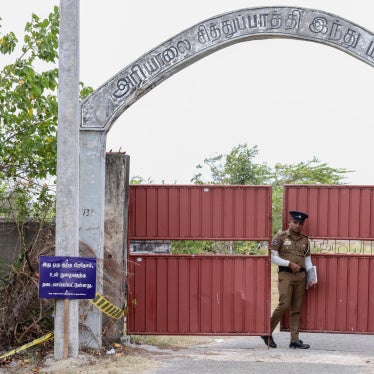
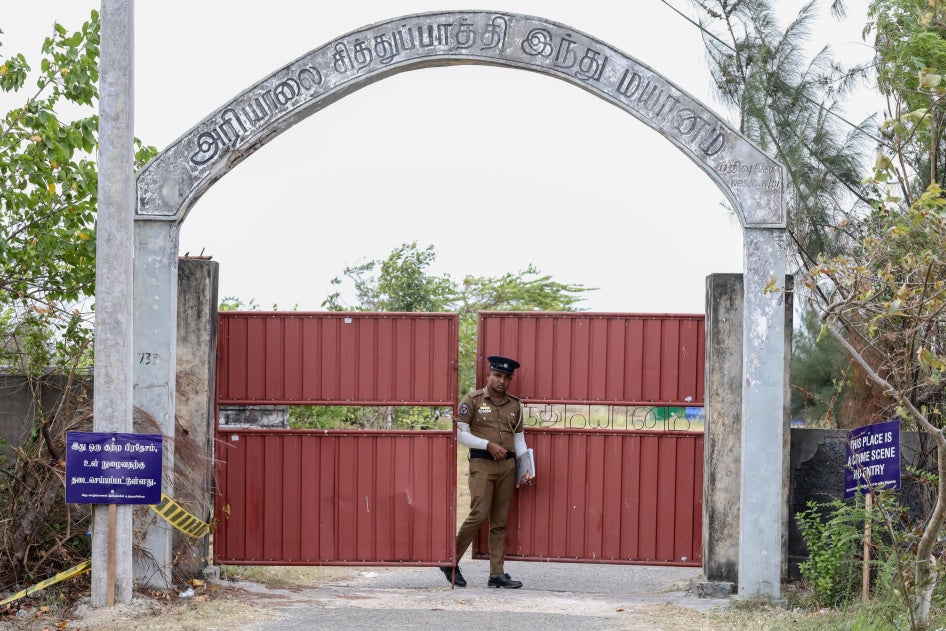
“Excavations [of mass graves] alone will not provide justice,” said a family member of a disappearance victim in Jaffna. “Will those who are responsible for abuses be held accountable?” Investigators have recovered the remains of 582 people from a mass grave at Chemmani, near Jaffna, but there has been no apparent progress in identifying the victims or finding what happened to them.
The Dissanayake government has made some progress in important investigations that were previously derailed. These include the inquiry into the 2009 murder of a newspaper editor, Lasantha Wickrematunge; the 2010 enforced disappearance of a journalist, Prageeth Ekneligoda; and the enforced disappearance by naval intelligence officers of 11 young men who were held for ransom in 2008 and 2009.
An investigation into an alleged high-level government conspiracy behind the 2019 Easter Sunday bombings, which killed 269 people, was only able to proceed after President Dissanayake took office. In February 2026, police arrested Suresh Sallay, a former military intelligence officer, for colluding with an Islamist group accused of carrying out the attacks. In June, a Sri Lankan court banned former President Gotabaya Rajapaksa and two other military intelligence officers from foreign travel in connection with the ongoing investigations into the attacks.
Despite the limited progress, the Dissanayake government has not responded with the needed urgency to end impunity for grave abuses, Human Rights Watch found. There has been no progress in other important cases in which senior officials have been implicated, including the 2006 killing of five Tamil students and the massacre of 17 mostly Tamil members of the French aid group Action Contre la Faim. Twenty years on, no one has been arrested, let alone prosecuted, for these killings.
The Dissanayake government has not accepted the Sri Lanka Accountability Project, established by the UN Human Rights Council to collect evidence of serious rights abuses. It has failed to establish the promised Directorate of Public Prosecution to independently prosecute past abuses.
Instead, it has backed initiatives of previous governments, such as the Office on Missing Persons and the Office for Reparations, which many victims’ families have rejected because they consider them efforts intended to delay justice.
Since the end of the civil war in 2009, the UN has played an important role in promoting justice and accountability while seeking to end ongoing violations. The UN Secretary-General’s 2011 Panel of Experts report and the 2015 investigation on Sri Lanka by the Office of the High Commissioner for Human Rights (OHCHR) documented extensive war crimes and other abuses by both sides during the civil war. And the UN Human Rights Council has adopted a series of resolutions seeking accountability.
The UN Human Rights Council and the OHCHR should continue to review the Dissanayake government’s progress on justice and press for action to address decades of impunity, Human Rights Watch said.
“The Dissanayake government should jumpstart its efforts to obtain genuine accountability for the killings and disappearances in the past conflicts,” McKernan said. “The UN high commissioner and UN member states at the Human Rights Council should urge the Dissanayake government to demonstrate its expressed commitment to justice in Sri Lanka.”