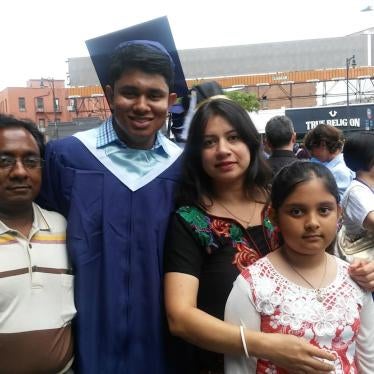
My mother, a 51-year-old service worker, immigrated to the U.S. in 2004 and lives in New York with my father. In August 2025, she received a phone call that no one wants to receive from their doctor — and found out that she has breast cancer.
As a Medicaid enrollee, she didn’t have to add fear about paying for treatment atop the other fears racing through her mind: of missing my family’s milestones or retiring with my father and feeling they had lived the American dream. And thanks to her Medicaid coverage, her cancer was detected early.
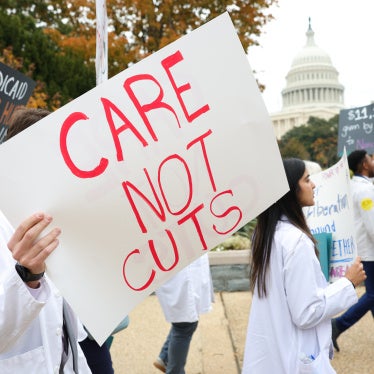
Politicians are now toying with her life and the lives of millions of low-income people in the U.S. who rely on Medicaid. The so-called One Big Beautiful Bill Act, passed in July 2025, extended and deepened expensive tax cuts that primarily benefit the wealthy and imposed new work requirements for Medicaid eligibility that will hinder access to health insurance for millions of people.
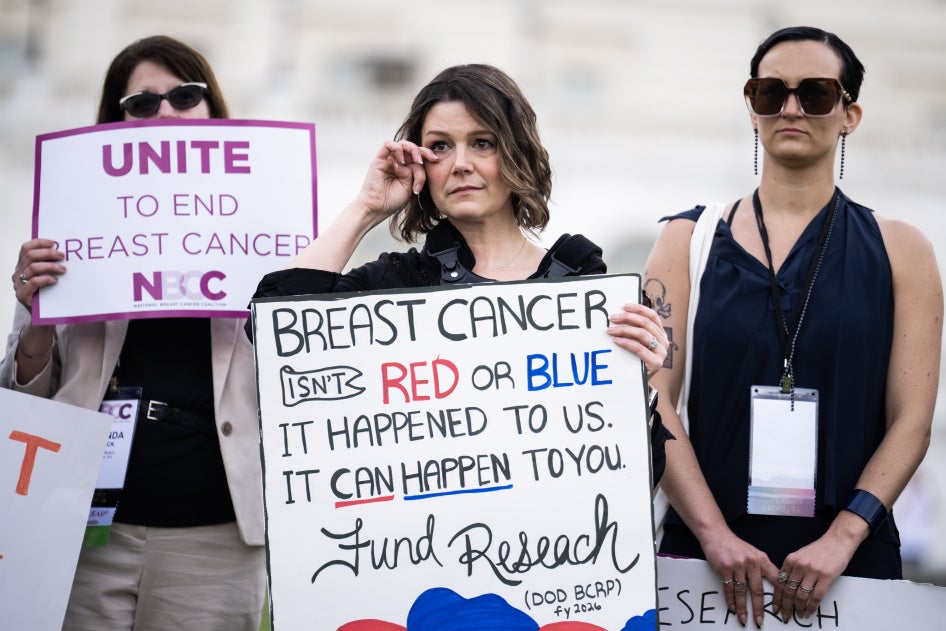
Medicaid pays for health care for more than 68 million low-income women, children, people of color, people with disabilities, and older people in the U.S. This includes 10% of adults with a history of cancer according to the American Cancer Society.
Like millions of other Medicaid enrollees, my mother now faces great uncertainty about whether she will be able to continue receiving coverage for the breast cancer treatment and other health care she requires. By the end of 2026, New York and the 39 other states and D.C. that expanded Medicaid coverage under the Affordable Care Act must impose harsh new eligibility criteria that will strip Medicaid coverage from many adults without dependents if they don’t document 80 hours per month of work, volunteering, education, or related activities.
The Urban Institute estimates that between 4.9 and 10.1 million people could lose Medicaid coverage by 2028 because of these new requirements.
The experiences and concerns that people like my mother face have seemingly not been carefully considered as the government issued new guidance on work requirements and states begin implementing them.
My mother, who had worked at Dunkin Donuts, hasn’t re-entered the workforce because of significant complications from her mastectomy and reconstructive surgeries. Her job required a lot of physical movement as she prepared orders, managed inventory, and engaged with customers. She is in physical therapy to regain upper body movement and will require additional procedures to perform most of her usual work. She worries that she will not be able to meet the demands of even online volunteering for 80 hours a month.
The bill includes exemptions, including for people with physical, intellectual, or developmental disabilities, and with serious or complex medical conditions, including those who are “medically frail.” On June 1, federal authorities issued guidance for states regarding these new requirements, that leaves it to states to determine which health conditions should fall under “medically frail” and narrows the definition.
Federal guidance will now require my mother’s oncologist and surgeons to show how breast cancer prevents her from working and or from volunteering, and for New York to update or create new diagnosis codes that also specify severity and ability to comply with work requirements.
As a working adult, I pay federal taxes so that families, like mine, can get the care they need. We know that Medicaid saves lives. Qualifying community engagement activities and exemptions should be interpreted to avoid excluding people with genuine barriers to work that fall outside these narrowly defined categories.
Saha is a senior women’s rights coordinator at Human Rights Watch.