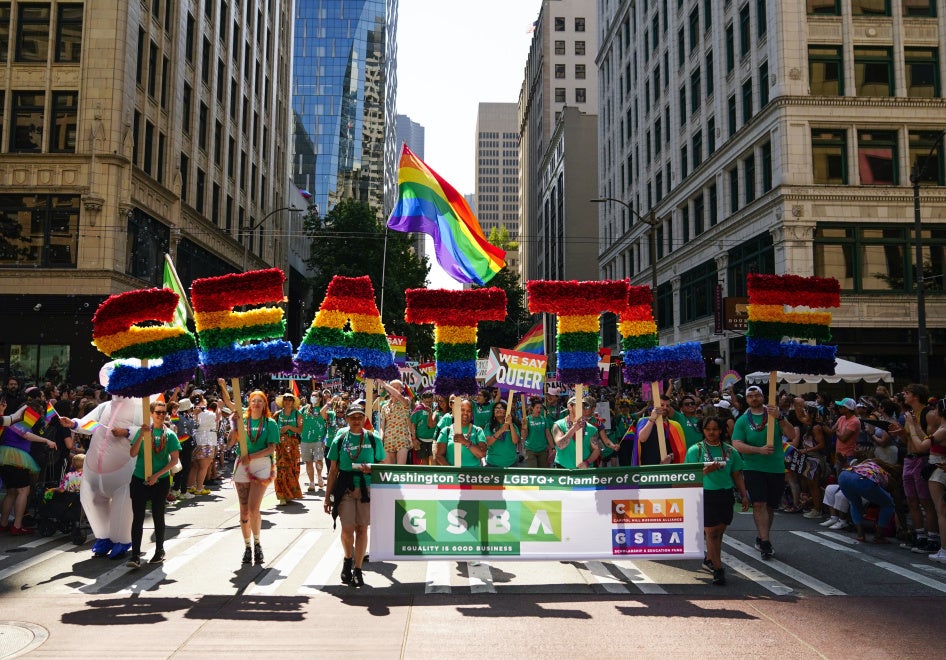
When the Egypt and Iran teams meet at Lumen Field in Seattle tonight, soccer fans will be free to wave the rainbow flag. The Fédération Internationale de Football Association (FIFA) confirmed Thursday that it would not bar the symbol from the stadium over formal objections from both countries’ football federations. It is the right call.
On June 25, FIFA called the tournament “an inclusive event that welcomes people from all backgrounds,” and said rainbow flags and other flags representing sexual orientation and gender identity are permitted under its stadium code of conduct, provided they are used in line with the rules.
This announcement is overdue, especially after FIFA shamefully canceled its own anti-discrimination campaign for the 2025 FIFA Club World Cup.
Human Rights Watch has long documented human rights abuses of lesbian, gay, bisexual, and transgender (LGBT) people in both of the countries whose teams are playing tonight. In Egypt, which denies the existence of LGBT people, no statute explicitly criminalizes same-sex conduct; instead, a vaguely worded “debauchery” law is used selectively to arrest, prosecute, and torture LGBT people.
Iran’s Islamic penal code prescribes punishments ranging from flogging, which constitutes torture, to death sentences for men engaging in consensual same-sex conduct. That is why a simple act like raising a flag is unnerving for these governments.
That is the context in which the football federations in Cairo and Tehran told FIFA they wanted to ban rainbow flags from their match.
The contrast with the World Cup in 2022 is important. Then, FIFA allowed the host government Qatar, whose government has a record of rights violations against LGBT people, to confiscate rainbow items from fans, detain a journalist over his rainbow t-shirt, and threaten to sanction captains for wearing the “One Love” armband. Since 2016, under its own statutes, FIFA has been bound to respect all internationally recognized human rights.
Seattle’s Pride Match Day shows human rights commitments can be honored, when FIFA chooses. The Seattle World Cup host city organizers captured this sentiment perfectly, affirming: “Soccer has a unique power to unite people across borders, cultures, and beliefs. We are honored to host a Pride Match and to celebrate Pride as part of a global football community. This match reflects our ongoing commitment to respect, dignity and unity for all.”