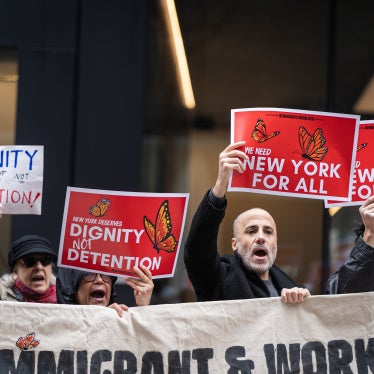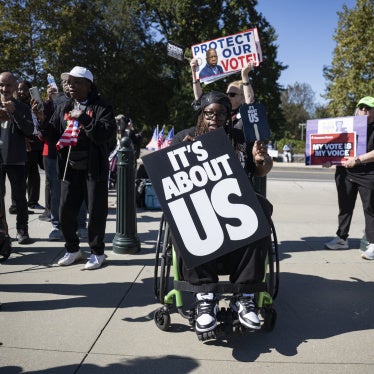
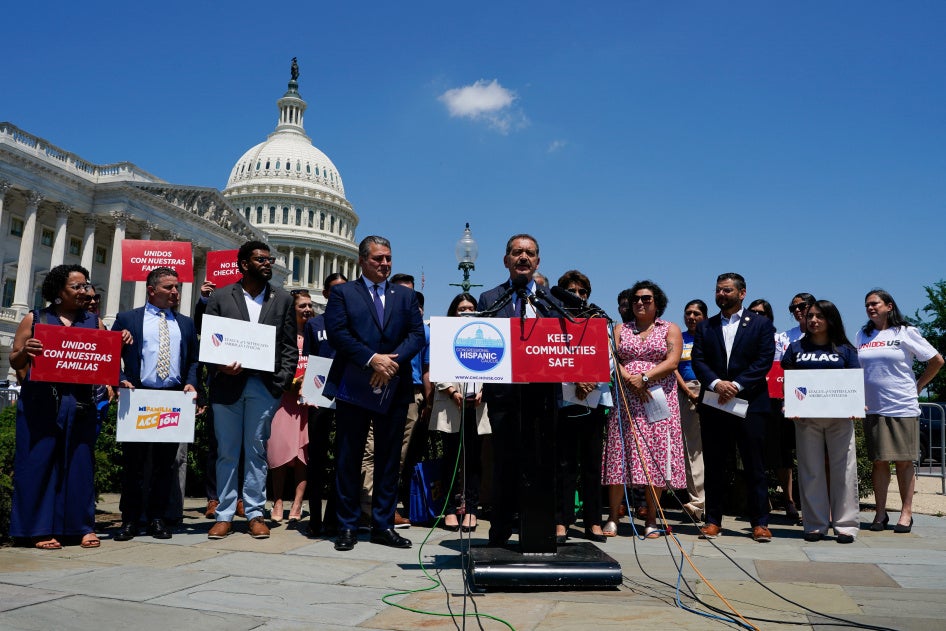
Against the backdrop of Mental Health Awareness Month and the advancement of Congress’ budget reconciliation bill, hundreds of immigrants, community members, and allies gathered in the nation’s capital on May 20 for a peaceful march from Immigration and Customs Enforcement’s (ICE) headquarters to the Capitol.
The demonstration was held to protest the budget reconciliation bill’s funding for the Department of Homeland Security (DHS), ICE’s parent agency. ICE has terrorized communities and harmed the mental health of many. The bill’s proposed additional $71 billion in funding would come with none of the lifesaving oversight and reforms that Human Rights Watch and others have repeatedly called for.
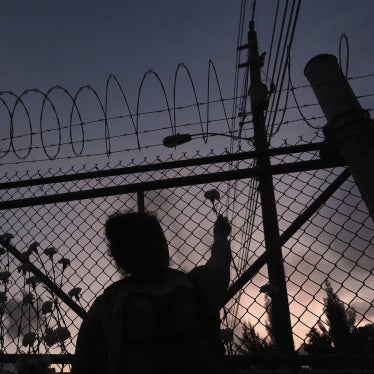
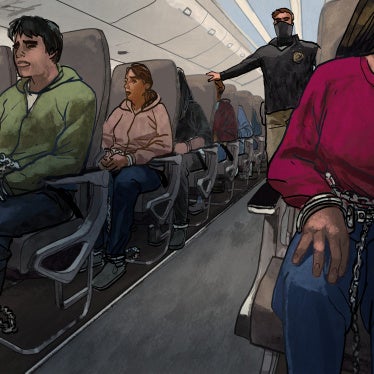
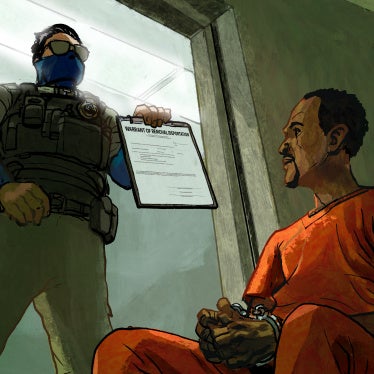
Abusive immigration detention is profoundly harmful to mental health; under the current administration, well-documented cases of medical neglect and inhumane treatment at detention centers and the gutting of oversight bodies has only made things worse. According to the Journal of the American Medical Association, the mortality rate in ICE detention in 2026 is on track to be the highest in 20 years—18 people have already died this year in detention, and 5 of those deaths have been categorized as apparent suicides.
Outside of detention, DHS subjects people across the country to extreme mental anguish. Healthcare workers in immigrant communities have described a notable rise in anxiety, depression, and suicidal thoughts among patients. Children in some communities are afraid to leave their homes, and if they do leave, some fear returning home to find that a parent has been taken from them. Some people of color, including US citizens, and their family members live in fear that they or a loved one will be subject to DHS’s violent immigration enforcement practices.
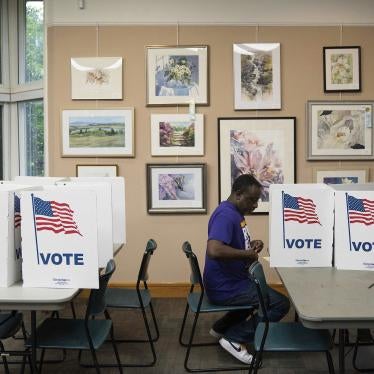
Meanwhile, the One Big, Beautiful Bill Act, passed in July 2025, will cut over a trillion dollars from rights-essential public programs, including Medicaid and the Supplemental Nutrition Assistance Program (SNAP) over the coming years, putting millions of at risk of losing access to health care and of experiencing food insecurity.
In reviewing the budget reconciliation bill, Congress should prioritize meaningful oversight of enforcement operations and detention facilities, as well as accountability measures for human rights violations, to prevent additional deaths and harm to mental health.