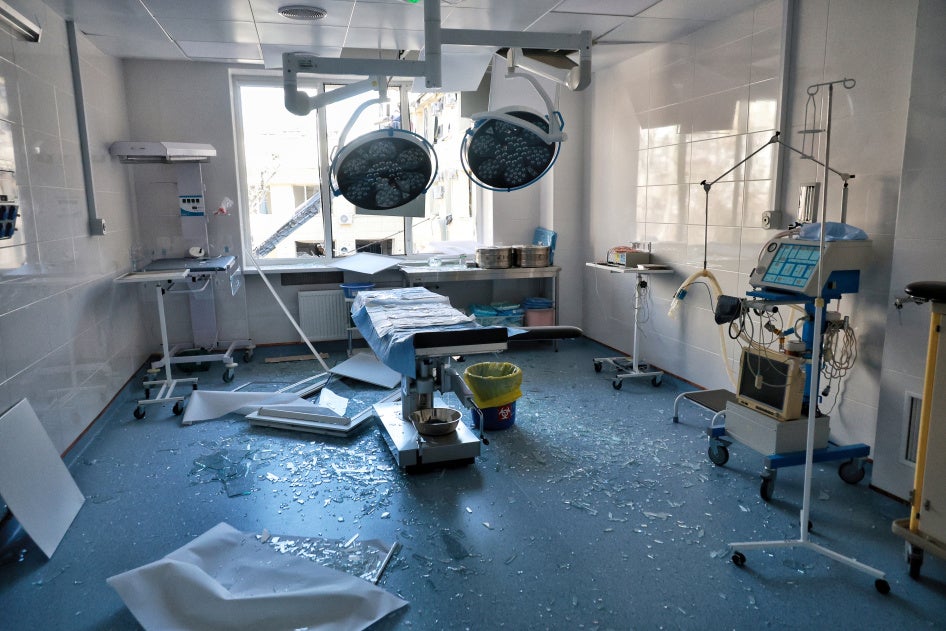
United Nations member states and civil society organizations met in New York City on Tuesday to renew their commitment to protecting health care in armed conflict. The event, part of Protection of Civilians Week, recognized a systemic failure to respect and uphold international laws and norms governing the use of force against health care.
The event acknowledged the 10th anniversary of UN Security Council Resolution 2286 and warned of a growing pattern of assaults on hospitals, ambulances, and medical personnel during hostilities. The resolution urges states and all parties to armed conflicts to “prevent and address” further attacks.
Medical personnel are protected under the laws of war as civilians or military noncombatants. Infrastructure such as hospitals, health clinics, and ambulances have special protections, which they lose only if they are being used outside their humanitarian function to commit acts harmful to the enemy. Even then, health infrastructure is still protected against indiscriminate attacks or attacks causing disproportionate civilian harm. Attacks on infrastructure critical to the health of the population, such as water and electrical plants, can violate international human rights as well as humanitarian law.
Human Rights Watch has documented unlawful attacks on health care during armed conflict for decades, including in Syria, Myanmar, Gaza, Ukraine, and elsewhere.
Tuesday’s event focused on “closing the gaps” that exist between rhetoric and action, violations and accountability, and laws and justice. As the representative from Spain, one of the events co-hosts with Poland, said: “The gap is not narrowing, it’s widening.”
States should heed Resolution 2286’s call to prevent attacks on health in conflict. This includes improving data collection on attacks on and threats to health care; integrating measures to ensure respect for international law into military doctrine and training; expanding domestic law to incorporate legal obligations under international law; and restricting the sale and export of arms and other technologies that may be used to identify, target, and attack healthcare facilities and personnel to known perpetrators. Governments should regularly and publicly report on actions taken to comply with these and other legal obligations.
Deliberately targeting health in conflict violates the foundational principles of international law and condemns civilians to suffer the long-lasting consequences of war without adequate access to desperately needed care. It is up to governments to turn their words into actions.