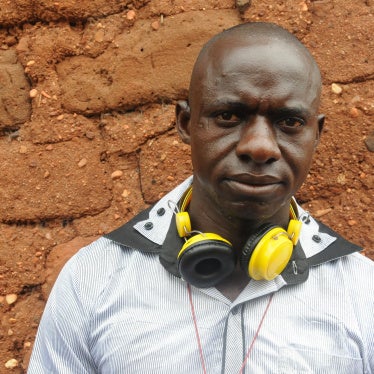
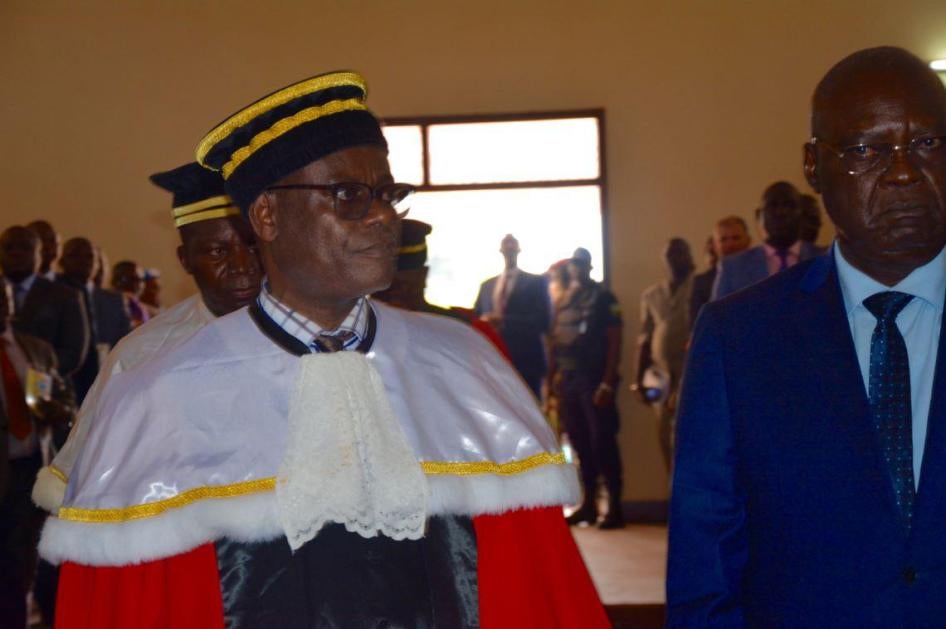
The Central African Republic’s Special Criminal Court announced the death of its first special prosecutor, Toussaint Muntazini, on March 25 after a long illness. His passing is a profound loss for victims of serious crimes.
Muntazini, a Congolese military judge and former attorney general of the armed forces of the Democratic Republic of Congo, will be remembered as a leader in the fight against impunity in two of the world’s most neglected conflicts. In Congo, he was pivotal in advancing the country’s efforts to investigate and prosecute serious crimes through its military courts. As the military’s attorney general at the time, Muntazini was the high-ranking official responsible for overseeing the domestic legal process that facilitated the surrender and transfer of Thomas Lubanga to the International Criminal Court for war crimes committed in Congo’s Ituri province.
In the Central African Republic, Muntazini was appointed special prosecutor to the Special Criminal Court in 2017. Established in 2015 and integrated into the national domestic system with international support, the court was designed to investigate and prosecute serious violations committed in the country since 2003. After arriving in Bangui, Muntazini crafted the court’s prosecutorial strategy, and his office went on to open preliminary investigations that led to the court’s first trials.
The Special Criminal Court faced enormous challenges in those early days, operating amid ongoing violence, with limited resources and acute insecurity. Muntazini lived under tight protection and rarely left the court’s compound. But his commitment and determination demonstrated that justice was possible even during an active conflict. The Special Criminal Court’s hybrid model, with national and international staff working side-by-side, offered a chance for local ownership while drawing on much-needed global expertise. The Special Criminal Court complements the ongoing work of the International Criminal Court in the Central African Republic and is proof that justice, while slow, is possible.
Muntazini’s determination helped dismantle the country’s long culture of impunity, where cycles of atrocity have driven conflict for decades. His passing leaves a gap at a pivotal moment, as the court’s mandate faces growing funding pressures. The international community should defend Muntazini’s legacy by pushing for meaningful justice and accountability efforts in his native Congo while ensuring that the Special Criminal Court has the resources it needs to continue its critical work.