In March, France notified the Council of Europe it is extending to its overseas territories the obligations under the European Social Charter – a Council of Europe treaty guaranteeing fundamental social and economic rights.
This long-overdue step ends a legal anomaly and structural injustice that excluded millions of people living within French jurisdiction, but in overseas territories. It will enhance scrutiny of France’s compliance with these rights obligations and help redress unequal treatment between territories rooted in the country’s colonial legacy.
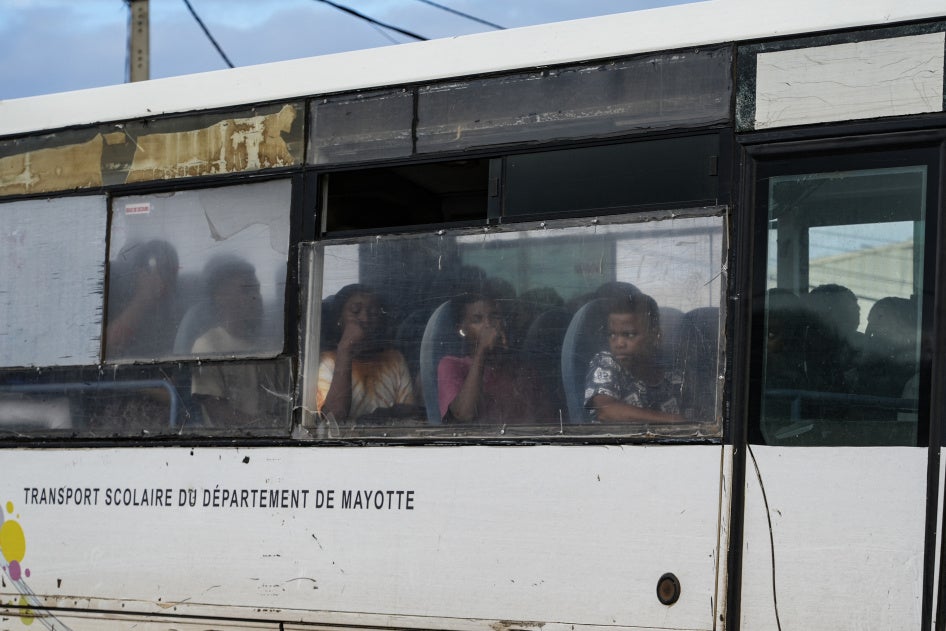
Human Rights Watch has documented the impact of deep structural inequalities in Mayotte, a French overseas territory in the Indian Ocean. Mayotte is France’s poorest region with more than 75 percent of its population living below the poverty line. Thousands of children are denied access to education, with more than 15,000 out of school. Those enrolled often face overcrowded schools where their rights are not met, including access to drinking water, sanitation, nutritious food, and a safe learning environment. Children living in informal settlements, those from migrant families, and children with disabilities, are particularly affected.
The Charter, widely regarded as Europe’s “social constitution”, complements the European Convention on Human Rights. Until now, France stood apart from countries including the Netherlands, Portugal, Spain, and the United Kingdom, which had already extended these protections –at least in part– to their overseas territories. Civil society organizations have long criticized this exclusion as depriving millions of access to these rights and their safeguards.
The extension opens two important avenues for oversight. France will now be required to report on implementation in these territories to the European Committee on Social Rights. Additionally, civil society organizations can bring collective complaints where they have identified violations.
Yet, notwithstanding the improved protection for children’s right to education that the extension of the Charter provides the core problem remains: in France, education is compulsory for children aged 3 to 16, yet thousands in Mayotte remain excluded. This is the result not only of inadequacies of law, but of funding, implementation and support. French authorities should act urgently to address these structural failures which have already held back so many people growing up in Mayotte. If they fail to do so, at least now the children of Mayotte can utilize this charter’s powers to hold them to account.