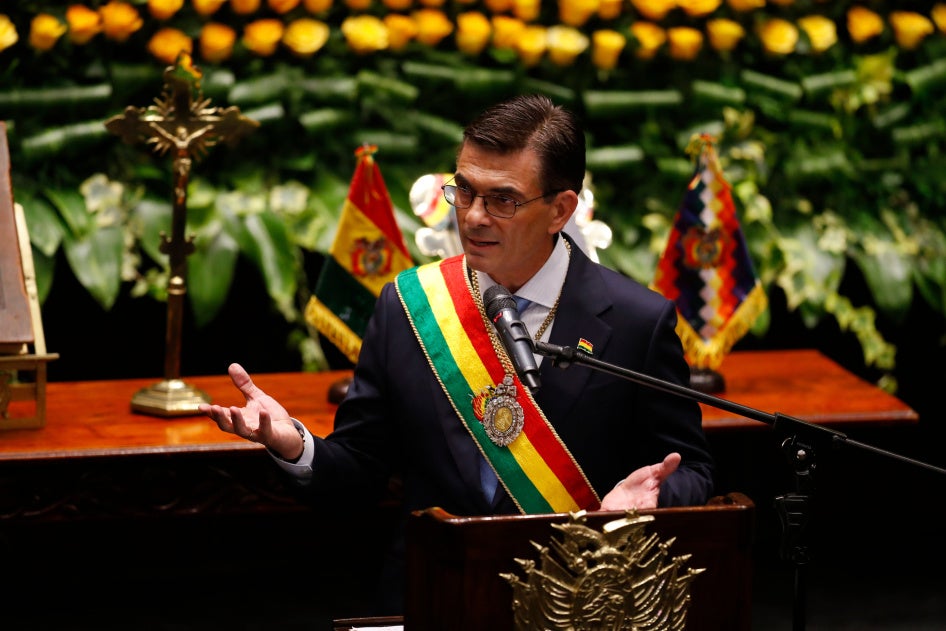
As Rodrigo Paz takes office as Bolivia’s next president, he inherits pressing challenges. The country’s economic crisis is arguably the most urgent, but his government’s legacy may turn more on whether it can reverse decades of backsliding on the rule of law.
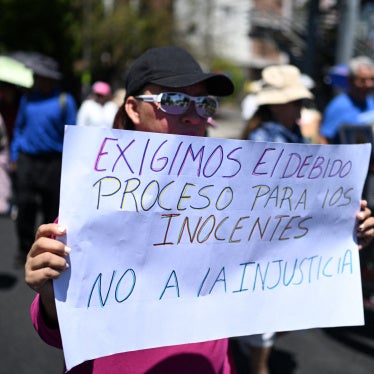
Paz, from the centrist Christian Democratic Party and until now a senator, will inherit a justice system in tatters, plagued by corruption and delays, and often pliant to those in power. Evo Morales, the president from 2006 to 2019, and Jeanine Áñez, interim president in 2019 and 2020, used the courts to pursue political opponents.
Paz’s immediate predecessor, Luis Arce, fell short of breaking with that pattern despite early signs to the contrary. Arce acknowledged that justice was a "debt" his party owed Bolivians and created a commission of experts to draft proposals for a truly independent justice system. However, the promised reforms never materialized.
Today, Bolivia has in many ways one of the weakest and least independent and functional justice systems in Latin America. The World Justice Project’s 2025 Rule of Law Index, which examines corruption and the effectiveness of justice systems, placed the country 131 out of 143 countries assessed worldwide for 2025 —only above Venezuela and Nicaragua in the Latin American region.
The first signs from Paz have been encouraging. His electoral platform includes judicial reform aimed at strengthening key institutions and establishing a merit-based reform commission with international support.
In media interviews, Paz said his government will not interfere in the work of judges and prosecutors and will seek equal justice for all, regardless of who is involved and their political inclination. And after winning the election on October 19, Paz pledged to convene a “Justice Summit” in Sucre to debate changes to the judiciary.
The challenges, however, are daunting. The 2009 Constitution establishes that high court judges and members of the Magistrates Council, the body that appoints and dismisses judges, are to be elected by popular vote from lists drawn up by Congress, which was controlled for the last two decades by Evo Morales’s Movement Toward Socialism (MAS). This process, while appearing to democratize the justice system, allowed the government to co-opt it.
In 2010, Morales signed a law stripping judges appointed before the 2009 Constitution of their tenure and retroactively deeming them temporary. The Magistrates Council removed scores of judges without providing any cause and named new judges amid allegations of irregularities.
More recently, Congress was unable to draw up lists for new members of the Constitutional Court after the Court paralyzed the selection process. As a result, the magistrates who were elected in 2017 for six-year terms have remained in office after their terms expired in 2023. A majority of them decided to extend their own mandate. Bolivians now refer to them as the “self-extended” magistrates. The president of the Supreme Court, another Bolivia high court, has publicly questioned the legality of their continued tenure.
President Paz and Congress should ideally replace the election system, which fails to ensure judicial independence. In the absence of a constitutional reform to overhaul the system altogether, however, they should pass legislation to create a selection committee that uses transparent, merit-based criteria to guide Congress’ decision to shortlist candidates.
The objective should be to make sure that those appointed have job tenure, with clear rules for appointments, transfers, promotions, and removal on the basis of merit. This would help shield judges and prosecutors from political influence, so that they can base their decisions solely on the facts of the case and the law.
Paz’s presidency is a stark political change for Bolivia. But only a functional and independent judiciary can ensure a stable rule of law.
Juanita Goebertus is the Americas director at Human Rights Watch.