JBS and the EU’s Exposure to Human Rights Violations and Illegal Deforestation in Pará, Brazil
The 86-page report “Tainted: JBS and the EU’s Exposure to Human Rights Violations and Illegal Deforestation in Pará, Brazil,” details how cattle ranchers illegally seized land and devastated the livelihoods of lawful residents in the Terra Nossa smallholder settlement and the Cachoeira Seca Indigenous territory, affecting their rights to housing, land, and culture. Human Rights Watch analysis of official sources shows that illegal farms in these areas sold cattle to several JBS direct suppliers.
Algorithmic, Wage and Labor Exploitation in Platform Work in the US
The 155-page report, “The Gig Trap: Algorithmic, Wage and Labor Exploitation in Platform Work in the US” focuses on seven major companies operating in the US: Amazon Flex, DoorDash, Favor, Instacart, Lyft, Shipt, and Uber. These companies claim to offer gig workers “flexibility” but often end up paying them less than state or local minimum wages. Six of the seven companies use algorithms with opaque rules to assign jobs and determine wages, meaning that workers do not know how much they will be paid until after completing the job.
Rights Abuses Linked to Saudi Arabia’s Public Investment Fund and Its Chairman, Mohammed bin Salman
The 95-page report, “The Man Who Bought The World: Rights Abuses Linked to Saudi Arabia’s Public Investment Fund and Its Chairman, Mohammad bin Salman,” found that Saudi Arabia’s vast fossil fuel-derived state wealth is effectively controlled by one person, Crown Prince Mohammed bin Salman. Human Rights Watch found that the crown prince wields this enormous economic power in a largely arbitrary and highly personalized manner rather than for the Saudi people’s benefit and that the PIF is used to whitewash the Saudi government’s abuses.
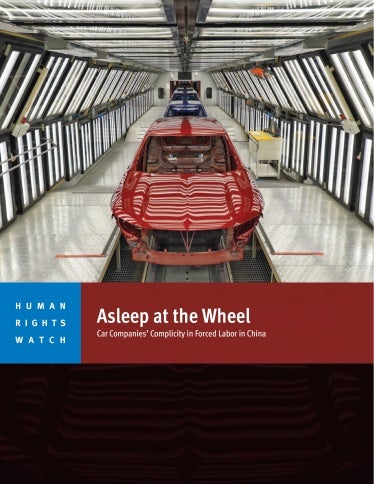
Car Companies’ Complicity in Forced Labor in China
The 99-page report, “Asleep at the Wheel: Car Companies’ Complicity in Forced Labor in China,” finds that some carmakers have succumbed to Chinese government pressure to apply weaker human rights and responsible sourcing standards at their Chinese joint ventures than in their global operations, increasing the risk of exposure to forced labor in Xinjiang. Most have done too little to map their aluminum supply chains and identify links to forced labor.