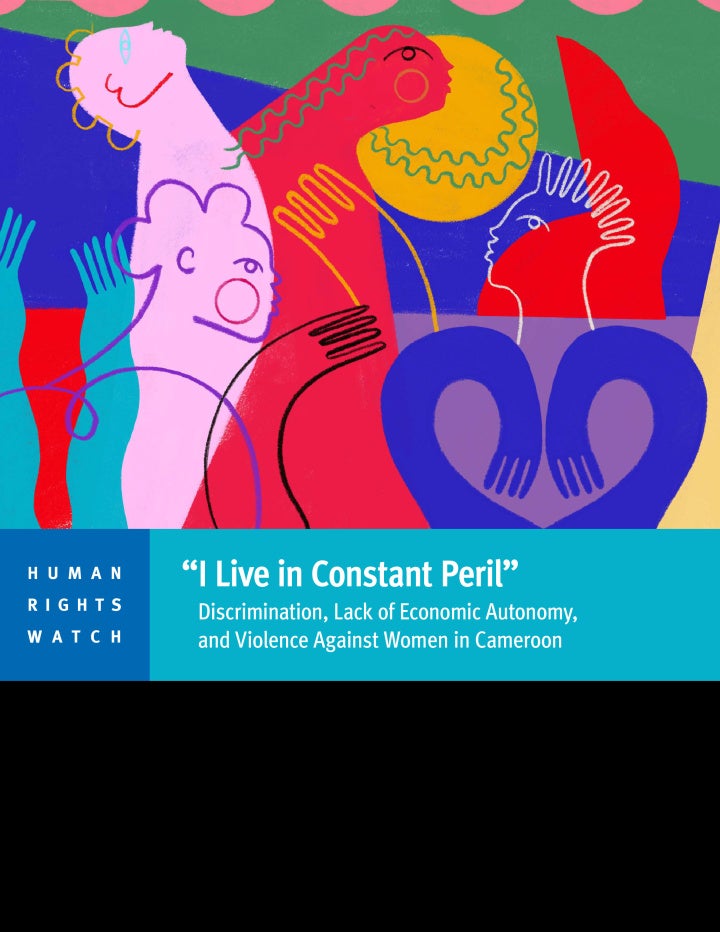
Discrimination, Lack of Economic Autonomy and Violence Against Women in Cameroon
The 75-page report, “‘I Live in Constant Peril:’ Discrimination, Lack of Economic Autonomy and Violence Against Women in Cameroon,” documents widespread violence against women, including physical, psychological, and economic abuse, in most cases by husbands and intimate partners. Researchers found that physical and economic abuse was used to restrict access to financial resources, social security, employment, property, and economic independence. These abuses are not isolated incidents but are rooted in entrenched gender inequality, discriminatory laws, and weak institutions, exacerbated by the government’s chronic underinvestment in prevention and survivor support.
In March 1995, Human Rights Watch released Neither Jobs Nor Justice, a report documenting widespread employment discrimination on the basis of sex that was practiced, condoned, and tolerated by the Russian government.
This report focuses mainly on one aspect of the criminal justice system and its handling of violence against women: the performance of those involved in the provision of medical expertise to the courts when it is alleged that women have been abused. Medical evidence is often a crucial element in the investigation and prosecution of a case of rape or sexual assault.
and Other Human Rights Obligations on the First Anniversary of its Accession to the Council of Europe
On February 28, 1996, the Russian Federation became a full member of the Council of Europe, an intergovernmental organization based in Strasbourg, France, which, among other goals, aims to protect human rights. Accession to the Council of Europe heightened expectations that the Russian Federation would take concrete steps to improve its poor human rights record in the year that has followed.
The Brazilian government is failing to prosecute violence against women in the home fully and fairly. Despite ever-increasing domestic violence (particularly wife-murder, battery and rap) impunity and discriminatory treatment in favor of the perpetrators of domestic violence are still the rule in the Brazilian justice system.