The 75-page report, “No Money, No Care: Obstetric Violence in Sierra Leone,” documents cases of verbal abuse, medical neglect, and abandonment of women and girls facing serious obstetric complications, practices that experts interviewed say are common. Many women interviewed said they were shamed and mistreated by healthcare providers for expressing pain, needing help, or for not having enough money to pay fees. Others described humiliating experiences in which healthcare providers treated them brusquely or withheld important health information. Some cases documented constitute obstetric violence, a largely unaddressed form of gender-based violence prevalent across the world.
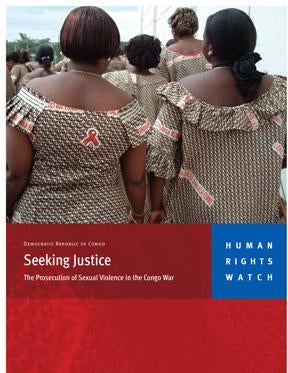
The Prosecution of Sexual Violence in the Congo War
This 52-page report documents how the government of the Democratic Republic of Congo has taken insufficient steps to prosecute those responsible for wartime rape. Human Rights Watch calls on the Congolese government and international donors, including the European Union, to take urgent steps to reform Congo’s justice system.
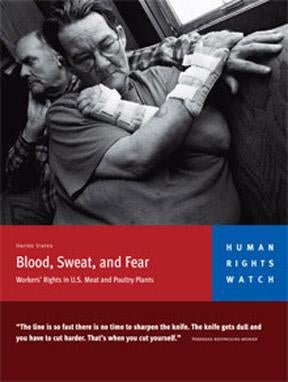
Workers in the U.S. meat and poultry industry endure unnecessarily hazardous work conditions, and the companies employing them often use illegal tactics to crush union organizing efforts. In meat and poultry plants across the United States, Human Rights Watch found that many workers face a real danger of losing a limb, or even their lives, in unsafe work conditions.
The 70-page report documents that youths in Rio de Janeiro’s detention centers are often beaten and verbally abused by guards. Most complaints of ill-treatment are never investigated by the state’s Department of Socio-Economic Action (Departamento Geral de Ações Sócio-Educativas, or DEGASE), the authority responsible for juvenile detention facilities.
HIV/AIDS is a preventable disease, yet approximately 5 million people were newly infected with HIV in 2003, the majority of them through sex. Many of these cases could have been avoided, but for state-imposed restrictions on proven and effective HIV prevention strategies, such as latex condoms.
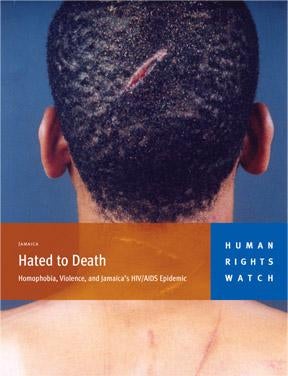
Homophobia, Violence, and Jamaica’s HIV/AIDS Epidemic
Jamaica’s growing HIV/AIDS epidemic is unfolding in the context of widespread violence and discrimination against people living with and at high risk of HIV/AIDS, especially men who have sex with men. Myths about HIV/AIDS persist.
Intimidation and Attacks against Women in Public Life in Afghanistan
When a U.S.-led coalition invaded Afghanistan in October 2001, one of the justifications for the war was that it would liberate women from the misogynistic rule of the Taliban. Three years later, on the eve of the country’s first-ever national presidential elections on October 9, 2004, there have been notable improvements for women and girls.
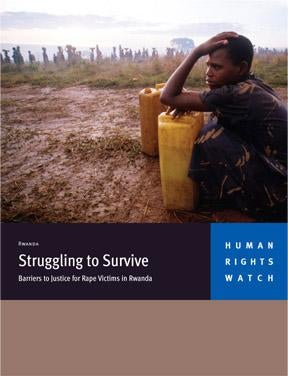
This 58-page report investigates the persistent weaknesses in the Rwandan legal system that hamper the investigation and prosecution of sexual violence. The report also documents the desperate health and economic situation of rape survivors. Many of the women who were raped became infected with HIV.
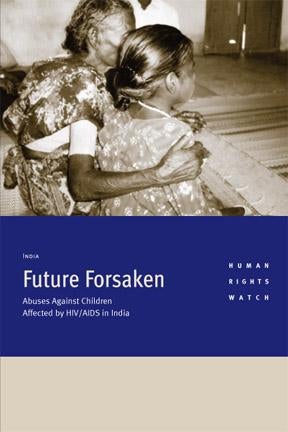
Abuses Against Children Affected by HIV/AIDS in India
This 209-page report documents how many doctors refuse to treat or even touch HIV-positive children. Some schools expel or segregate children because they or their parents are HIV-positive. Many orphanages and other residential institutions reject HIV-positive children or deny that they house them.
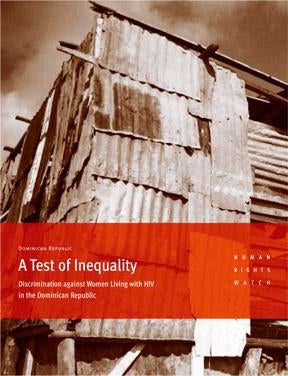
Discrimination against Women Living with HIV in the Dominican Republic
Women in the Dominican Republic are routinely subjected to involuntary HIV testing, and those who test positive are fired and denied adequate healthcare. This 50-page report documents the human rights violations women living with HIV suffer in the public health system as well as in the workplace.
Human Rights Watch has issued numerous reports showing that human rights abuses against persons living with and at high risk of HIV/AIDS contribute significantly to new HIV infections worldwide. This is true in Thailand, the host of this year’s AIDS conference, as well as in numerous other countries worldwide.
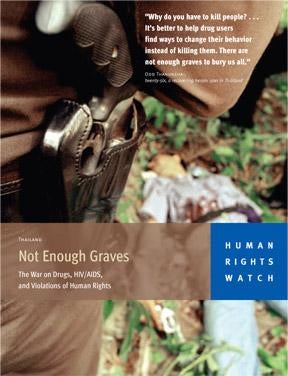
The War on Drugs, HIV/AIDS, and Violations of Human Rights
This 60-page report provides fresh evidence of extrajudicial killings, arbitrary arrests and other human rights violations by Thai authorities. The report contains first-hand testimony from relatives of people killed during the drug war, as well as drug users who endured beatings, forced confessions and arbitrary arrests at the hands of Royal Thai Police.
This 33-page report documents how the Tunisian authorities continue to hold as many as 40 of the country’s more than 500 political prisoners in long-term isolation in prisons around the country. This policy violates Tunisian law as well as international penal standards, undermining government claims of prison reform.
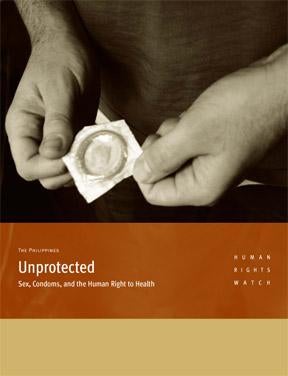
In this 70-page report, Human Rights Watch says that the Philippine government bans the use of national funds for condom supplies. Some local authorities, such as the mayor of Manila City, prohibit the distribution of condoms in government health facilities. School-based HIV/AIDS educators told Human Rights Watch that schools often prohibited them from discussing condoms with students.