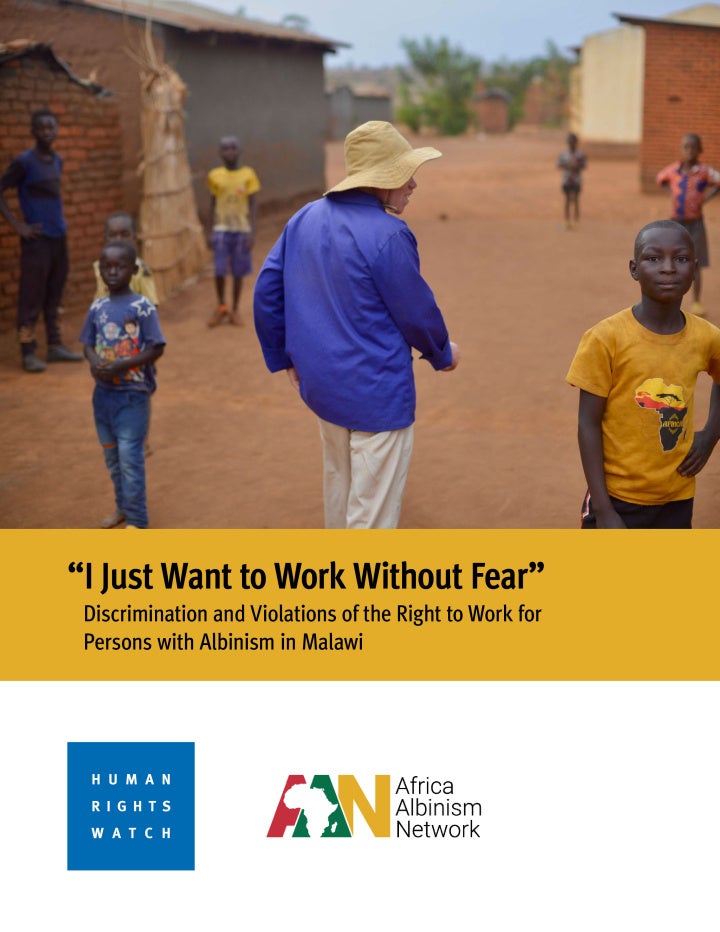
Discrimination and Violations of the Right to Work for Persons with Albinism in Malawi
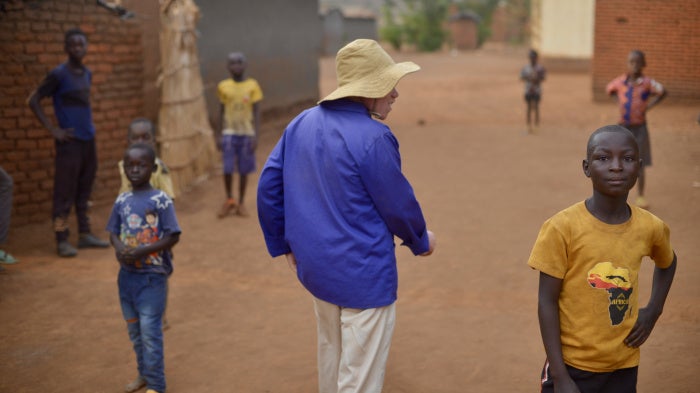
The 65-page report, “‘I Just Want to Work Without Fear’: Discrimination and Violations of the Right to Work for Persons with Albinism in Malawi,” documents how stigma, discrimination, fear of violence, and lack of reasonable accommodation undermine the rights of people with albinism to work, education, health and social security.
The Sudanese government and rebel groups in Darfur are hindering humanitarian agencies from reaching hundreds of thousands of civilians dependent on international aid in many areas of Darfur. Human Rights Watch called on all the warring parties to cease attacks on civilians, including aid workers, and immediately facilitate access of humanitarian assistance to civilians.
A series of prosecutions of independent weeklies, the most outspoken and critical sector of the Moroccan news media, show the continuing limits on press freedom in that country.
The North Korean Government’s Control of Food and the Risk of Hunger
This 34-page report examines recent worrisome developments in North Korea’s food policies, its marginalization of the World Food Programme (WFP), its refusal to allow adequate monitoring of food aid, and the implications of the government’s new policies.
Discrimination, Denial, and the Fate of Binational Same-Sex Couples under U.S. Law
<table cellpadding="3" cellspacing="0"><tr><td><img src="http://hrw.org/images/home/2006/100/usdom13290.jpg" align="left" border="0" /></td> <td valign="top">This report documents how U.S immigration law and federal policy discriminate against binational same-sex couples.</td></tr></table>
Findings of the Detainee Abuse and Accountability Project
This 27-page report presents findings of the Detainee Abuse and Accountability Project, a joint project of New York University’s Center for Human Rights and Global Justice, Human Rights Watch and Human Rights First. The project is the first comprehensive accounting of credible allegations of torture and abuse in U.S. custody in Iraq, Afghanistan and Guantánamo.
Government Discrimination Against “Non-Indigenes” in Nigeria
This 64-page report documents the harmful impact of discriminatory policies against those citizens defined as "non-indigenes" in Nigeria. These policies have a harmful impact on the human rights of many Nigerians and are in violation of the Nigerian constitution and international human rights law.
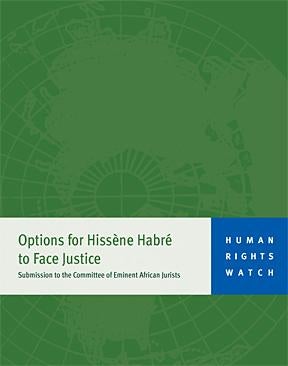
This paper examines Senegal’s legal obligations as well as the different options for bringing Mr. Habré to justice. It notes that—whatever the outcome of the A.U. review—Senegal is under an obligation to prosecute or to extradite Hissène Habré. It concludes that Mr. Habré’s extradition to Belgium is the most efficient, realistic, and timely option for ensuring that Mr.
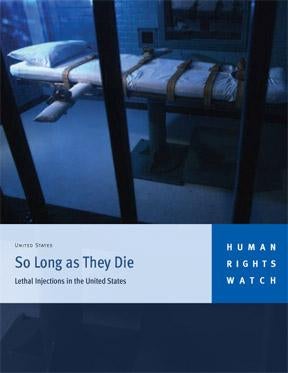
This 65-page report reveals the slipshod history of executions by lethal injection, using a protocol created three decades ago with no scientific research, nor modern adaptation, and still unchanged today. As the prisoner lies strapped to a gurney, a series of three drugs is injected into his vein by executioners hidden behind a wall.
This briefing paper addresses the need for the U.N. Security Council to authorize the proposed United Nations mission in Darfur to use force as necessary to protect civilians.
Police Violence and the Beginnings of Impunity in East Timor
This 60-page report is based on dozens of interviews with witnesses and victims of police abuse in East Timor. It documents excessive force during arrests, torture and ill-treatment of detainees by the National Police of East Timor (PNTL). Several people interviewed had to be hospitalized because of the severity of their injuries.
The briefing paper draws on previously unpublished documents to lay out the way the extermination system was planned in the months before the genocide was launched, 12 years ago this week.
Street Children in the Democratic Republic of Congo
This 72-page report documents how security officials and other adults routinely abuse the country’s street children. In the past 10 years, armed conflict, HIV/AIDS, prohibitive education fees, and even accusations of sorcery have led to a doubling of the number of street children. With no secure access to shelter, food or other basic needs, these children live in insecurity and fear.
Submission to the Committee of Eminent African Jurists
This paper examines Senegal’s legal obligations as well as the different options for bringing Mr. Habré to justice. It notes that—whatever the outcome of the A.U. review—Senegal is under an obligation to prosecute or to extradite Hissène Habré.
Will It Keep Evidence Obtained through Torture or Cruel Treatment out of Commission Trials?
On March 24, 2006, the General Counsel of the Department of Defense issued Military Commission Instruction No. 10, “Certain Evidentiary Requirements,” in response to growing public concern that evidence acquired through torture might be admissible in military commission proceedings.
Since Maoist forces ended their four-month unilateral ceasefire on January 2, 2006, fighting in Nepal’s civil war has engulfed the entire country. Nearly every one of the country’s 75 districts has been affected by the fighting between the Royal Nepali Army (RNA) and the forces of the Communist Party of Nepal (Maoist) (the “Maoists”).