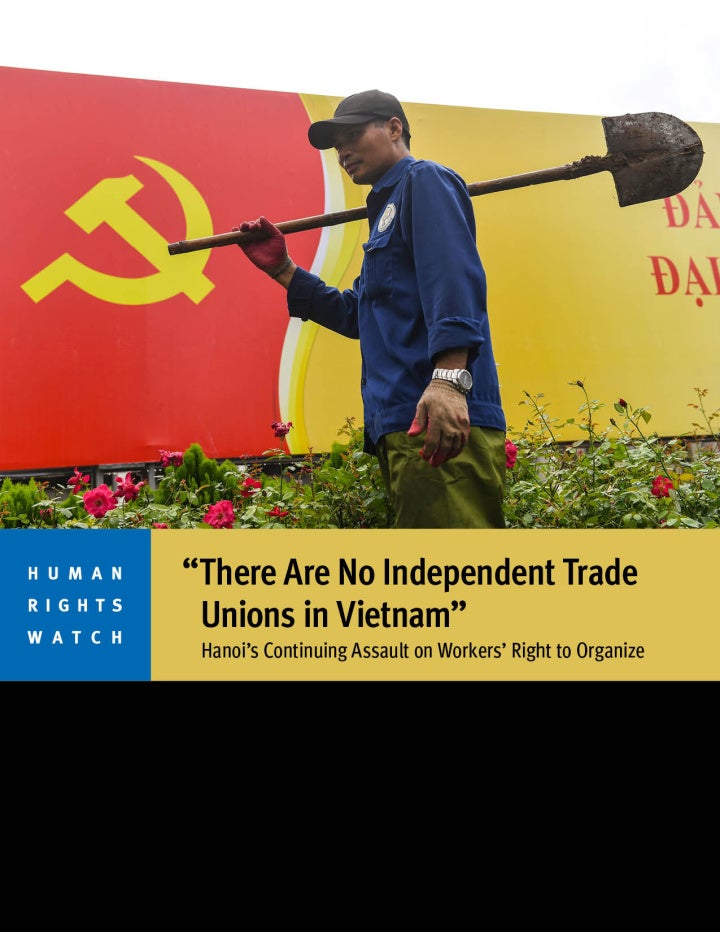
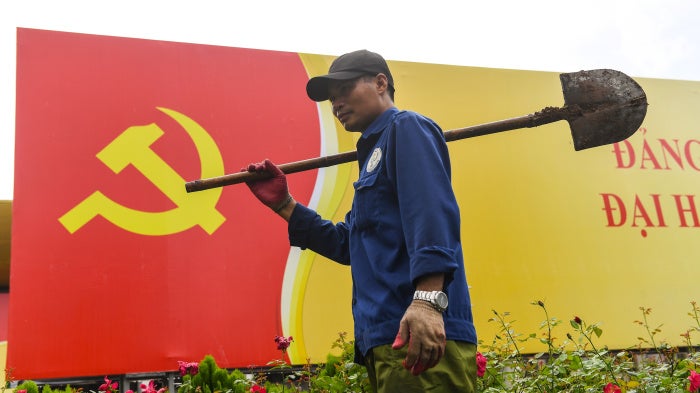
Hanoi’s Continuing Assault on Workers’ Right to Organize
The 49-page report, “There Are No Independent Trade Unions in Vietnam: Hanoi’s Continuing Assault on Workers’ Right to Organize,” documents the Vietnamese governments’ continuing useof vague, overbroad criminal laws to suppress the activities of human rights and labor rights defenders, while maintaining an atmosphere of repression to thwart independent labor organizing. The government has issued decrees and articles in state-run media that reaffirm that all labor organizations in Vietnam are under the government’s authority, and portray independent trade unions as dangerous, anti-state entities.
This 102-page report found that many major cancer hospitals in India do not provide patients with morphine, despite the fact that more than 70 percent of their patients are incurable and likely to require pain treatment and palliative care. Health centers offering services to people living with HIV similarly do not have morphine or doctors trained to prescribe it.
Enforced Disappearances in the Wake of Xinjiang’s Protests
This 44-page report documents the enforced disappearances of 43 Uighur men and teenage boys who were detained by Chinese security forces in the wake of the protests.
This 45-page report says that local representatives of the Interior Ministry often refuse to accept registration papers when a group's objectives or membership displeases the authorities. Moroccan law permits new associations to come into being simply by registering with local authorities, rather than by requiring prior authorization. The law obliges officials to accept the registration papers.
This 150-page report documents repeated failures both in providing health care to pregnant women in Uttar Pradesh state in northern India and in taking steps to identify and address gaps in care.
Ending Human Rights Abuses and Repression across Sudan
This 25-page report documents human rights violations and repression in Khartoum and northern states, ongoing violence in Darfur, and the fighting that threatens civilians in Southern Sudan. It is based on field research in eastern Chad and Southern Sudan in July and August.
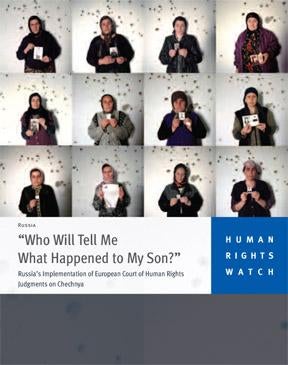
Russia’s Implementation of European Court of Human Rights Judgments on Chechnya
This 38-page report examines Russia's response to European Court judgments on cases from Chechnya. In almost all of the 115 rulings, the court concluded that Russia was responsible for extrajudicial executions, torture, and enforced disappearances, and that it had failed to investigate these crimes.
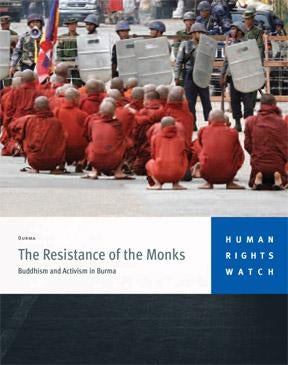
This 99-page report written by longtime Burma watcher Bertil Lintner, describes the repression Burma's monks experienced after they led demonstrations against the government in September 2007. The report tells the stories of individual monks who were arrested, beaten and detained.
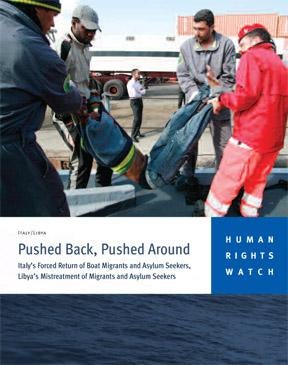
Italy's Forced Return of Boat Migrants and Asylum Seekers, Libya's Mistreatment of Migrants and Asylum Seekers
This 92-page report examines the treatment of migrants, asylum seekers, and refugees in Libya through the eyes of those who have managed to leave and are now in Italy and Malta. It also documents Italy's practice of interdicting boats full of migrants on the high seas and pushing them back to Libya without the required screening.
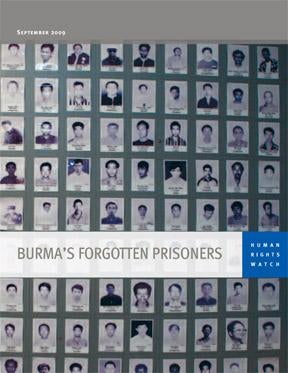
The 35-page report showcases dozens of prominent political activists, Buddhist monks, labor activists, journalists, and artists arrested since peaceful political protests in 2007 and sentenced to draconian prison terms after unfair trials. The report was released on September 16, 2009 at a Capitol Hill news conference hosted by Senator Barbara Boxer.
Burma remains one of the most repressive and closed societies in the world. A shadowy clique of generals, who call themselves the State Peace and Development Council (SPDC), have ruled the country in one incarnation or another since 1962.
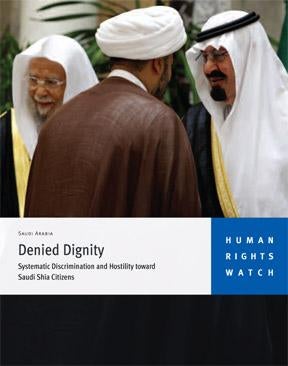
Systematic Discrimination and Hostility toward Saudi Shia Citizens
This 32-page report documents the sharpest sectarian tensions in the kingdom in years, set off by clashes between Shia pilgrims and religious police in Medina in February 2009, followed by arbitrary arrests of Shia protesters in the Eastern Province in March.
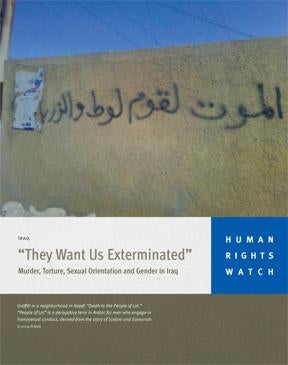
Murder, Torture, Sexual Orientation and Gender in Iraq
This 67-page report documents a wide-reaching campaign of extrajudicial executions, kidnappings, and torture of gay men that began in early 2009. The killings began in the vast Baghdad neighborhood of Sadr City, a stronghold of Moqtada al-Sadr's Mahdi Army militia, and spread to many cities across Iraq.