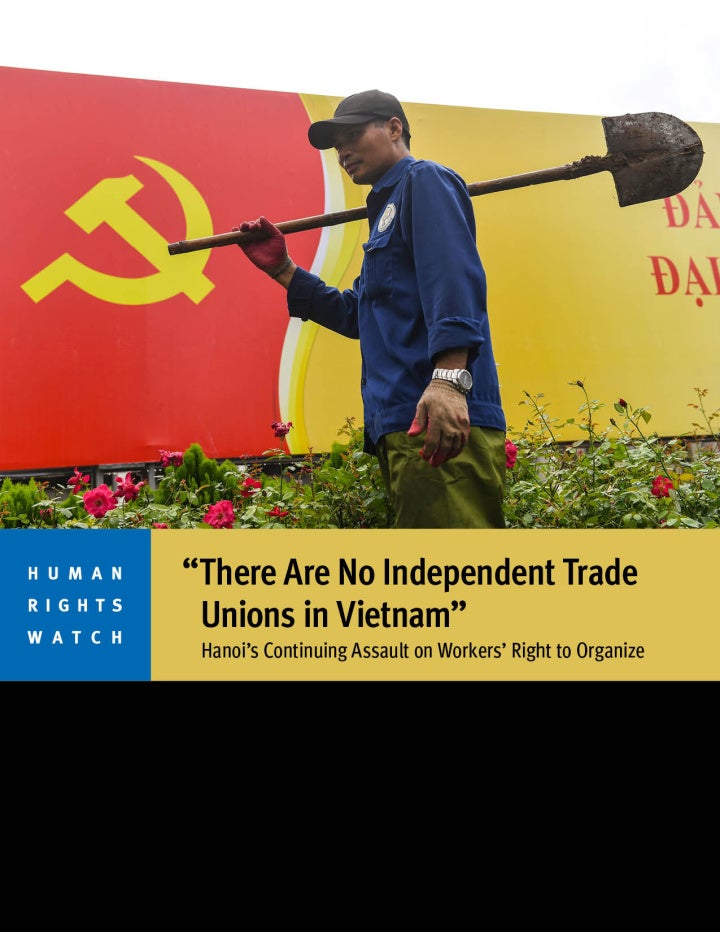
Hanoi’s Continuing Assault on Workers’ Right to Organize
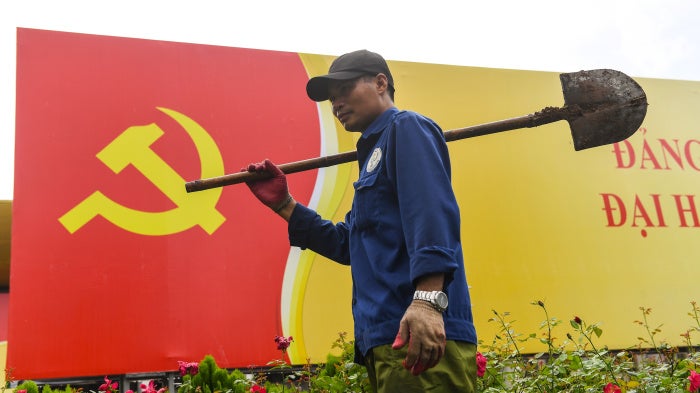
The 49-page report, “There Are No Independent Trade Unions in Vietnam: Hanoi’s Continuing Assault on Workers’ Right to Organize,” documents the Vietnamese governments’ continuing useof vague, overbroad criminal laws to suppress the activities of human rights and labor rights defenders, while maintaining an atmosphere of repression to thwart independent labor organizing. The government has issued decrees and articles in state-run media that reaffirm that all labor organizations in Vietnam are under the government’s authority, and portray independent trade unions as dangerous, anti-state entities.
In April 1994, tens of thousands of workers took to the streets in Medan, Indonesia, demanding higher wages, improved benefits and freedom of association. Notable for their size and anti-Chinese violence, the protests underscored the Indonesian government's urgent need to address worker's rights issues.
The bloody conflict in the Indian state of Punjab drew to a close in 1993, but the restoration of an elected government has not meant the restoration of the rule of law. To the contrary, the Punjab police continue to torture, kill or cause their victims to disappear with impunity.
The mysterious death of President Habyarimana of Rwanda in April 1994 was the pretext for Hutu extremists from the late president's entourage to launch a campaign of genocide against the Tutsi, a minority that made up about 15 percent of the population. The extremists also killed Hutu willing to cooperate with Tutsi in forming a more democratic government.
Iraq’s 1988 Anfal campaign of extermination against the Kurdish people living within its borders resulted in the death of at least 50,000 and as many as 100,000 people, many of them women and children. This book, co-published with Yale University Press, investigates the Anfal campaign and concludes that this campaign constituted genocide against the Kurds.
President Clinton's policy of disregarding fundamental human rights issues to resolve Haiti's political crisis, combined with his inhumane and illegal practice of summarily returning Haitian refugees, has contributed to a human rights disaster that has tarnished his presidency and discredited its stated commitment to democracy and human rights around the world.
Since 1989, tens of thousands of black Mauritanians have been forcibly expelled and hundreds more have been tortured or killed. An undeclared military occupation of the Senegal River Valley — where many of the blacks live — subjects those who remain to harsh repression.
The Greek government views the term "Macedonian" as a geographic term that describes all Greek citizens living in the Macedonian region in northern Greece.
Six War Criminals Named by Victims of "Ethnic Cleansing"
In detailing gross violations of human rights and humanitarian law in Bosanski Samac, this report identifies six war criminals — known as Stevo Todorovic, Slavko and Makso, Goran, Lugar, and Cika Tralija — and calls for immediate action by the international tribunal on war crimes in the former Yugoslavia.
Researched and written prior to the 1994 elections in South Africa, this report describes how the former South African government failed to fulfill its obligations to protect its citizens from violence and guarantee the exercise of their political rights in two homelands.
In spite of the peace accord signed in October 1992 between government forces and RENAMO rebels, innocent civilians are maimed and killed by landmines in Mozambique on a daily basis.
Violations of Human Rights and Humanitarian Law during the Armed Revolt in Chiapas, Mexico
This report examines the underlying causes of the New Year’s Rebellion, the Mexican government’s two-phase response, and the most serious human rights and humanitarian law violations that occurred to date during the conflict.
While paramilitary groups carry out punishment shootings and beatings, the government is responsible for the failure to ensure that police officers and soldiers are held accountable for the use of lethal force, unfair trials, and ill-treatment in detention, among other violations.
Kosovo is a police state. Police raids on homes and marketplaces occur daily and Serbian authorities have stepped up a drive to push Albanians out of Serbian-populated areas. Heavily armed Serbian police, paramilitary troops and regular army forces spread their terror.
Physician Participation in Executions in the United States
This report documents that physicians continue to be involved in executions, in violation of ethical and professional codes of conduct. This involvement is often mandated by state law and specified in departmental regulations about execution procedures.
Human Rights on the Eve of the March 1994 Elections
As El Salvador winds up the campaign for presidential, legislative, and municipal elections scheduled for March 20, 1994, no issue represents a greater threat to the peace process than the rise in political murders of leaders and grassroots activists belonging to the Farabundo Martí National Liberation Front (FMLN).