Hanoi’s Continuing Assault on Workers’ Right to Organize
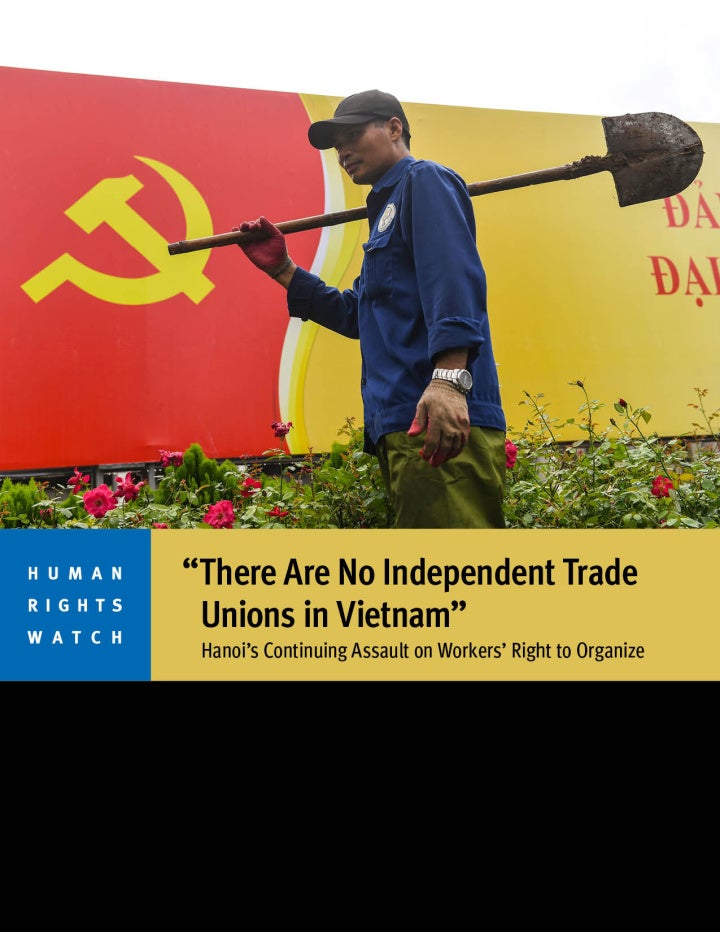
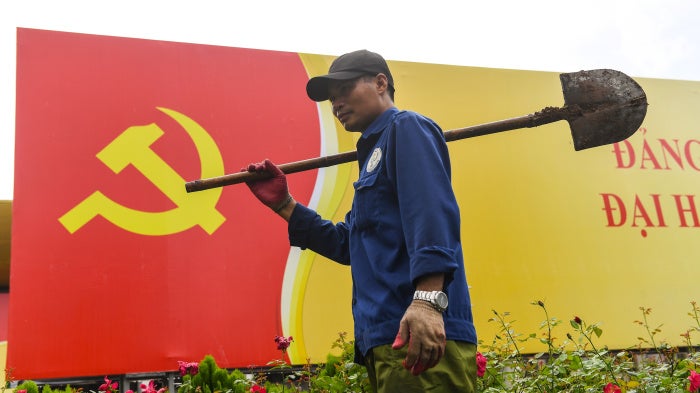
The 49-page report, “There Are No Independent Trade Unions in Vietnam: Hanoi’s Continuing Assault on Workers’ Right to Organize,” documents the Vietnamese governments’ continuing useof vague, overbroad criminal laws to suppress the activities of human rights and labor rights defenders, while maintaining an atmosphere of repression to thwart independent labor organizing. The government has issued decrees and articles in state-run media that reaffirm that all labor organizations in Vietnam are under the government’s authority, and portray independent trade unions as dangerous, anti-state entities.
This report is the third in a series on the conflict in Chechnya. As the war in the breakaway republic enters its third month, Russian forces continue to commit gross abuses against the civilian population.
The perilous state of human rights in the Palestinian self-rule areas is among the key factors — along with continuing political violence, Jewish settlement activity and economic development — that will determine the long-term success of any peace process in the region.
There has been a marked deterioration in relations between Albania and Greece since 1993. At the center of the dispute is the treatment of the Greek minority living in Albania and this report documents their situation.
Forced Resettlement, Suppression of Dissent and Labor Rights Concerns
In April 1992, China’s National People’s Congress (NPC) formally approved the “Resolution on the Construction of the Yangtze River Three Gorges Project,” marking the conclusion of decades of controversy within the Chinese leadership in favor of supporters of the world’s biggest-ever river dam project.
This is the first report by a human-rights organization about Egyptian prisons based on on-site inspections. Beginning on February 12, 1992, Middle East Watch inspected six prisons in an eight-day period. These facilities housed approximately 9,800 inmates, over twenty-seven percent of Egypt's prison population.
Abuses in East Timor, involving possible extrajudicial executions, torture, disappearances, unlawful arrests and detentions and denials of freedom of association, assembly and expression, continue unabated. The perpetrators are the police and army, as well as a group operating in civilian dress, locally known as “ninjas,” who operate as masked gangs reportedly organized by the military.
The first in a series of reports that document violations of humanitarian law by all sides in the war in Chechnya, it describes how Russian forces have shown utter contempt for civilian lives in the breakaway republic of Chechnya.
This report is an urgent update on violations in a criminal trial of 19 men charged with crimes carrying the penalty of death, and was issued as the trial drew to a close after 16 months in court. In a detailed report released in August 1994 (see D611), we compiled the evidence that some, and likely all, of the defendants in case no.
The existence of confidential Chinese government blacklists barring overseas-based pro-democracy and human rights activists from returning to China has long been suspected by the exiled Chinese dissident community and other concerned observers. Until now, however, no conclusive documentary evidence confirming the operation of such a policy has ever come to light.
Since 1992, Egypt has faced continuing political violence and a corresponding rise in human rights abuses committed by both government security forces and armed Islamist militants.
Now the longest-running conflict in the former Soviet Union, the battle for Nagorno-Karabakh has rapidly expanded and intensified since it began in 1988, resulting in the deaths of an estimated 25,000 soldiers and civilians and the displacement of one million others.
Pressure from the international community has resulted in some signs of movement by the SLORC, the ruling military government of Burma, toward adhering to successive U.N. resolutions and improving its international image. But the fundamental issue of widespread human rights abuses has not changed.
We issued this report upon learning of a tense debate within the U.S. State and Defense Departments over whether to allow the export to Turkey of the most advanced and deadly cluster bomb in the U.S. arsenal, the CBU-87. Those who oppose the sale based on Turkey’s appalling human rights record are squared off against those who fear damage to the “strategic relationship” if the sale is denied. The CBU-87’s “combined effect” is its ability to be used both as an antitank and antipersonnel weapon. The CBU-87 could be used in Turkey’s counterinsurgency war with Kurdish rebels, with dire consequences for the civilian population, as the Turkish government has a well-documented record of contempt for civilian life during military operations.
In May, 1991, the government of former President Mengistu Haile Mariam was overthrown by the military forces of the Ethiopian People's Revolutionary Democratic Front (EPRDF) and the Eritrean People's Liberation Front (EPLF), ending seventeen years of the repressive rule of the Dergue regime. The Mengistu government was responsible for human rights violations on an enormous scale.
The Egyptian Constitution proclaims Islam the state religion, but also guarantees to all citizens freedom of belief and freedom to practice religious rites.