Hanoi’s Continuing Assault on Workers’ Right to Organize
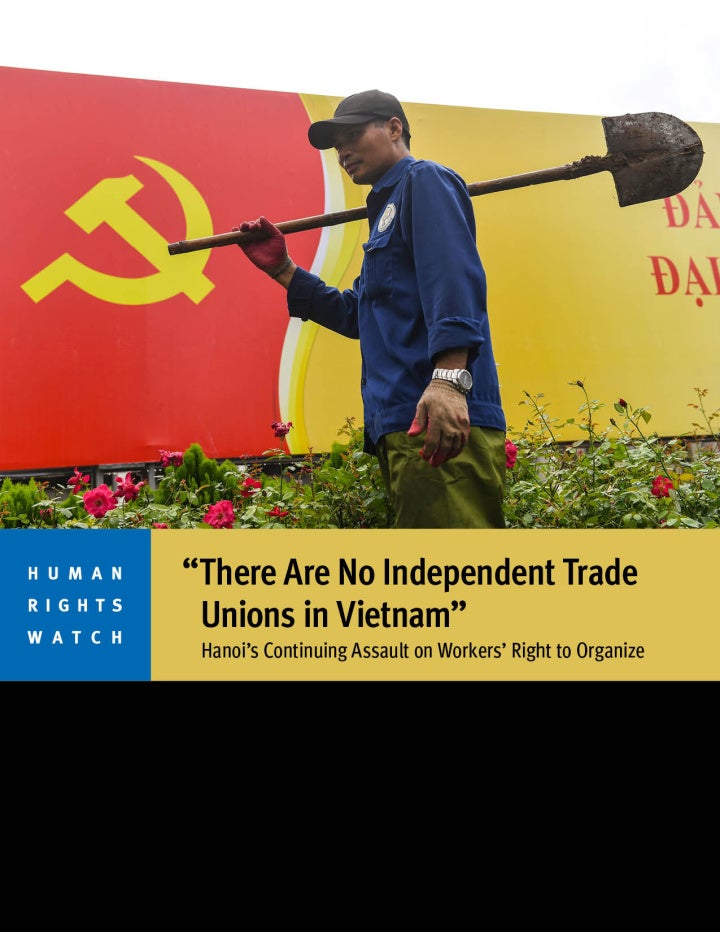
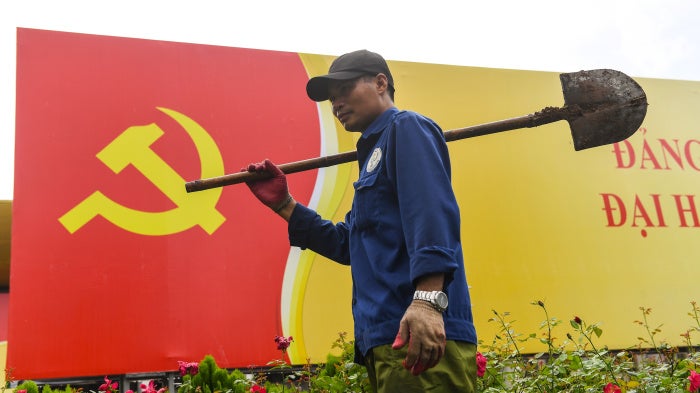
The 49-page report, “There Are No Independent Trade Unions in Vietnam: Hanoi’s Continuing Assault on Workers’ Right to Organize,” documents the Vietnamese governments’ continuing useof vague, overbroad criminal laws to suppress the activities of human rights and labor rights defenders, while maintaining an atmosphere of repression to thwart independent labor organizing. The government has issued decrees and articles in state-run media that reaffirm that all labor organizations in Vietnam are under the government’s authority, and portray independent trade unions as dangerous, anti-state entities.
The departure of the last U.N. troops of the Somalia operation in March 1995 marks a critical juncture for Somalia, and for international peacekeeping. In researching this report, we set out to discover what would be left behind when the U.N.
The current epidemic of communal violence--violence involving groups that define themselves by their differences of religion, ethnicity, language or race--is today's paramount human rights problem.
Germany has been confronted with a disturbing escalation in violent crimes against those who are different, and especially those who are perceived as not ethnic German during the period since unification. Racism that is endemic in many societies has exploded in a public way in Germany.
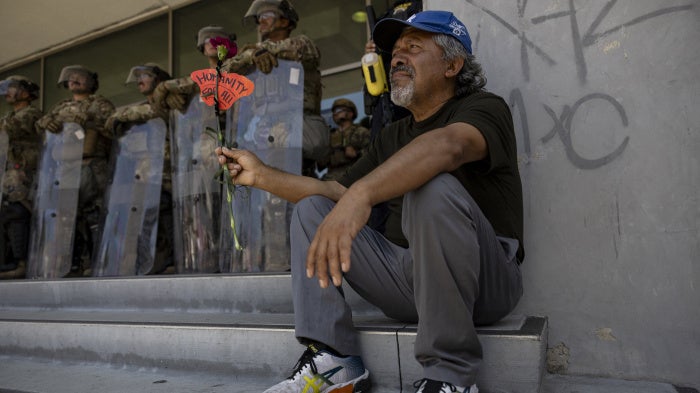
Human Rights Abuses Along the U.S. Border with Mexico Persist Amid Climate of Impunity
U.S. Border Patrol agents are committing serious human rights violations, including unjustified shootings, rapes and beatings, while enjoying virtual impunity for their actions.
Recycled Haitian Soldiers On the Police Front Line
The United States-dominated multinational force entered Haiti on September 19, 1994, with a mandate to "use all necessary means...to establish and maintain a secure and stable environment...." The force's presence permitted the reinstatement of President Jean-Bertrand Aristide and a reduction in the severe human rights abuses that plagued Haiti during the three year military regime.
On August 14, 1992, a fratricidal war broke out on the resort beaches of Abkhazia, a small territory located on the Black Sea coast of the newly independent Republic of Georgia. A 16-month conflict ensued between Abkhaz forces and the central government of Georgia.
The Vietnamese government's recent detention of two prominent senior monks is the latest step in its campaign to suppress the Unified Buddhist Church, the main Buddhist organization in south and central Vietnam prior to unification of the country in 1975.
As the multinational force prepared to turn over operations to the U.N. Mission in Haiti (UNMIH) on March 31, 1995, political tensions increased and far from having brought stability, the U.S.-led force pointed only to a fragile security that impending parliamentary and presidential elections may rupture.
Economic and political changes in Russia have left many Russians staggering under the burdens of rising unemployment, high rates of inflation, disappearing social services and the encroaching threats of corruption and organized crime.
Human Rights Watch opposes the imposition of the death penalty on all criminal offenders in all circumstances because of its inherent cruelty. In addition, Human Rights Watch is concerned that the death penalty is most often carried out in a discriminatory manner on racial, ethnic, religious or political grounds.
Prisoners in Japan face routine violations of human rights from the moment of arrest through the end of their prison term. After being apprehended, Japanese suspects are placed in police detention (daiyo-kangoku) where they face severe pressure, often involving physical abuse, in order to obtain confessions.
Tens of thousands of Guatemalans, both civilians and combatants, were disappeared by government forces over the past 3 decades. One of the fundamental tasks assumed by the government and guerrillas through the ongoing U.N.-mediated peace process is to end the impunity with which such crimes have been committed.
The human rights situation in Burma has not improved with the passing of each new U.N. resolution condemning abuses; if anything, it is worse. This report documents the gross violation of human rights of the civilian population during the Burmese offensive against the KNU from November 1994 to February 1995.
Tens of thousands of Guatemalans have been forcibly "disappeared" by government forces over the past three decades, many of them civilians and some of them combatants. One of the fundamental tasks assumed by the government and guerrillas through the ongoing U.N.-mediated peace process is to end the impunity with which such crimes have been committed.
Although the United Nations peacekeeping mission in Cambodia has been hailed as one of the mostsuccessful ever, the country was back at war even before the last of the peacekeepers left. The civilian population now faces a wide range of abuses from both the Khmer Rouge and the Royal Cambodian Armed Forces.