Hanoi’s Continuing Assault on Workers’ Right to Organize
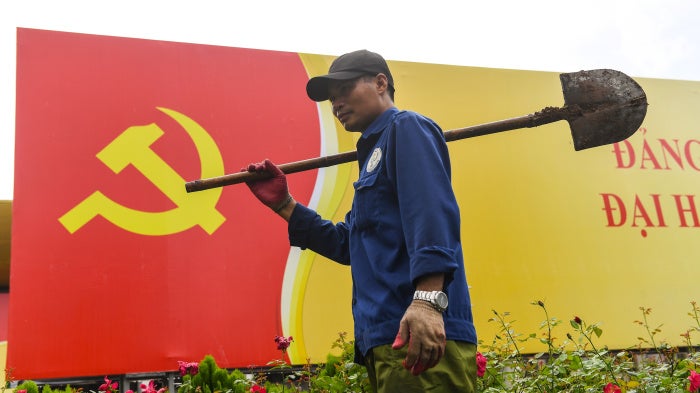
The 49-page report, “There Are No Independent Trade Unions in Vietnam: Hanoi’s Continuing Assault on Workers’ Right to Organize,” documents the Vietnamese governments’ continuing useof vague, overbroad criminal laws to suppress the activities of human rights and labor rights defenders, while maintaining an atmosphere of repression to thwart independent labor organizing. The government has issued decrees and articles in state-run media that reaffirm that all labor organizations in Vietnam are under the government’s authority, and portray independent trade unions as dangerous, anti-state entities.
The pattern of systematic human rights violations that characterized former President Suharto's thirty-two year rule is perhaps best symbolized by the people he imprisoned for political activities.
Politics & the Policing Agenda of the UN International Police Task Force
The United Nations mission to Bosnia and Hercegovina-with over 2,000 international police monitors-has the opportunity to make an important contribution to lasting peace and respect for human rights in the country. The U.N.
Political tensions began to rise in Zambia soon after the conclusion of the June 1997 Consultative Group (CG) meeting on Zambia. Two weeks after the meeting closed, the opposition United National Independence Party (UNIP) found its Lusaka headquarters besieged by police and filled with tear gas.
Since gaining independence from the Soviet Union in 1991, the Republic of Uzbekistan has made little progress in moving away from Soviet-style repression of human rights.
Despite positive movement toward the consolidation of political freedoms, human rights violations in Mexico continue to be extremely serious. State and federal police and members of the army continue to engage in torture, arbitrary detention, and other widespread abuses. Prosecutors frequently accept such abuses and judges often fail to question them.
Despite positive movement toward the consolidation of political freedoms, human rights violations in Mexico continue to be extremely serious. State and federal police and members of the army continue to engage in torture, arbitrary detention, and other widespread abuses. Prosecutors frequently accept such abuses and judges often fail to question them.
Immigration practices, police abuse, the death penalty, prison conditions, and issues of discrimination continue to be some of the most serious human rights violations in the United States.
Even as democracy has advanced in Argentina, the country still faces a number of serious human rights problems, including police brutality, lack of independence of the judiciary, and harassment of journalists who expose such problems.
President Clinton will begin his Summit trip with an official state visit to Chile. Almost eight years have passed since Chile returned to democratic rule, and during this time the country has benefitted from economic growth unparalleled elsewhere in Latin America.
Even as the administration of President Ernesto Samper has taken limited steps to curb violence and address impunity, the human rights situation in Colombia has deteriorated sharply. Political violence was particularly intense in areas contested by guerrillas and by paramilitaries operating with the acquiescence or active support of the Colombian army.
The most significant human rights event in Cuba in the past months was the visit of Pope John Paul II in late January. While the pontiff's visit forced the Cuban government to make some concessions, there has been a lack of genuine human rights reform in Cuba.
Human Rights Watch has created packet containing background information on the state of human rights in several American countries, in anticipation of the Second Summit of the Americas.
In the past year, the Haitian National Police (HNP) Force has committed serious human rights abuses, including extrajudicial executions, beatings in detention, and killings resulting from an excessive use of force.
In the past year, the Haitian National Police (HNP) Force has committed serious human rights abuses, including extrajudicial executions, beatings in detention, and killings resulting from an excessive use of force.
Five years of civil war in Tajikistan were formally brought to a close on June 27, 1997, when a peace accord was signed between the government and the United Tajik Opposition (UTO). A major force, however, was left out of the peace negotiations: the political opposition based in Tajikistan's northern region, Leninabad.