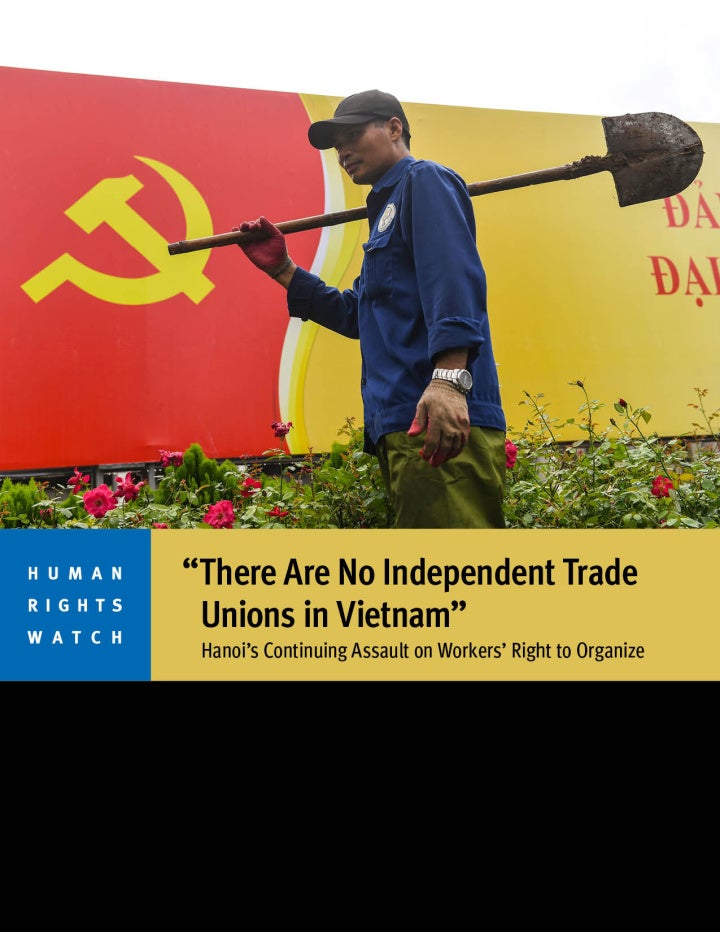
Hanoi’s Continuing Assault on Workers’ Right to Organize
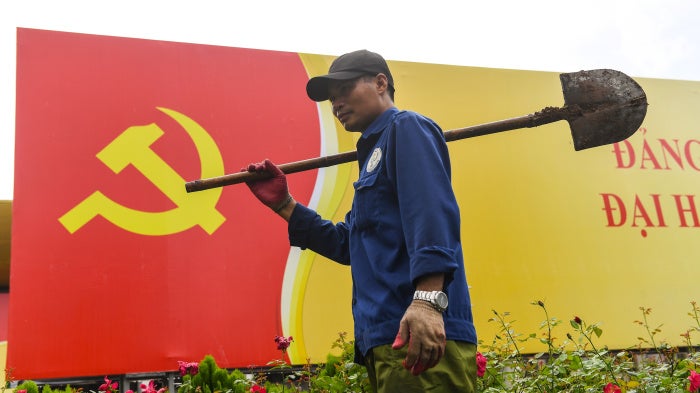
The 49-page report, “There Are No Independent Trade Unions in Vietnam: Hanoi’s Continuing Assault on Workers’ Right to Organize,” documents the Vietnamese governments’ continuing useof vague, overbroad criminal laws to suppress the activities of human rights and labor rights defenders, while maintaining an atmosphere of repression to thwart independent labor organizing. The government has issued decrees and articles in state-run media that reaffirm that all labor organizations in Vietnam are under the government’s authority, and portray independent trade unions as dangerous, anti-state entities.
Arbitrary Detention, Torture, and Extortion in Chechnya
This report details the cycle of torture and extortion faced by thousands of Chechens whom Russian forces have detained in Chechnya. The rights group called on European states to file a case against Russia in the European Court of Human Rights, for these and other abuses during the war in Chechnya.
As a result of the findings contained in this report, Human Rights Watch is calling on the Georgian government to take a number of steps to amend the applicable laws and improve practices so as to safeguard against torture, and to meet United Nations and other international standards regarding fair trials and the treatment of persons held in pre-trial detention. This report reiterates the U.N.
In a report released today, Human Rights Watch documents Georgia's repeal of reforms that would have widened access to the courts to hear torture and other complaints of abuses by the police, procuracy, and security forces.The Georgian parliament repealed these important reforms just weeks after Georgia was voted into the Council of Europe in April 1999.
South Africa is not living up to its own high standards with respect to arms exports, Human Rights Watch charged today. In this report, "A Question of Principle: Arms Trade and Human Rights," Human Rights Watch charged the South African government with selling weapons to countries with serious human rights problems, where an influx of weaponry could significantly worsen ongoing abuses.
Thousands of Thai women are "trafficked" every year into Japan, where many of them endure slavery-like conditions in the Japanese sex industry, Human Rights Watch said in a this new report.
During Indian Prime Minister A.B. Vajpayee's state visit with President Clinton on September 15, both sides will probably try to avoid "controversial issues." But Human Rights Watch has documented extensive human rights problems in India, which should certainly be on the two leaders' agenda. This briefing describes some of these problems and includes specific questions to be put to the President and Prime Minister at the joint press conference scheduled for the same day.
This report documents the Chinese government’s reaction to the efforts of a small number of democracy activists in 1998 and 1999 to take the first steps toward establishing a legal opposition party.
In this thirty-five page report released today, Human Rights Watch called on China's President Jiang Zemin to release more than thirty people imprisoned for their role in the China Democracy Party and all others who have been detained in China for peaceful political activities. The Chinese President will be in the U.S. on September 7 to meet world leaders at the opening of the U.N.
At its summit in Helsinki in December 1999, the European Union (E.U.) recognized Turkey as a candidate for membership in the union, subject to the understanding that actual negotiations for membership will not commence until Turkey meets thepolitical criteria for E.U. membership established in Copenhagen in 1993. Once adopted by the Commission and the E.U.
After fleeing systematic discrimination, forced labor, and other abuses in Burma, ethnic Rohingya in Malaysia face a whole new set of abuses in Malaysia. These include beatings, extortion, and arbitrary detention. The refugees are forced to live in poverty and constant fear of expulsion from the country.
Workers' basic rights are routinely violated in the United States because U.S. labor law is so feebly enforced and so filled with loopholes, Human Rights Watch said in this report. Human Rights Watch examined workers' rights to organize, to bargain collectively, and to strike under international norms. It found widespread labor rights violations across regions, industries and employment status.
Human Rights Watch welcomes Kuwait's submission of its first periodic report on implementation of the International Covenant on Civil and Political Rights (ICCPR) but wishes to draw to the attention of the Human Rights Committee certain deficiencies relating to the report and to Kuwait's application of the Covenant.
Human Rights Watch urged President Clinton to keep the promise he made in 1994 to ban antipersonnel landmines by joining the 1997 Mine Ban Treaty.
"Clinton's Landmine Legacy," the 42-page report from Human Rights Watch, details U.S. policy and practice on antipersonnel mines and recommends a dozen steps the president should take before leaving office.
Although the government of Burundi has promised Nelson Mandela that it will close its squalid "regroupment" camps, that promise has not yet been fulfilled, Human Rights Watch charged in this report. The former South African president is leading a new round of the Burundi peace talks, opening tomorrow.
United States Failure to Protect Child Farmworkers
Agricultural work is the most hazardous and grueling area of employment open to children in the United States.3 It is also the least protected. Hundreds of thousands of children and teens labor each year in fields, orchards, and packing sheds across the United States. They pick lettuce and cantaloupe, weed cotton fields, and bag produce.