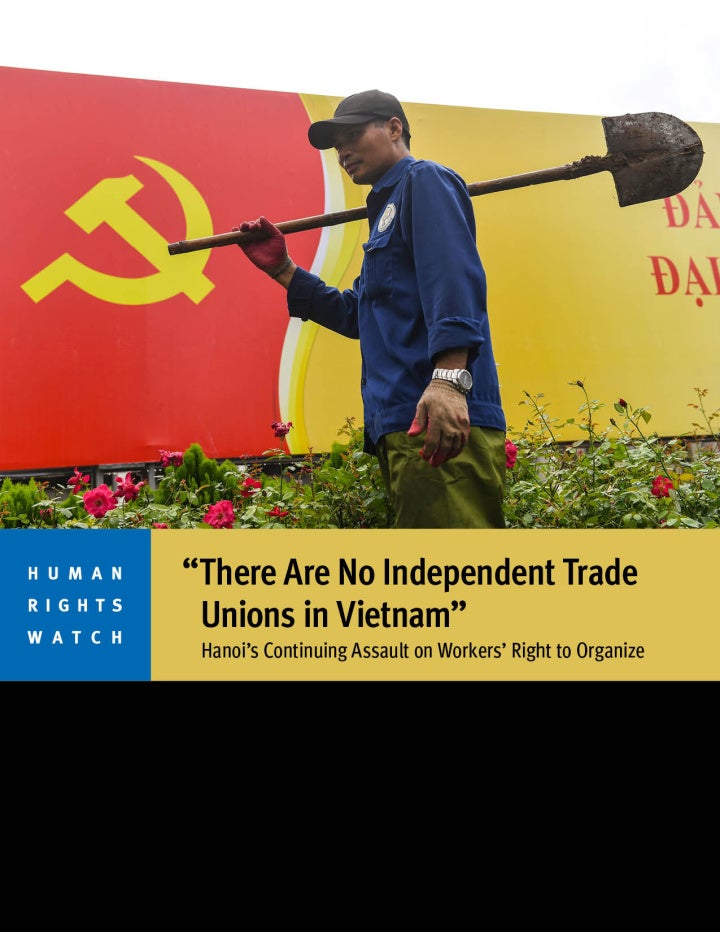
Hanoi’s Continuing Assault on Workers’ Right to Organize
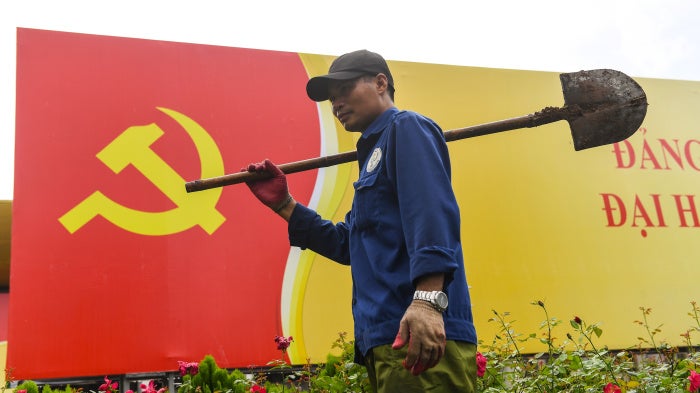
The 49-page report, “There Are No Independent Trade Unions in Vietnam: Hanoi’s Continuing Assault on Workers’ Right to Organize,” documents the Vietnamese governments’ continuing useof vague, overbroad criminal laws to suppress the activities of human rights and labor rights defenders, while maintaining an atmosphere of repression to thwart independent labor organizing. The government has issued decrees and articles in state-run media that reaffirm that all labor organizations in Vietnam are under the government’s authority, and portray independent trade unions as dangerous, anti-state entities.
Afghanistan has been at war for more than twenty years. During that time it has lost a third of its population. Some 1.5 million people are estimated to have died as a direct result of the conflict. Throughout the war, all of the major factions have been guilty of grave breaches of international humanitarian law.
How countries treat those who have been forced to flee persecution and human rights abuse elsewhere is a litmus test of their commitment to defending human rights and upholding humanitarian values.
Widespread torture of detainees is common in criminal investigations in Uzbekistan, and has become an unmistakable feature of the government's crackdown against independent Islam.
The November 24-25 summit in Zagreb, with the participation of fifteen European Union (E.U.) states and Albania, Bosnia and Herzegovina, Croatia, Federal Republic of Yugoslavia, the former Yugoslav Republic of Macedonia and Slovenia, provides a unique opportunity for the E.U.
While dissent is seriously punished by isolation of critics and through a legal system that is highly politicized, Human Rights Watch notes that there have been areas of gradual improvement in Vietnam in recent years. Restrictions on everyday life for most citizens have eased noticeably as the market economy has taken hold.
Parliamentary elections scheduled for November 5 were to have been a test of Azerbaijan's commitment to the rule of law and to its obligations as a country seeking accession to join the Council of Europe.
Human Rights Watch welcomes the Justice Ministry's apparent abandonment of plans to impose a regime of isolation in its new F-type high security prisons. However, the organization believes that further work on the draft laws issued last week will be necessary in order to allay fears among prisoners and their families.
Elections for Egypt´s 454-member People´s Assembly began on October 18, 2000. Fifteen political parties are contesting 444 parliamentary seats, the remaining ten seats to be filled by presidential appointment. These are the first parliamentary elections in the country´s history to be held under full judicial supervision.
Human Rights Watch today accused Pakistan's military rulers of committing widespread abuses in the name of political "reform," and called on General Pervez Musharraf to immediately return the country to constitutional rule. In the twenty-page report, "Reform or Repression?
Addressing Sexual and Domestic Violence inTanzania's Refugee Camps
Burundian refugee women confront daily violence in Tanzanian refugee camps, Human Rights Watch charges in a new report released today. Wide-spread sexual and domestic abuse have left many of these women physically battered, psychologically traumatized, and fearful for their lives
Municipal elections in Kosovo will take place on October 28, 2000. As in Bosnia and Hercegovina, Kosovo's first post-conflict elections will have a profound impact in shaping the democratic development of the province, with ramifications for the rule of law, human rights, and the overall security situation.
Arbitrary Detention, Torture, and Extortion in Chechnya
This report details the cycle of torture and extortion faced by thousands of Chechens whom Russian forces have detained in Chechnya. The rights group called on European states to file a case against Russia in the European Court of Human Rights, for these and other abuses during the war in Chechnya.
As a result of the findings contained in this report, Human Rights Watch is calling on the Georgian government to take a number of steps to amend the applicable laws and improve practices so as to safeguard against torture, and to meet United Nations and other international standards regarding fair trials and the treatment of persons held in pre-trial detention. This report reiterates the U.N.