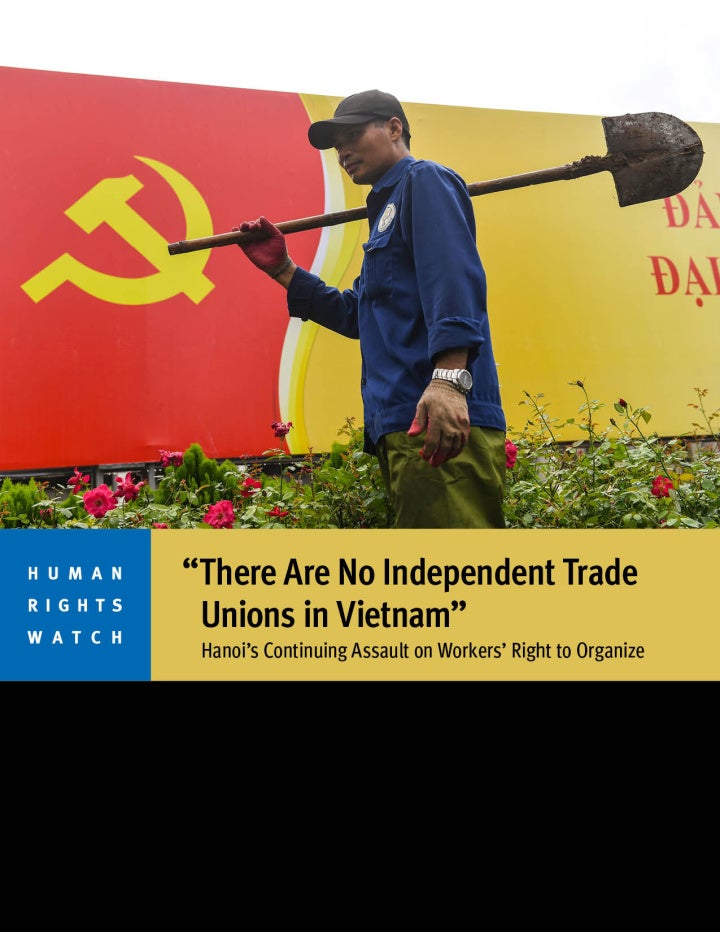
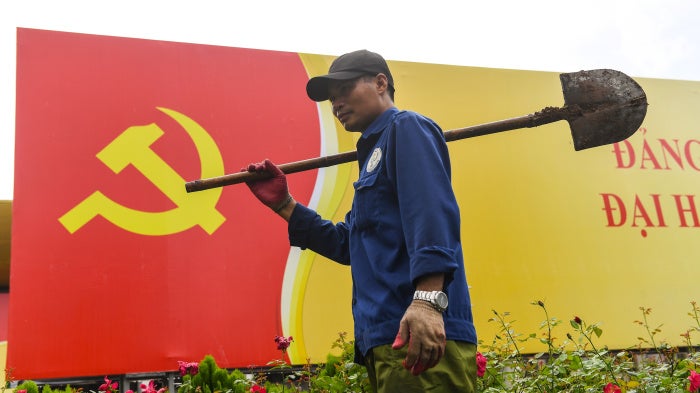
Hanoi’s Continuing Assault on Workers’ Right to Organize
The 49-page report, “There Are No Independent Trade Unions in Vietnam: Hanoi’s Continuing Assault on Workers’ Right to Organize,” documents the Vietnamese governments’ continuing useof vague, overbroad criminal laws to suppress the activities of human rights and labor rights defenders, while maintaining an atmosphere of repression to thwart independent labor organizing. The government has issued decrees and articles in state-run media that reaffirm that all labor organizations in Vietnam are under the government’s authority, and portray independent trade unions as dangerous, anti-state entities.
Russian authorities have concealed and obstructed the prosecution of Russian forces for violations of human rights and international humanitarian law in the Chechnya conflict.
When George W. Bush visits President Vicente Fox in Mexico this Friday, the two leaders will discuss issues that have important implications for human rights in the region-including migration, trade and the war on drugs.
On February 14-15, Bahraini citizens will cast "yes" or "no" votes for a National Charter drafted late last year on the instructions of the country's ruler, or amir (prince), Shaikh Hamad bin Isa Al Khalifa.
This report documents two massacres committed by Taliban forces in the central highlands of Afghanistan, in January 2001and May 2000. In both cases the victims were primarily Hazaras, a Shia Muslim ethnic group that has been the target of previous massacres and other serious human rights violations by Taliban forces.
If Yemeni voters cast a "yes" vote in the constitutional referendum on February 20, Field Marshall Ali Abdallah Saleh's term as president will be extended for two years and enable him to be re-elected in 2006 for another seven years.
Government Violations in the Lead-Up to the Election in Uganda
There are serious human rights concerns in the lead-up to Uganda's March 12, 2001 presidential elections that shed doubt on whether the election will be free and fair. Not only is President Yoweri Museveni relying on a biased legal framework, but he is also using the state machinery to obstruct a transparent and fair electoral process.
When Jean-Bertrand Aristide is sworn in for a second term as Haitian president on Wednesday, February 7, he will face a number of pressing challenges in the areas of human rights and democracy.
In the past two years, Ugandans have recruited and trained both Hema and Lendu to serve in the forces of the Congolese Rally for Democracy-Liberation Movement (RCD-ML), a rebel group which is backed by Uganda and which nominally controls this area. Within the last year, however, at least some Ugandan officers have reportedly favored the Hema.
Using fraud and forgery of official documents, district officials in Ratanakiri province and intermediaries of Royal Cambodian Armed Forces Gen. Nuon Phea are attempting to force nearly one thousand indigenous minority villagers to give up rights to 1,250 hectares of land that their families have lived on for generations.
This report examines the response of Indonesia’s National Human Rights Commission (Komnas HAM) to a massacre in Aceh that occurred in August 2001. Thirty men and a two-year-old child, all ethnic Acehnese, were shot and killed by a group of armed men who suddenly appeared on the grounds of the Bumi Flora rubber and palm oil plantation in Julok, East Aceh.
Togo has been under the dominance of a single ruler, Gnassingbe Eyadema, since 1967, when he came to power in a military coup. A single party, the Rassemblement du Peuple Togolais [Togolese Peoples' Rally] (RPT) ruled Togo during most of the past 30 years. Independent political parties were authorized in 1991.
Each year over one million children between the ages of seven and twelve are hired by Egypt's agricultural cooperatives to take part in cotton pest management. Employed under the authority of Egypt's agriculture ministry, most are well below Egypt’s minimum age of twelve for seasonal agricultural work.
State-sponsored national human rights commissions represent a new vogue among governments, and particularly in Africa. The number of state human rights commissions has multiplied across the continent in the past decade, spreading from one country in 1989 to two dozen by 2000.
The Greek Government should as a matter of urgency take measures to alleviate the extreme overcrowding and otherappalling conditions of detention for foreigners held in police facilities in Greece.
The Yugoslav republic of Serbia has an opportunity to hold free and fair parliamentary elections on December 23, for the first time since a multiparty system was introduced in 1990.