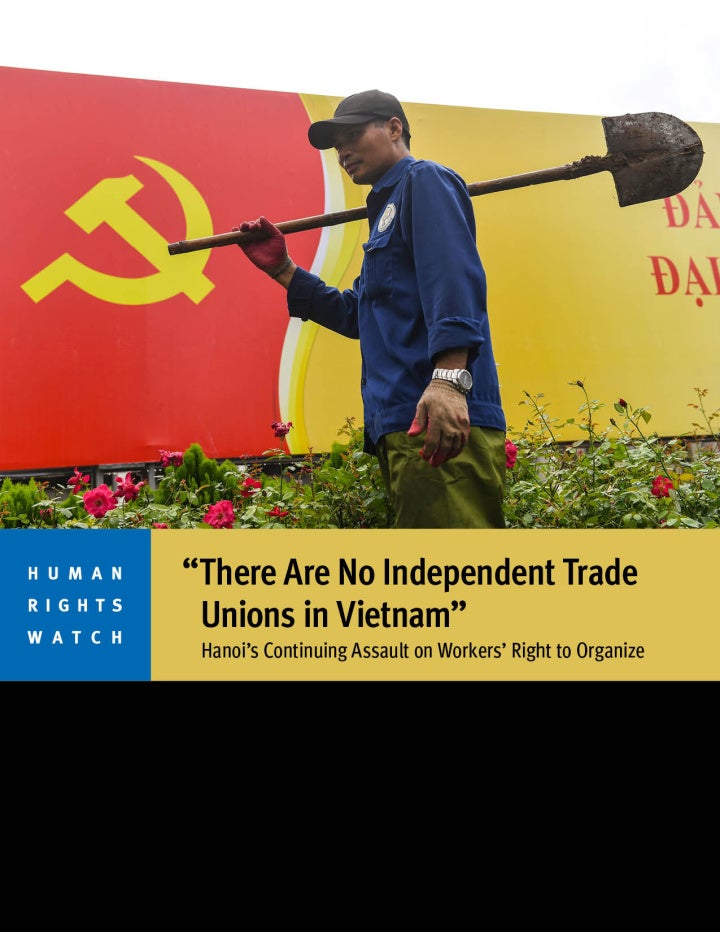
Hanoi’s Continuing Assault on Workers’ Right to Organize
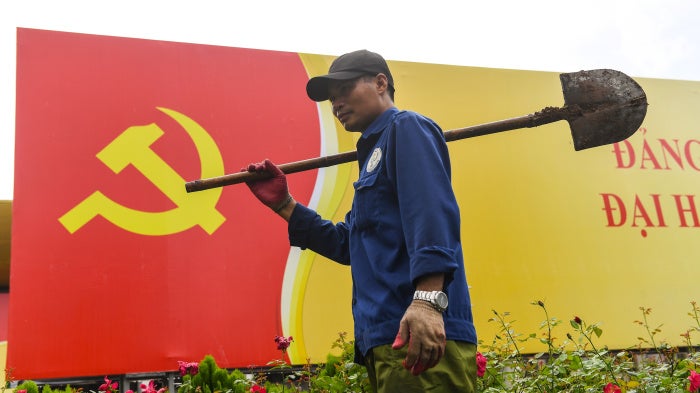
The 49-page report, “There Are No Independent Trade Unions in Vietnam: Hanoi’s Continuing Assault on Workers’ Right to Organize,” documents the Vietnamese governments’ continuing useof vague, overbroad criminal laws to suppress the activities of human rights and labor rights defenders, while maintaining an atmosphere of repression to thwart independent labor organizing. The government has issued decrees and articles in state-run media that reaffirm that all labor organizations in Vietnam are under the government’s authority, and portray independent trade unions as dangerous, anti-state entities.
A Human Rights Watch Briefing Paper for the 59th Session of the United Nations Commission on Human Rights
This paper first surveys initiatives taken by U.N., regional, and other intergovernmental bodies in the context of the international campaign against terrorism.
The use of cluster munitions in Iraq will result in grave dangers to civilians and friendly combatants. Based on experiences in the Persian Gulf War in 1991, Yugoslavia/Kosovo in 1999, and Afghanistan in 2001 and 2002, these dangers are both foreseeable and preventable.
Tunisian lawyers who are increasingly determined to defend human rights and expose the absence of an independent judiciary are under attack from state authorities. Their activism is evident in the revitalized national Bar Association and in the creation of new human rights groups over the past fifteen months.
The Presidential Administration of Ukraine blatantly violates freedom of expression through explicit instructions on how television stations may cover the news, Human Rights Watch said in a report released today that included examples of these directives.
On January 20, 2003, the Belgrade district court began an important war crimes trial against four Serbs accused of kidnapping, torturing, and killing seventeen Muslims from Serbia in 1992. The crime occurred in an area of Bosnia and Herzegovina controlled by Bosnian Serbs, near the border with Serbia.
Iraq´s practice of expelling Kurds, Turkomans, and Assyrians in the oil-rich regions of Kirkuk and turning their property over to Arab families from the south continues, Human Rights Watch said today.
There is growing concern in the United States, and a growing belief around the world, that the United States itself has engaged in torture or condoned its use by others as part of its war against terrorism. Newspapers such as the New York Times and the Washington Post have published credible reports, based on interviews with former detainees and unnamed U.S. officials, alleging that U.S.
Women throughout Kenya lose their homes, land, and other property due to discriminatory laws and customs, Human Rights Watch said in a new report released today. Human Rights Watch said property rights abuses in sub-Saharan Africa perpetuate women's inequality, doom development efforts, and undermine the fight against HIV/AIDS.
Militia and vigilante violence continues to pose a real threat to security in Nigeria, especially in the period leading up to elections in April 2003, Human Rights Watch said in a new report released today. One of the more notorious groups is the O'odua People's Congress (OPC), an organization active in the southwest, which has killed or injured hundreds of people over the last few years.
A ceasefire signed on December 3, 2002 by the government of Burundi and the rebel movement, the National Council for the Defense of Democracy-Forces for the Defense of Democracy (Conseil National pour la Défense de la Democratie-Forces pour la Défense de la Democratie, CNDD-FDD) raised hopes for an end to nine years of war in Burund
Algerian security forces made "disappear" at least 7,000 persons, more than the number recorded in any other country during the past decade except wartime Bosnia, Human Rights Watch said in a new report. To date, the Algerian authorities have utterly failed to investigate these "disappearances" or to provide families with answers about the fate of their loved ones.
The United Nations Committee on the Elimination of Racial Discrimination, which reviews compliance with the United Nations’ anti-discrimination convention, recently adopted its concluding observations and recommendations for Russia.
A potential U.S.-led military action against Iraq would likely have profound humanitarian consequences for the Iraqi civilian population. Consistent with our established policy, Human Rights Watch takes no position on the legality or appropriateness of such a war. Yet we have concerns with regard to the manner in which it may be conducted.