Hanoi’s Continuing Assault on Workers’ Right to Organize
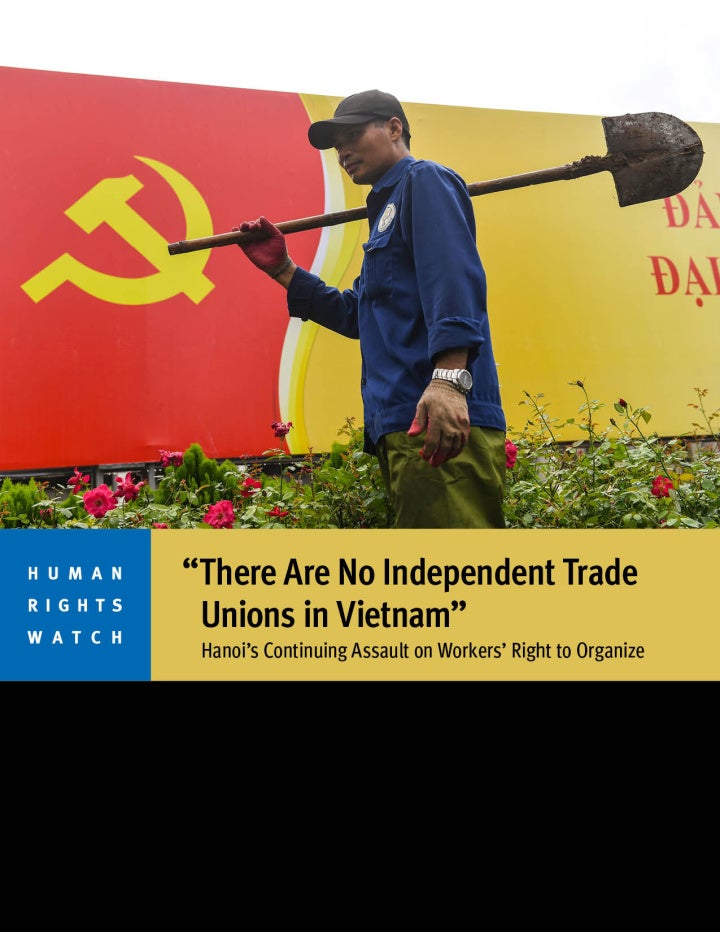
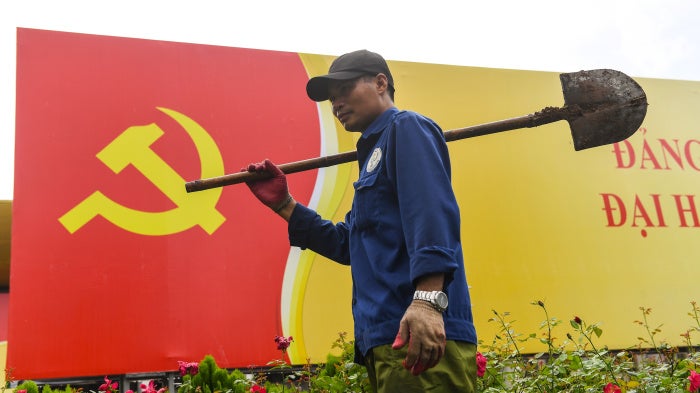
The 49-page report, “There Are No Independent Trade Unions in Vietnam: Hanoi’s Continuing Assault on Workers’ Right to Organize,” documents the Vietnamese governments’ continuing useof vague, overbroad criminal laws to suppress the activities of human rights and labor rights defenders, while maintaining an atmosphere of repression to thwart independent labor organizing. The government has issued decrees and articles in state-run media that reaffirm that all labor organizations in Vietnam are under the government’s authority, and portray independent trade unions as dangerous, anti-state entities.
Intimidation and Attacks against Women in Public Life in Afghanistan
When a U.S.-led coalition invaded Afghanistan in October 2001, one of the justifications for the war was that it would liberate women from the misogynistic rule of the Taliban. Three years later, on the eve of the country’s first-ever national presidential elections on October 9, 2004, there have been notable improvements for women and girls.
On October 6 the European Commission will publish its 2004 Regular Report on Turkey’s progress toward European Union membership. This document provides a background, highlights key issues to look for in the report, and ends with an assessment of the progress of reforms.
Turkish state forces violently and illegally displaced upwards of 380,000 Kurdish villagers in the 1990s during a conflict with the Kurdish Workers Party (PKK) in southeast Turkey. Turkey should stop fending off the legitimate involvement of international agencies and make a formal declaration to integrate them in its return plans.
Human Rights Watch provides background on the Oct. 4, 2004, House of Lord's Judicial Committee meeting that will consider the lawfulness of detaining foreign terrorism suspects without trial.
This 58-page report investigates the persistent weaknesses in the Rwandan legal system that hamper the investigation and prosecution of sexual violence. The report also documents the desperate health and economic situation of rape survivors. Many of the women who were raped became infected with HIV.
Human Rights Abuses and Political Repression in the Run-up to Afghanistan’s Presidential Election
The election could be prove to be a historic event for a country that has, over the last twenty-five years, suffered Soviet occupation, civil war, failed governance, severe repression of women, and the vicious rule of the Taliban. The prospect of a future dictated by ballots, and not bullets and bombs, is a cause for great hope.
The Indonesian government has been fighting an on-again, off-again war with the armed separatist “Free Aceh Movement” (Gerakan Aceh Merdeka, or GAM) for more than two decades. After a brief ceasefire and sporadic peace negotiations in late 2002 and early 2003, on May 19, 2003, President Megawati Sukarnoputri imposed martial law and a state of military emergency in Aceh.
Turkey has made significant progress in reducing torture and other ill-treatment by the security services through successive legislative reforms since 1997. There are continuing problems implementing these laws, however, as the Turkish government itself concedes.
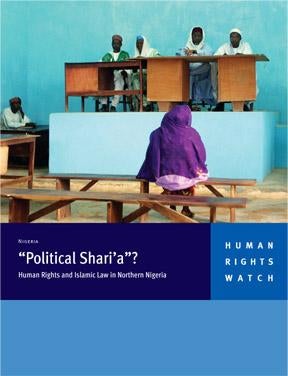
This 111-page report documents human rights violations since Shari’a was introduced to cover criminal law in 12 northern states. Since 2000, at least 10 people have been sentenced to death and dozens sentenced to amputation and floggings. The majority have been tried without legal representation. Many sentenced to amputation were convicted on confessions extracted under torture by the police.
How Nongovernmental Organizations Can Contribute To the Prosecution of War Criminals
This guide answers some of the frequently asked questions about the Court. In particular it explains how NGOs can contribute to the Court’s work of prosecuting war crimes, crimes against humanity, and genocide at the international level. It does so by answering frequently asked questions about the International Criminal Court and the way NGOs can contribute to its efforts.
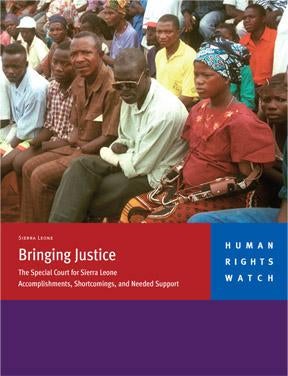
This 56-page report evaluates developments at the court, identifying achievements and making recommendations where operations should be improved. The report also urges the international community to provide more financial and political support for the court so it can complete its work effectively.
Serbian President Slobodan Milosevic’s defense is scheduled to begin at the International Criminal Tribunal for the former Yugoslavia (ICTY) on August 31. This series of questions and answers provides background information, explains key concepts, evaluates the progression of the trial thus far, and describes what is yet to come.