The Inhumane Effects of White Phosphorus Munitions and the Need for Stronger Law
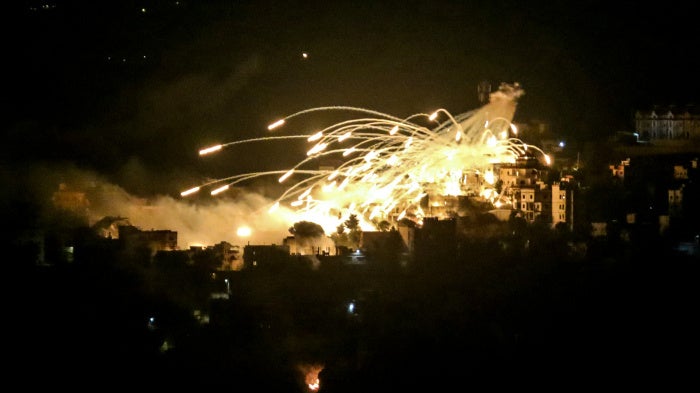
The 45-page report, “Uncontrolled Burn: The Inhumane Effects of White Phosphorus Munitions and the Need for Stronger Law,” documents 23 verified incidents of Israeli use in southern Lebanon between March and May 2026. The report also details the horrific harm the munitions have caused in armed conflicts in recent years. White phosphorus munitions, which produce fire when their payload is exposed to oxygen, are not currently regulated by a specific treaty.
The Unfulfilled Promise of NAFTA’s Labor Side Agreement
On the eve of the Quebec summit of Western hemisphere leaders, Human Rights Watch called for the creation of an independent oversight agency to spur remedial action for workers' rights violations."Trading Away Rights: The Unfulfilled Promise of NAFTA's Labor Side Agreement," analyzes the twenty-three complaints filed under the accord since it came into force in 1994.
An impending appeals court ruling in Tunisia threatens to undermine the Arab world's oldest independent human rights organization, according to a report released today by Human Rights Watch and the Observatory for the Protection of Human Rights Defenders. The Observatory is a joint program of the International Federation for Human Rights and the World Organization against Torture.
For the past six months, the West Bank city of Hebron has been the scene of serious and sustained human rights abuses, Human Rights Watch said in a new report released today.
Human Rights Watch welcomes the opportunity to submit information to the Human Rights Committee regarding Venezuela's implementation of the International Covenant on Civil and Political Rights.
The Death Penalty and Offenders with Mental Retardation
Twenty-five U.S. states still permit the execution of offenders with mental retardation and should pass laws to ban the practice without delay. The United States appears to be the only democracy whose laws expressly permit the execution of persons with this severe mental disability.
This fifty-page report documents how Ugandan authorities meddled in rivalries among factions of the rebel Congolese Rally for Democracy (RCD). Some of these quarrels degenerated into military skirmishes in which civilians have been killed and injured.
Sexual Violence Against Girls in South African Schools
In schools across South Africa, thousands of girls of every race and economic group are encountering sexual violence and harassment that impede their access to education, Human Rights Watch charged in a report released today.
Forced Disappearances, Torture and Summary Executions
European Union governments must press the issue of the "disappeared" in Chechnya when Russian President Vladimir Putin visits Stockholm this week, Human Rights Watch urged in releasing a new report on Chechnya today.
Chile's record on freedom of expression has improved little since the end of military rule, Human Rights Watch charged in this report. Although the country has made great progress in prosecuting the abuses of the Pinochet dictatorship, the same repressive defamation laws that the military regime regularly employed against its critics are still in use.
On April 3, 2000, the International Monetary Fund (IMF) and the Angolan government announced the beginning of a Staff Monitored Program (SMP). This program is an ambitious agreement to implement a wide range of economic and institutional reforms in Angola that could lead to further lending and cooperation with the IMF and World Bank, but it is unclear whether the government will be able to comply with its requirements.
The violence in Sampit, Central Kalimantan, started on the night of February 17-18 when a Dayak house was burned down. Rumor spread that an ethnic Madurese was responsible, and immediately, a band of Dayaks went into a Madurese neighborhood and began burning houses.
On March 27, 2000, Kheda Kungaeva, an eighteen-year-old woman, was taken from her home in Chechnya, beaten, raped, and murdered. On February 28, 2001, the Rostov District Military Court will try Col. Yuri Budanov for Kungaeva's murder.
When Colombian President Andrés Pastrana meets with President George W. Bush next Tuesday (February 27), the two leaders will discuss U.S. military aid to Colombia, including the issue of Colombia's progress on improving human rights.
Russian authorities have concealed and obstructed the prosecution of Russian forces for violations of human rights and international humanitarian law in the Chechnya conflict.
When George W. Bush visits President Vicente Fox in Mexico this Friday, the two leaders will discuss issues that have important implications for human rights in the region-including migration, trade and the war on drugs.