The Inhumane Effects of White Phosphorus Munitions and the Need for Stronger Law
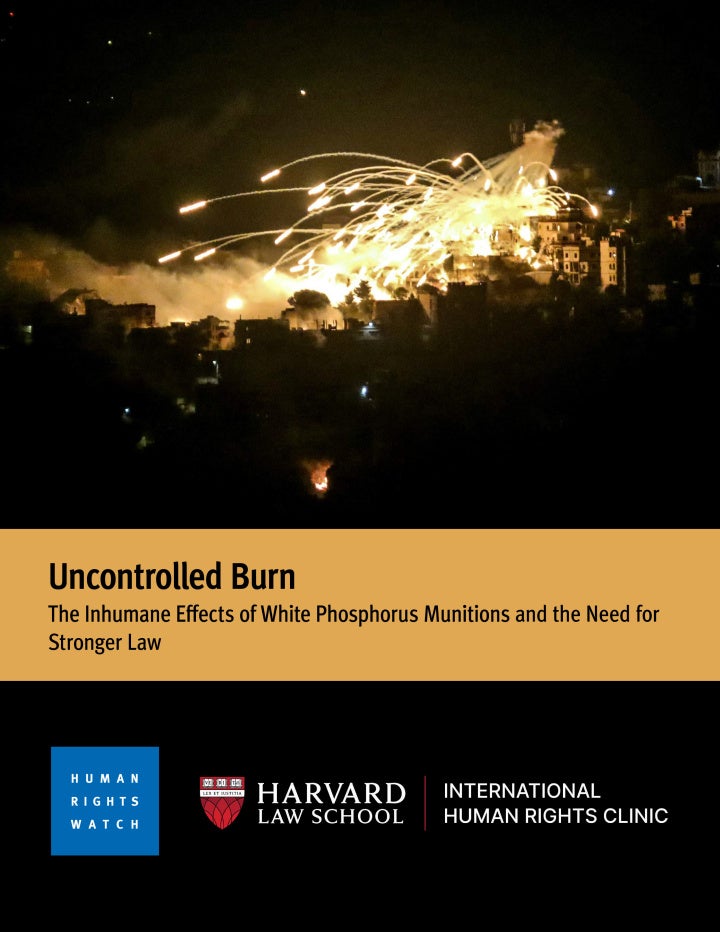
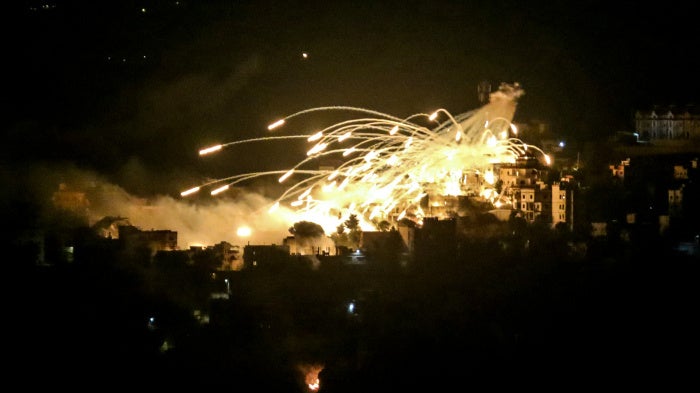
The 45-page report, “Uncontrolled Burn: The Inhumane Effects of White Phosphorus Munitions and the Need for Stronger Law,” documents 23 verified incidents of Israeli use in southern Lebanon between March and May 2026. The report also details the horrific harm the munitions have caused in armed conflicts in recent years. White phosphorus munitions, which produce fire when their payload is exposed to oxygen, are not currently regulated by a specific treaty.
Russia’s forces are committing abuses against displaced Chechens in Ingushetia as the conflict in Chechnya spills over into this neighboring republic. This 28-page report documents arbitrary arrest and detention, ill-treatment, and looting by Russia’s forces in Ingushetia this summer.
More than 11,000 children fight in Colombia's armed conflict, one of the highest totals in the world. Both guerrilla and paramilitary forces rely on child combatants, who have committed atrocities and are even made to execute other children who try to desert.
While the world's attention on Indonesia has been focused on the terror trials of the Bali bombers, Indonesia has also been prosecuting a largely hidden war in the northwest province of Aceh. This war has been taking place off the front pages of the world's press and out of reach of human rights or even most humanitarian workers.
Any lasting peace agreement in Sudan must provide meaningful guarantees for the protection of the human rights of all segments of Sudanese society including their rights to participate in post-conflict political processes.
While Chile has taken impressive steps forward on justice and accountability since 1998, the underpinnings of accountability remain fragile. This briefing provides an overview of recent developments.
Human Rights and HIV Prevention for Injection Drug Users
Government interference with sterile syringe programs is thwarting HIV prevention efforts in California. State laws and local enforcement are preventing drug users from obtaining the sterile syringes they need to protect themselves from HIV.
Eight years after the end of the war in Croatia, ethnic discrimination continues to impede the return of hundreds of thousands of Croatian Serbs displaced by the war. This 61-page report describes the plight of displaced Croatian Serbs and urges that progress on return be made a condition of Croatia’s application to join the European Union.
The Human Rights of People Living with HIV/AIDS in China
Widespread discrimination against people with HIV/AIDS is fueling the spread of the epidemic in China. This 94-page report is based on more than 30 interviews with people with HIV/AIDS, police officers, drug users, and AIDS outreach workers in Beijing, Hong Kong, and Yunnan province. Many people living with HIV/AIDS have no access to health care because hospitals refuse to treat them.
Discrimination Against Women in the Ukrainian Labor Force
Gender discrimination in Ukraine is cutting women out of the work force while the Ukrainian government is doing nothing to stop the problem. This 52-page report describes how Ukrainian employers discriminate against women job seekers in the way they announce vacancies and interview applicants.
Abuses Against Persons at High Risk of HIV Infection in Bangladesh
Bangladesh is stoking an emerging AIDS epidemic with violent police abuse of sex workers, injection drug users and men who have sex with men. In this 51-page report, Human Rights Watch documents rapes, gang-rapes, beatings and abductions by both police officers and powerful criminals known as mastans.
The Angolan government and the United Nations are failing to ensure the safe and voluntary return of millions of Angolans to their homes. This 29-page report documents several incidents of government authorities using violence, or the threat of violence, to drive people out of camps where they had been living sometimes for years.
Domestic Violence and Women's Vulnerability to HIV in Uganda
The Ugandan government's failure to protect women from domestic violence and discrimination increases women's risk of contracting HIV. This 77-page report documents widespread rape and brutal attacks on women by their husbands in Uganda, where a specific domestic violence law has not been enacted and where spousal rape is not criminalized.
Violence Against Civilians in Western Côte d'Ivoire
This 55-page report documents widespread abuses against civilians in fighting following a September 2002 army mutiny. The abuses include summary executions, sexual violence against women and girls, and looting of civilian property by Ivorian government troops, government-supported civilian militias, and by the rebel groups.