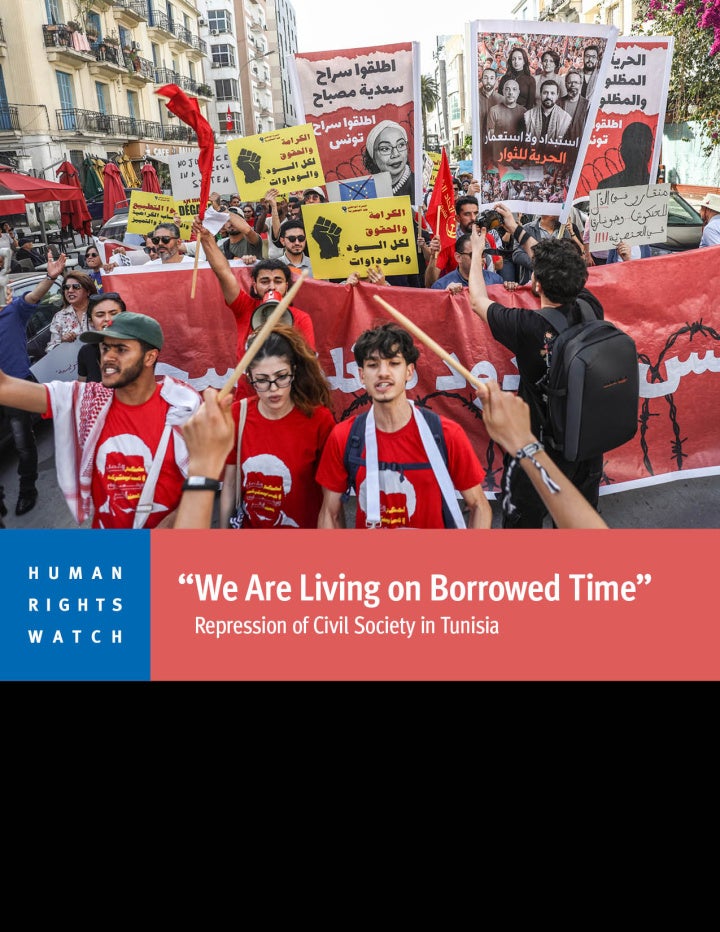
The 49-page report, “‘We Are Living on Borrowed Time’: Repression of Civil Society in Tunisia” documents the Tunisian authorities’ escalating repression of local and international civil society groups, workers, members, and affiliates through the weaponization of abusive prosecutions, arbitrary arrests, detention, financial and criminal investigations, mass suspensions, and threats of dissolution.
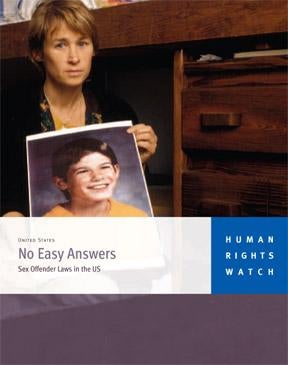
This 146-page report is the first comprehensive study of US sex offender policies, their public safety impact, and the effect they have on former offenders and their families.
Human Rights Violations by Uganda’s National Army in Law Enforcement Operations in Karamoja Region
This 97-page report is based on some 50 eyewitness accounts of law enforcement operations carried out by the Uganda Peoples’ Defence Forces (UPDF) between September 2006 and January 2007, and on visits to the sites of six of these operations.
As it enters its second year, the Council must take hold of the many situations that “require the HRC’s attention,” and take action of some sort to address them. The HRC’s efforts to address these situations will provide an important indication of its ability to fulfil the purpose for which it was created.
Civilian Casualties in Lebanon during the 2006 War
In this 249-page report Human Rights Watch examines military operations by Israeli and Hezbollah forces in Lebanon during the armed conflict that lasted from July 12 until August 14, 2006. In five months of research, Human Rights Watch investigated 94 cases of air, artillery and ground attacks by the Israel Defense Forces (IDF) to discern the circumstances surrounding the deaths of 510 civilians and 51 combatants, nearly half the at least 1,125 Lebanese deaths during the conflict. Of the approximately 510 Lebanese civilian deaths investigated by Human Rights Watch, at least 300 were women or children.
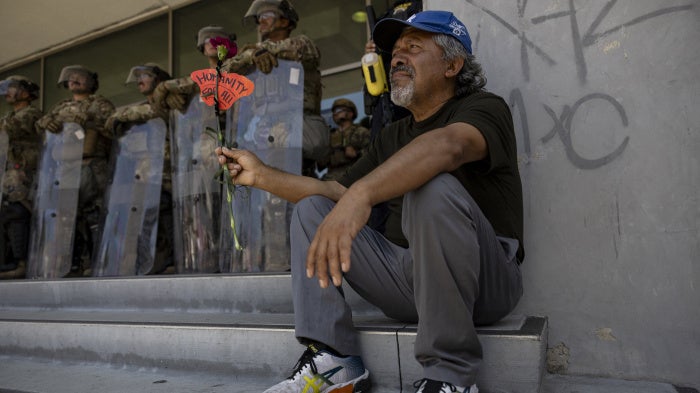
This 43-page report describes the experiences of the two Tunisians returned home 11 weeks ago and urges the US government to set up a process that would give detainees advance notice of their transfer, and allow them the opportunity to contest it before a federal court if they fear torture or ill-treatment upon return to their home countries.
Hezbollah’s Rocket Attacks on Israel in the 2006 War
This 128-page report presents more than 20 case studies based on extensive field research in northern Israel into rocket attacks that killed or injured civilians in Jewish, Arab and mixed villages, towns and cities. It also draws evidence of Hezbollah’s intent behind these rocket attacks from more than 100 Hezbollah communiques and declarations.
Insurgent Attacks on Civilians in Thailand’s Southern Border Provinces
This 105-page report documents abuses of women in detention based on interviews with women and girls, Sunni and Shia, in prison; their families and lawyers; and medical service providers in the prisons at a time of escalating violence involving security forces and armed groups.
This 13-page briefing paper highlights priority areas of concern on human rights and proposes a number of actions to help tackle the crisis in Zimbabwe. The government of Zimbabwe has used methods against critics that range from intimidation, threats and harassment to physical attacks and torture.
This 113-page report is the first independent, on-the-ground investigation of the fighting that wracked Mogadishu in March and April 2007, resulting in the deaths of hundreds of civilians and the displacement of 400,000 people. Ethiopian, Somali and insurgent forces are all responsible for rampant violations of the laws of war in Mogadishu.
Media Freedoms Under Assault in China Ahead of the 2008 Beijing Olympic Games
This 40-page report documents how Chinese authorities have repeatedly obstructed the work of foreign journalists this year, even though China on January 1, 2007, adopted temporary regulations to comply with commitments it made to the International Olympics Committee (IOC) on guaranteeing journalists freedom. The report draws on interviews and information provided from 36 foreign and Chinese journalists in June 2007.
The Sri Lankan government is responsible for unlawful killings, enforced disappearances and other serious human rights violations since the resumption of major hostilities with the Liberation Tigers of Tamil Eelam (LTTE) in 2006. This 129-page report uses accounts by victims and eyewitnesses to document the shocking increase in violations by government forces. Ethnic Tamils have borne the brunt of these violations, the report said, but members of the Muslim and majority Sinhalese population are not immune to government abuse.
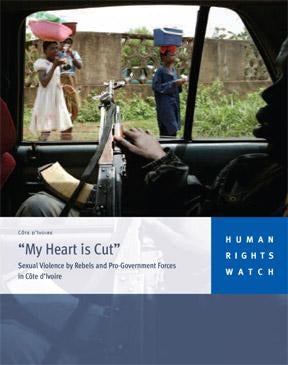
Sexual Violence by Rebels and Pro-Government Forces in Côte d’Ivoire
Pro-government and rebel forces in Côte d’Ivoire have subjected thousands of women and girls to rape and other brutal sexual assaults with impunity. This 135-page report details the widespread nature of sexual violence throughout the five-year military-political crisis. The report, which is based on interviews with more than 180 victims and witnesses, documents how women and girls have been subjected to individual and gang rape, sexual slavery, forced incest and other egregious sexual assaults.
Annex 22-B: A Missed Opportunity on Workers’ Rights in North Korea
This 13-page briefing paper looks at Annex 22-B of the US-Korea Free Trade Agreement (FTA) and how it flouts the spirit of the recently amended workers’ rights provisions. It also makes recommendations on how to amend Annex 22 in order to effectively protect, in law and practice, the basic labor rights of the workers producing goods under the existing agreement.
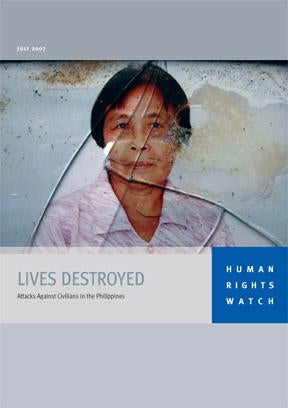
Violent Islamist groups in the Philippines have killed or injured more than 1,700 people in bombings and other attacks since 2000. The attacks, mostly in Mindanao, Basilan, Jolo, and other southern islands, have also included kidnappings, executions, and shootings.
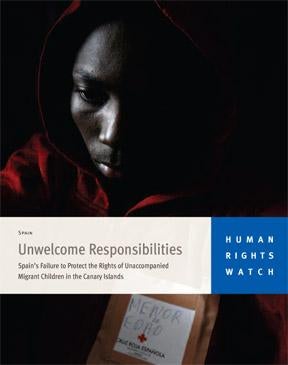
Spain’s Failure to Protect the Rights of Unaccompanied Migrant Children in the Canary Islands
This 115-page report documents how children stay in emergency centers for indefinite periods, in often overcrowded and poor conditions. The children told Human Rights Watch that they have been subjected to beatings by staff, and left unprotected from violence by their peers.