Reports

US Civil Rights Enforcement Under the Trump Administration

The 112-page report, “Remedies Abandoned: US Civil Rights Enforcement Under the Trump Administration,” documents the administration’s efforts to unravel the work of four key agencies between January 2025 and the spring of 2026: the Justice Department’s Civil Rights Division, which lost about 75 percent of its attorneys; the Education Department’s Office of Civil Rights, which moved to lay off nearly half its staff in one day and closed 7 of its 12 regional offices; the Housing and Urban Development Department’s Fair Housing Office, which shrank dramatically; and the Equal Employment Opportunity Commission, which reached its lowest staffing levels in over 40 years.
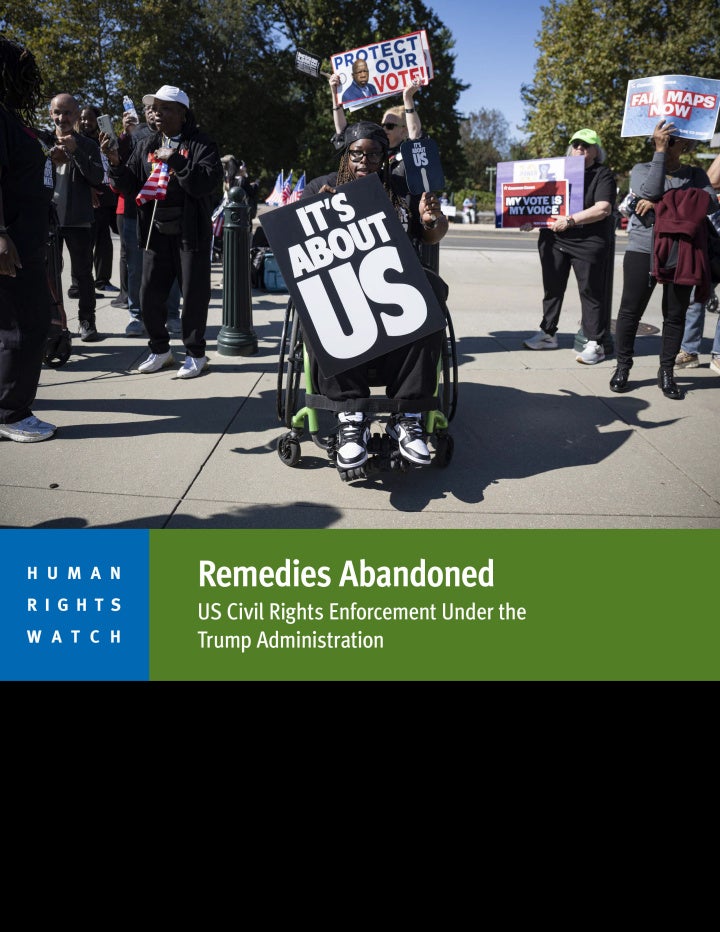
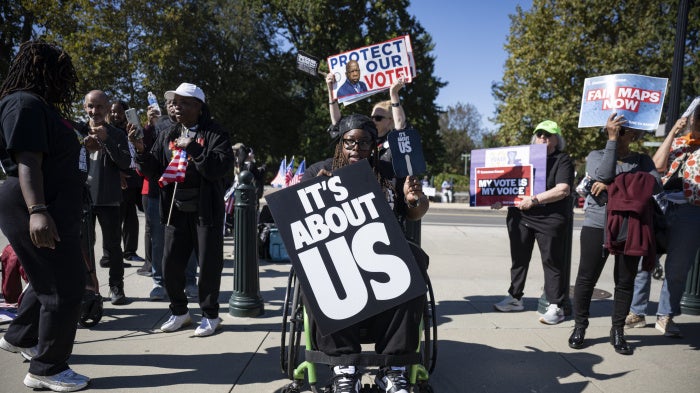
A man in a wheelchair holds a protest sign at a demonstration
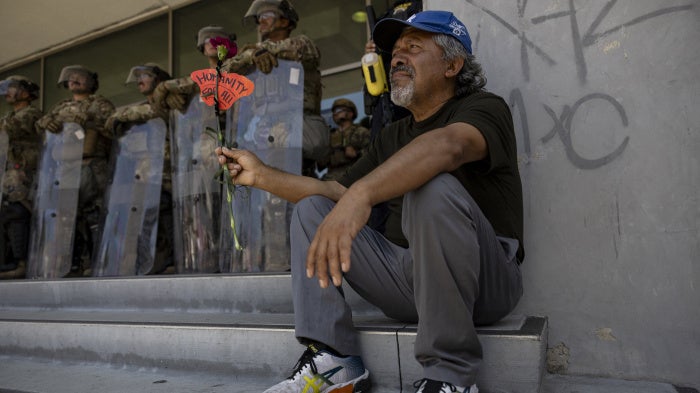
A man holds a flower and the message "Humanity for All" in front of a line of soldiers

Search

  • October 1, 2008

    The 2007 Horn of Africa Renditions and the Fate of Those Still Missing

    This 54-page report examines the 2007 rendition operation, during which at least 90 men, women, and children fleeing the armed conflict in Somalia were unlawfully rendered from Kenya to Somalia, and then on to Ethiopia.
  • September 29, 2008

    Relentless Violence and Impunity in Manipur

    This 79-page report documents the failure of justice in the state, where for 50 years the army, empowered and protected by the Armed Forces (Special Powers) Act (AFSPA), has committed numerous serious human rights violations.
  • September 23, 2008

    US Policy and International Standards on the Rights and Interests of Victims of Crime

    In this report, Human Rights Watch analyzed how well the United States is meeting international best practices. Human Rights Watch found that police and prosecutors in some states enjoy very broad discretion over who is to be granted victim status and the extent to which victims are included in the justice process.

  • September 22, 2008

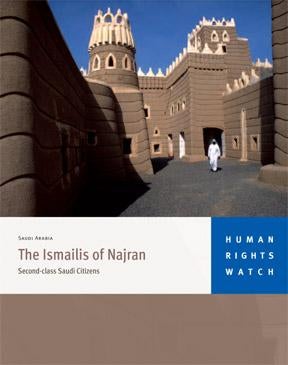
    Second-class Saudi Citizens

    This 90-page report, based on more than 150 interviews and reviews of official documents, documents a pattern of discrimination against the Ismailis in the areas of government employment, education, religious freedom, and the justice system.
  • September 18, 2008

    Faces and Cases from Ahmadinejad’s Crackdown

    Under President Ahmadinejad's administration, Iran's human rights record has deteriorated markedly. While the international community's attention has focused on nuclear concerns, Iran has not been held accountable for its violations of international human rights law.

  • September 18, 2008

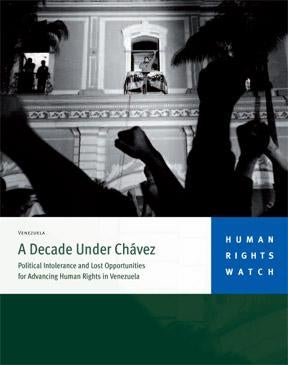
    Political Intolerance and Lost Opportunities for Advancing Human Rights in Venezuela

    This 230-page report examines the impact of the Chávez presidency on institutions that are essential for ensuring respect for human rights and the rule of law: the courts, the media, organized labor, and civil society.

  • September 11, 2008

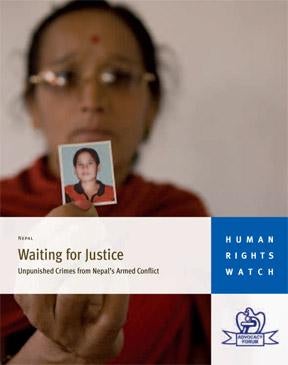
    Unpunished Crimes from Nepal’s Armed Conflict

    This 118-page report documents in detail 62 cases of killings, disappearances, and torture between 2002 and 2006, mostly perpetrated by security forces but including a couple of cases involving Maoists.
  • September 10, 2008

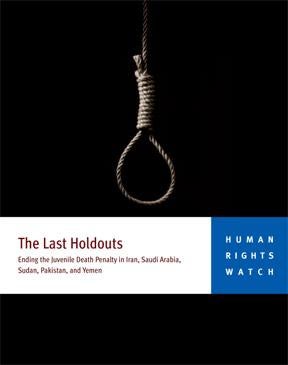
    Ending the Juvenile Death Penalty in Iran, Saudi Arabia, Sudan, Pakistan, and Yemen

    In this 20-page report, Human Rights Watch documents failures in law and practice that since January 2005 have resulted in 32 executions of juvenile offenders in five countries: Iran (26), Saudi Arabia (2), Sudan (2), Pakistan (1), and Yemen (1).
  • September 8, 2008

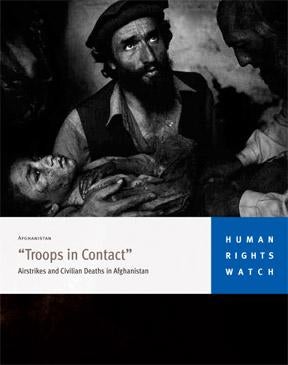
    Airstrikes and Civilian Deaths in Afghanistan

    Civilian deaths in Afghanistan from US and NATO airstrikes nearly tripled from 2006 to 2007, with recent deadly airstrikes exacerbating the problem and fuelling a public backlash. The report also condemns the Taliban’s use of “human shields” in violation of the laws of war.
  • September 5, 2008

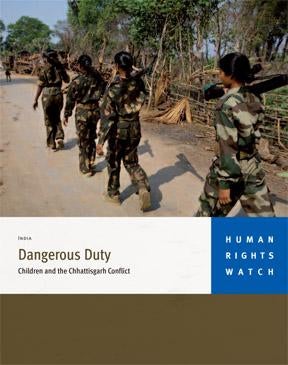
    Children and the Chhattisgarh Conflict

    This 58-page Human Rights Watch report updates information on the use of children by all parties to the conflict, the harm they have suffered, and the adverse impact of the conflict on children’s education.
  • September 2, 2008

    Despite modest improvements in recent years, Libyans and foreign residents in Libya continue to suffer from serious violations of human rights. Below is a selection of the key human rights issues in Libya, as documented by Human Rights Watch. The material is based primarily on three visits to Libya since 2005.
  • August 27, 2008

    State Responsibility for "Disappearances" and Abductions in Sri Lanka

    The resumption of major military operations between the government of Sri Lanka and the Liberation Tigers of Tamil Eelam (LTTE) in mid-2006 has brought the return of a haunting phenomenon from the country's past-the widespread abduction and "disappearance" of young men by the parties to the conflict. With the de facto breakdown of the 2002 Norway-brokered ceasefire between the parties, and its formal dissolution in January 2008, it is likely armed conflict will intensify in the coming year. Unless the Sri Lankan government takes far more decisive action to end the practice, uncover the fate of persons unaccounted for, and prosecute those responsible, then 2008 could see another surge in "disappearances."

  • August 19, 2008

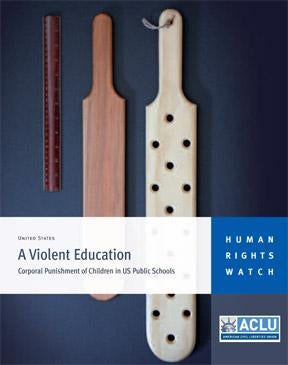
    Corporal Punishment of Children in US Public Schools

    In this 125-page report, the ACLU and Human Rights Watch found that in Texas and Mississippi children ranging in age from 3 to 19 years old are routinely physically punished for minor infractions such as chewing gum, talking back to a teacher, or violating the dress code, as well as for more serious transgressions such as fighting. Corporal punishment, legal in 21 states, typically takes the form of “paddling,” during which an administrator or teacher hits a child repeatedly on the buttocks with a long wooden board. The report shows that, as a result of paddling, many children are left injured, degraded, and disengaged from school.