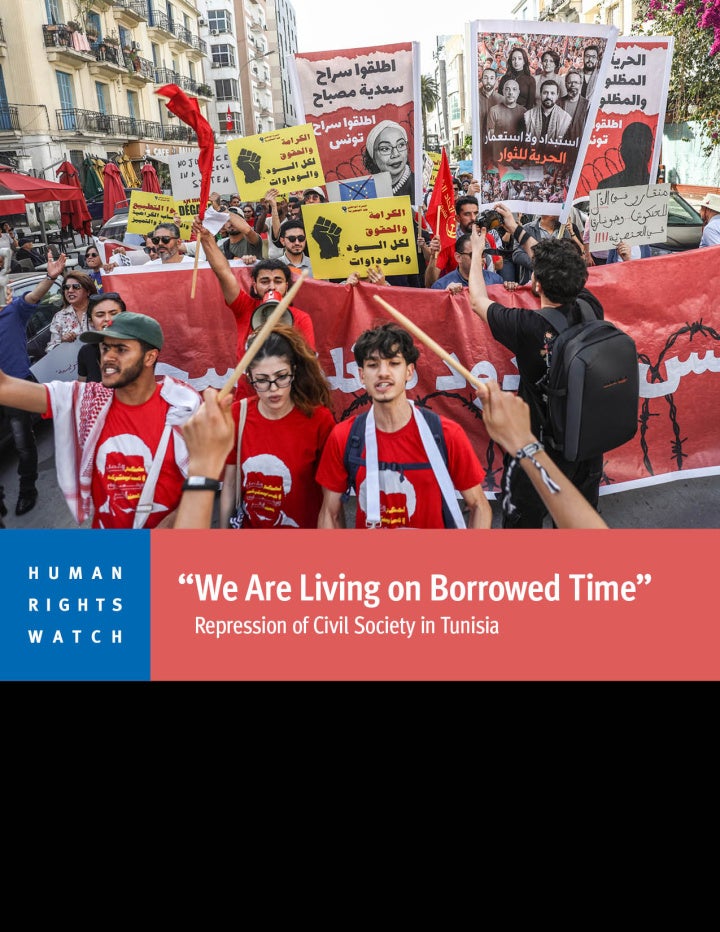
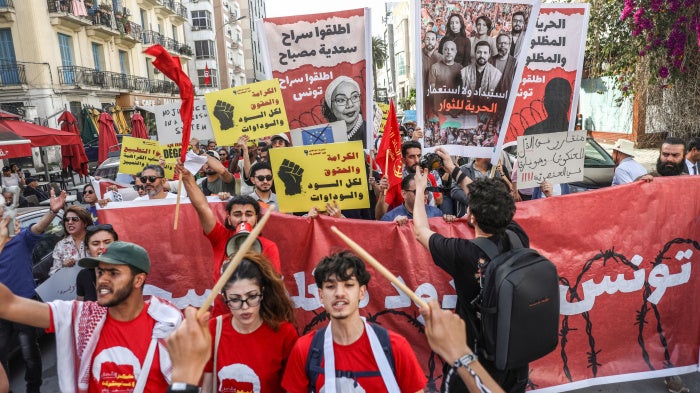
The 49-page report, “‘We Are Living on Borrowed Time’: Repression of Civil Society in Tunisia” documents the Tunisian authorities’ escalating repression of local and international civil society groups, workers, members, and affiliates through the weaponization of abusive prosecutions, arbitrary arrests, detention, financial and criminal investigations, mass suspensions, and threats of dissolution.
In 1990, the Economic Community Cease-fire Monitoring Group entered Liberia as a peacekeeping force, temporarily stopping the bloodshed and ethnic killing. However, Ecomog has not integrated human rights protection and promotion into its activities, leaving it embroiled in a conflict with few immediate prospects for resolution.
The Human Rights Watch Global Report on Prisons summarizes six years of work by the Prison Project and divisions of Human Rights Watch in investigating prison conditions in some twenty countries worldwide.
In this report, we examine five of the largest UN field operations in recent years, in Cambodia, El Salvador, Iraq, Somalia and the former Yugoslavia. These operations span a broad range of regions and circumstances. Yet with the exception of El Salvador, they have in common the low priority given to human rights.
More than 300 Tutsi and members of political parties opposed to Rwandan President Juvenal Habyarimana were massacred in northwestern Rwanda in late January 1993 by private militia at the direction of local and central government authorities.
Prior to the June 12 presidential elections, the Nigerian military government stepped up attacks on civil institutions, raising fears about its intentions to leave office as promised and, if it does leave, about the future stability of the country.
For three years, President Mobutu has blocked a peaceful movement for democratic change in Zaire, dividing the opposition to his rule. His efforts are now bearing fruit as ethnic and regional violence emerge in a number of regions throughout the vast central African country.
On March 4, 1993 President Chiluba declared a state of emergency, alleging the existence of a plot to overthrow the government by illegal means. The plot, known as the “Zero Option Plan,” was said to have been devised by members of the opposing United National Independence Party with support form the governments of both Iraq and Iran.
The Official Response to the Rising Tide of Violence
The greatest obstacle to the transition to a peaceful democracy in South Africa is the political violence that continues to rage in the black townships. The violence, which began in 1984 and gained greater momentum after reform initiatives were undertaken in 1990, has resulted in more than 14,000 deaths.
The violations of human rights taking place in today's Uzbekistan are uncannily familiar. Perhaps most striking is the gulf between the government's stated and legal commitment to human rights protection, and its actual record.
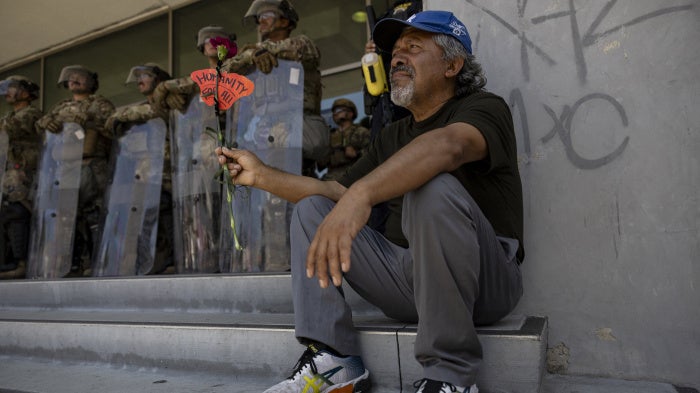
Human Rights Abuses Along the U.S. Border with Mexico Persist Amid Climate of Impunity
A follow-up on human rights violations along the U.S. border with Mexico, this report concludes that serious abuses by U.S. immigration law enforcement agents continue and that current mechanisms intended to curtail abuses and discipline officers are woefully inadequate.
Torture and Police Killings In Sao Paulo and Rio De Janeiro after Five Years
An update of a 1987 Americas Watch report, Urban Police Violence in Brazil describes incidents of torture and extra-judicial killings by police and updates specific cases previously reported.
Describing serious human rights abuses leading up to the elections in May 1993, this report criticizes the international community and the U.N. Transitional Authority in Cambodia for tolerating the bombing of opposition party offices and for encouraging members of the Khmer Rouge to participate in the elections despite their having slaughtered ethnic Vietnamese.
Continuing human rights abuses in Northern Ireland include killings by paramilitary groups and security forces, street harassment by security forces, ill-treatment in detention, problems in obtaining a fair trial, the abandonment of normal policing in some troubled areas and harassment by paramilitary organizations.
Since January 1990, the north Indian state of Jammu and Kashmir has been the site of a brutal conflict between Indian security forces and armed Muslim insurgents demanding independence or accession to Pakistan.
For the first time ever, scientists have been able to prove the use of chemical weapons through the analysis of environmental residues taken years after such an attack occurred.