US Civil Rights Enforcement Under the Trump Administration
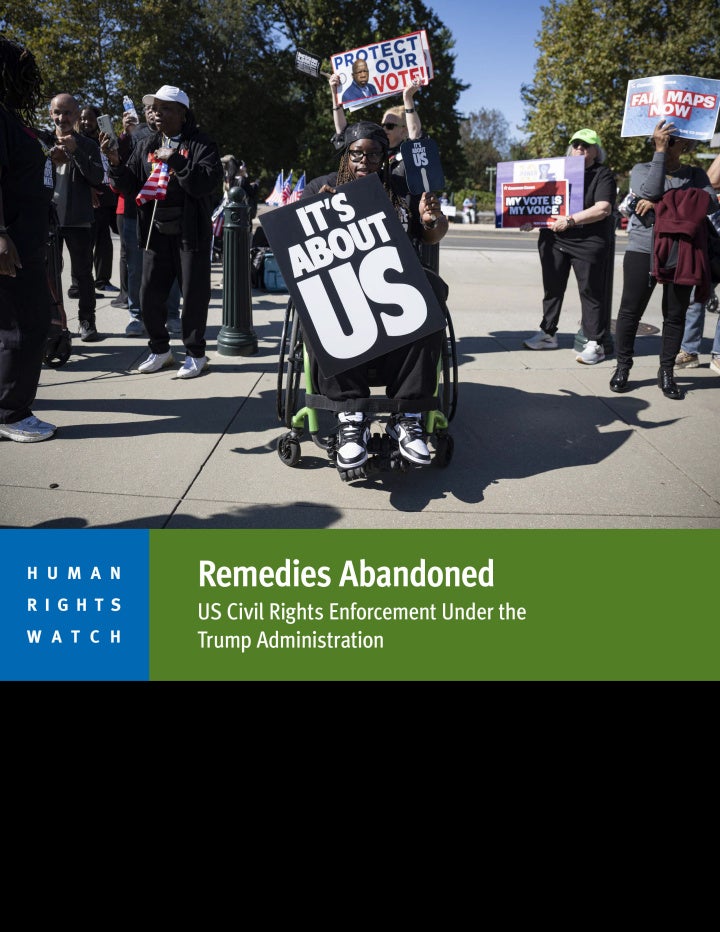
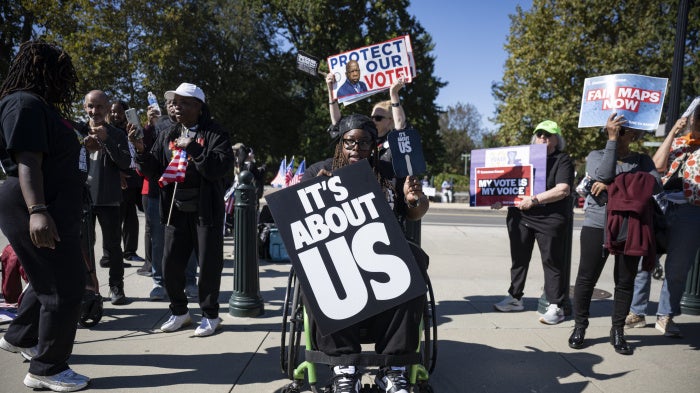
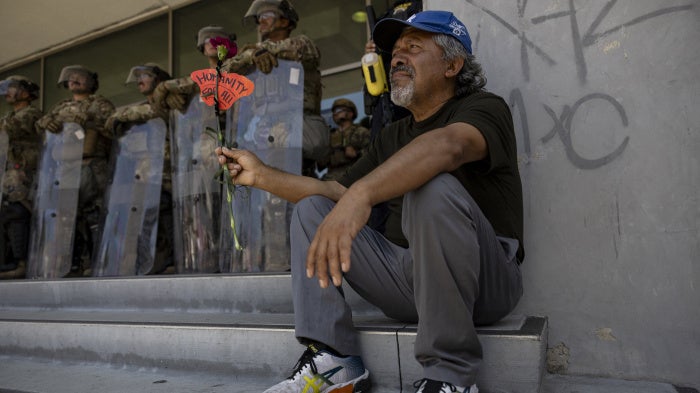
The 112-page report, “Remedies Abandoned: US Civil Rights Enforcement Under the Trump Administration,” documents the administration’s efforts to unravel the work of four key agencies between January 2025 and the spring of 2026: the Justice Department’s Civil Rights Division, which lost about 75 percent of its attorneys; the Education Department’s Office of Civil Rights, which moved to lay off nearly half its staff in one day and closed 7 of its 12 regional offices; the Housing and Urban Development Department’s Fair Housing Office, which shrank dramatically; and the Equal Employment Opportunity Commission, which reached its lowest staffing levels in over 40 years.
Mexico, the United States, and Canada broke new ground in January 1994 when they brought into force a labor rights side agreement to accompany the North American Free Trade Agreement (NAFTA).
The title of this report is taken from a United Nations High Commissioner for Refugees (UNHCR) report of June 1995 on the repatriation of over 200,000 Burmese refugees, most of them members of the Rohingya Muslim minority, from Bangladesh to their home state of Arakan in northern Burma. The repatriation is being held up as a success story by the UNHCR.
Haiti’s turmoil over the last decade demonstrates the insidious effect of impunity for violent human rights abuse. Despite repeated official promises of justice and untold opportunities to fulfill those vows, prosecutions for human rights crimes have been rare.
With credible estimates ranging from 60 to 115 million, India has the largest number of working children in the world. Whether they are sweating in the heat of stone quarries, working in the fields sixteen hours a day, picking rags in city streets, or hidden away as domestic servants, these children endure miserable and difficult lives. They earn little and are abused much.
Ongoing Ethnically-Motivated Expulsions and Harassment in Bosnia
The ethnically-motivated intimidation, mistreatment and expulsions of civilians that were the hallmark of the war in Bosnia and Hercegovina have continued since the signing of the Dayton agreement. Those ethnic minorities who have remained in their homes have come under increasing pressure in recent months to leave.
Human Rights Violations and the Faceless Courts in Peru
The incarceration of hundreds of innocent prisoners charged or convicted of terrorist crimes they did not commit is now an open secret in Peru. While there may be disagreement about the numbers unjustly prosecuted by Peru's "faceless courts," no one in Peru, including the architect of the court system, President Alberto Fujimori, denies that the problem exists.
Denial of the Right of Refugees to Return to the Krajina
One year ago, on August 4, 1995, the Croatian Army launched Operation Storm, an offensive to retake the Krajina region, which had been controlled by separatist ethnic Serbs since early 1991.
In the aftermath of rioting on July 27, 1996, in Jakarta, a massive crackdown was conducted by the Indonesian internal security apparatus, targeting young student activists suspected of involvement in organizations collectively branded by the army as the "new PKI" [Indonesian Communist Party].
Maquiladoras, or export-processing factories, along the U.S.-Mexico border account for over US billion in export earnings for Mexico and employ over 500,000 workers.
The impact of crime control policies on minorities is among the most important, disturbing and contentious social issues facing the United States. Overwhelming data establish the striking proportion of African-Americans entangled in the criminal justice system—on any given day one in three young black American males is either in prison or jail, on probation or parole.
The region of North Kivu in eastern Zaire has been the site of recurrent interethnic violence since 1992, often carried out with the complicity of Zairian regional and national leaders and the Zairian security forces.
Since late March 1993, following a series of stabbings inside Israel, a general policy of "closure" — the term referring to Israel's sealing of the West Bank and Gaza — has been in effect in the occupied territories.